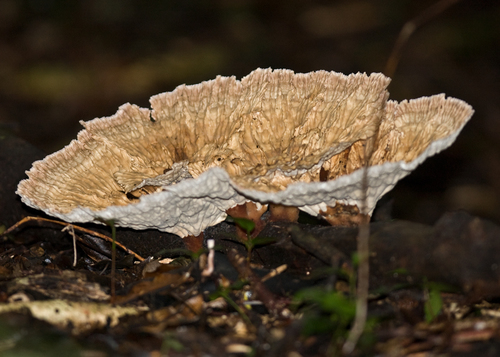
Microporus affinis
(Blume & T. Nees) Kuntze
PolyporaceaeMushrooms
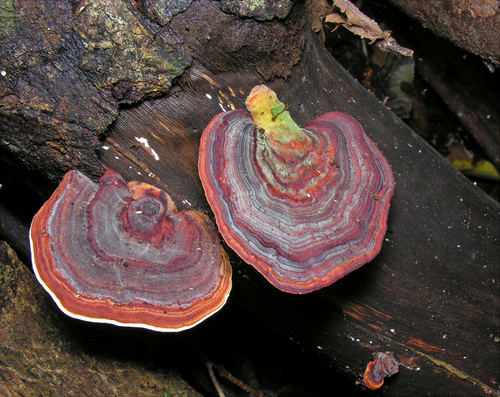
iNaturalist · cc-by-nc-sa
(c) Paul George, some rights reserved (CC BY-NC-SA), uploaded by Paul George
(c) Paul George, some rights reserved (CC BY-NC-SA), uploaded by Paul George

iNaturalist · cc-by-nc
(c) Julie Ward, some rights reserved (CC BY-NC)
(c) Julie Ward, some rights reserved (CC BY-NC)
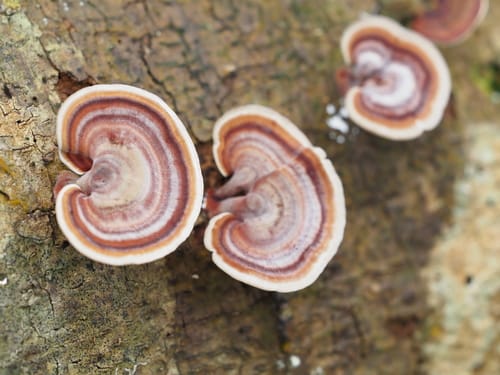
iNaturalist · cc-by-nc
(c) Cheongweei Gan, some rights reserved (CC BY-NC)
(c) Cheongweei Gan, some rights reserved (CC BY-NC)
What to Eat
Edible parts: Mushroom, Fungus
The mushroom is edible.
Where to Find It
It is a tropical plant. It grows on fallen branches in the rainforest.
Asia, Australia, Malaysia, Papua New Guinea, PNG, SE Asia,
Countries: United Arab Emirates, Afghanistan, Armenia, Australia, Azerbaijan, Bangladesh, Bahrain, Brunei, Bhutan, China, Georgia, Indonesia, Israel, India, Iraq, Iran, Jordan, Japan, Kyrgyzstan, Cambodia, North Korea, South Korea, Kuwait, Kazakhstan, Laos, Lebanon, Sri Lanka, Myanmar, Mongolia, Maldives, Malaysia, Nepal, Oman, Papua New Guinea, Philippines, Pakistan, Qatar, Saudi Arabia, Singapore, Syria, Thailand, Tajikistan, Timor-Leste, Turkmenistan, Turkey, Taiwan, Uzbekistan, Vietnam, Yemen
How to Identify
A fan-shaped bracket fungus in the Polyporaceae family with a velvety ridged cap, found growing on fallen branches in tropical rainforests.
Wikipedia
Source ↗Microporus affinis is a fungus species in the family Polyporaceae. It was first described in 1826 as a species of Polyporus by German botanists Carl Ludwig Blume and Theodor Nees. Otto Kuntze transferred it to Microporus in 1898. It is a widespread polypore that is common in tropical and subtropical regions of both the Northern and Southern Hemispheres.
Names & Synonyms
Mondsem, Mondshoba
References (2)
- Boa, E. R., 2004, Wild edible fungi and their importance to people. FAO Non Wood Forest Products Booklet 17
- Sillitoe, P. 1995, An Ethnobotanical Account of the Plant Resources of the Wola Region, Southern Highlands Province, Papua New Guinea. J. Ethnobiol. 15(2): 201-235