Ceropegia distincta
N. E. Br.

(c) epiforums, some rights reserved (CC BY-NC-SA)
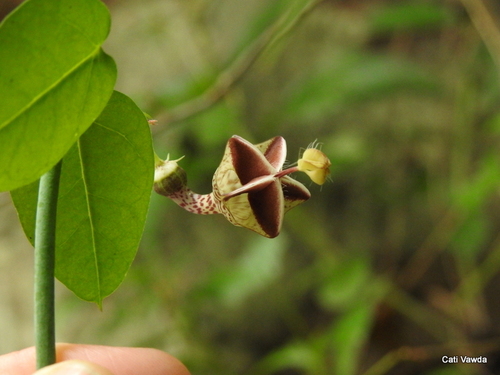
(c) cati, some rights reserved (CC BY-NC)
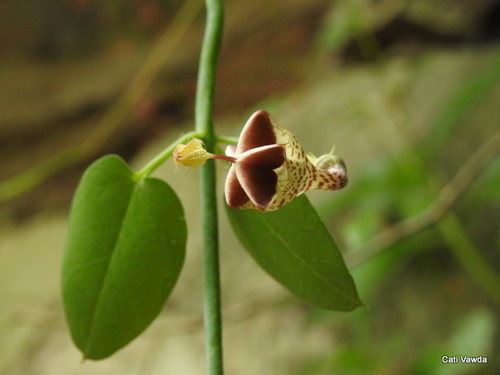
(c) cati, some rights reserved (CC BY-NC)
What to Eat
Edible parts: Tuber, Root
The tuber is washed, scraped clean, and eaten raw or cooked, either boiled or roasted.
Where to Find It
It is a tropical plant. It is best in a humus-rich soil. It needs a protected, sunny position. It is damaged by frost or drought.
Africa, Australia, East Africa, South Africa*, Southern Africa, Zimbabwe,
How to Identify
It is a vine that keeps growing from year to year. It grows 1.5 m high and spreads 1.5 m wide. The plant contains milky sap. The stem is stout and twining. The leaves are fleshy and in pairs. They are oval and bright green. The flowers develop with or before the new leaves. The flowers are white with purple spots. They are tube shaped. The tubes curve and the lobes expand into a funnel shape. They unite at the tip. The fruit is a double curved pod. The seeds have white silky hairs.
How to Grow
Plants can be grown by seed, cuttings or division of the tubers.
Notes
There are about 160-200 Ceropegia species. Probably now in Apocynaceae
Names & Synonyms
Muroodza
References (6)
- Andersohn, G., 1983, Cacti and Succulents. EP Publishing. p 259
- Bodkin, F., 1991, Encyclopedia Botanica. Cornstalk publishing, p 242
- Ruiters-Welcome, A. K., 2019, Food plants of southern Africa. Ph.D. thesis. Univ. of Johannesburg p 23
- Tredgold, M.H., 1986, Food Plants of Zimbabwe. Mambo Press. p 2
- Welcome, A. K. & Van Wyk, B.-E., 2019, An inventory and analysis of the food plants of southern Africa. South African Journal of Botany 122 (2019) 136–179
- www.zimbabweflora.co.zw 2011


