Berberis jamesiana
Forrest & W. W. Smith

(c) Lauren Harris, some rights reserved (CC BY-NC), uploaded by Lauren Harris
What to Eat
Edible parts: Shoots, Stems, Leaves, Fruit
The young shoots, leaves, and fruit are eaten fresh and are commonly used as a snack and spice.
Where to Find It
It is a temperate plant. It grows on the edges of forests and along riversides between 2,100-3,600 m above sea level. It grows in Sichuan and Yunnan in China.
Asia, China, Himalayas, Tibet,
How to Identify
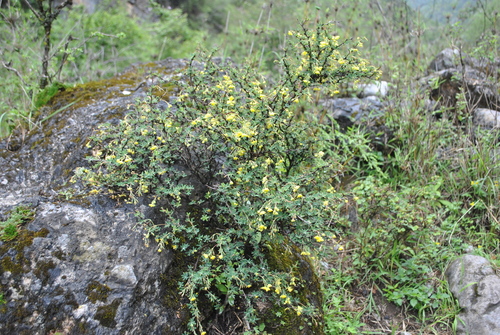
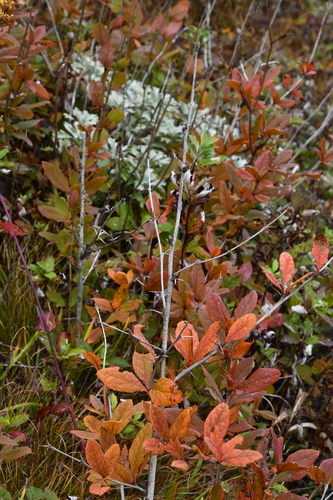
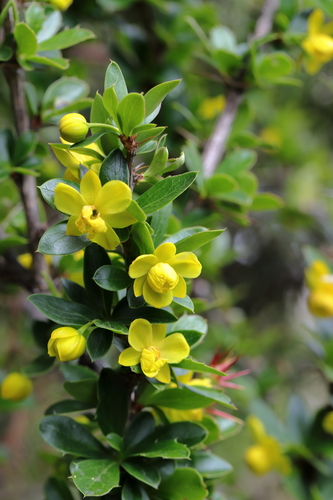
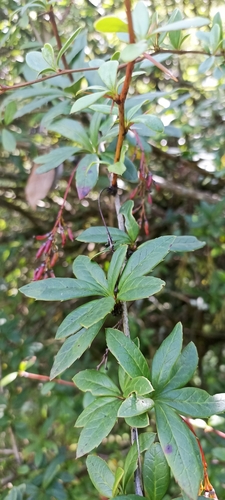
A shrub. It loses its leaves during the year. It grows 1-3 m tall. The branches are dark grey and the shoots are purple. It has spines. The leaves are 3-8 cm long by 1-4 cm wide. Flowers are in groups of 9-20. The fruit is a creamy white berry that ripens to light red. It is 10 mm long by 8 mm wide.
Production
In Yunnan plants are harested from May to September.
Other Information
It is commonly used as a snack and spice.
Names & Synonyms
Qiesi
References (2)
- Ju, Y., et al, 2013, Eating from the wild: diversity of wild edible plants used by Tibetans in Shangri-la region, Yunnan, China, Journal of Ethnobiology and Ethno medicine 9:28
- Wang, J., et al, 2020, An ethnobotanical survey of wild edible plants used by the Yi people of Liangshan Prefecture, Sichuan Province, China. Journal of Ethnobiology and Ethnomedicine 16:10 p 6