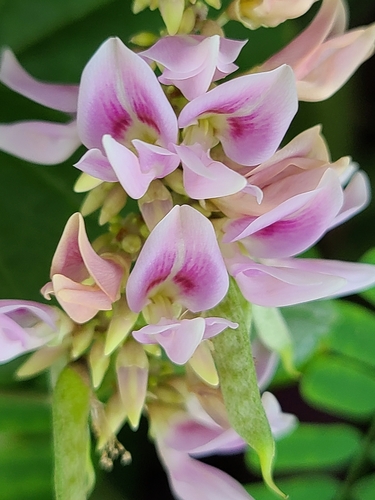
Inga vera
Willd.
River koko
(c) Alexis López Hernández, some rights reserved (CC BY)
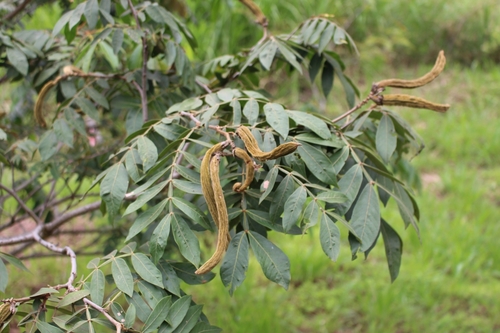
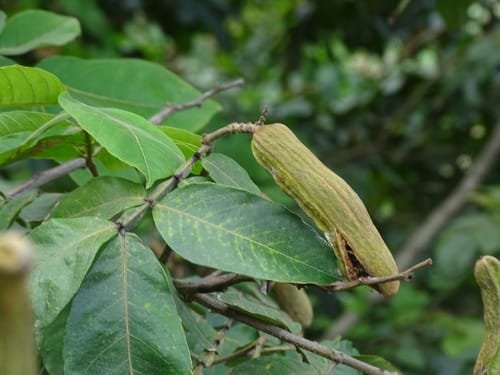
no rights reserved, uploaded by Jake Rehage
What to Eat
Edible parts: Fruit - aril, Pod pulp
The sweet-tasting pulp surrounding the seeds inside the pod is eaten, though it is not widely appreciated. The pods are nearly cylindrical and narrow, measuring 10–20cm long and 1–2cm wide.
Where to Find It
It is a tropical plant. It grows in moist forests. It grows between 60-700 m above sea level. It grows in the humid lowland forest. It grows best in areas with a daytime temperature between 18-28°C and an average annual rainfall between 1,200-4,000 mm. It is best in soils with a pH between 6-8.
Andes, Argentina, Bahamas, Barbados, Belize, Bolivia, Brazil, Caribbean, Central America*, Chile, Colombia, Costa Rica, Cuba, Dominica, Dominican Republic, Ecuador, El Salvador, French Guiana, Grenada, Guadeloupe, Guatemala, Guianas, Guyana, Haiti, Honduras, Indonesia, Jamaica, Martinique, Mexico, Montserrat, Netherlands Antilles, Nicaragua, North America, Panama, Paraguay, Peru, Puerto Rico, South America*, St Kitts and Nevis, St Lucia, St Vincent and the Grenadines, Suriname, Trinidad and Tobago, Uruguay, Venezuela, Virgin Islands, West Indies,
How to Identify
An evergreen tree. It grows 12-20 m tall. The crown is widely spreading. The trunk can be 30-100 cm across. The leaves are alternate in 2 rows. The leaves are compound with 3-7 pairs of leaflets. There is a tiny round gland between each pair of leaflets. The leaflets are oblong and 5-15 cm long by 3-7 cm wide. The flowers are in clusters of 1-4. They are at the base of the leaf or at the ends of twigs. The fruit are pods. They are 10-20 cm long by 1-2 cm wide.
How to Grow
It grows best in areas where annual daytime temperatures are within the range 18 - 28°c, but can tolerate 15 - 35°c. It prefers a mean annual rainfall in the range 1,500 - 3,000mm, but tolerates 1,200 - 4,000mm. Succeeds in full sun and in dappled shade. Succeeds on a wide variety of soils, including limestone. Prefers a pH in the range 6 - 8, tolerating 5.5 - 8.5. A fast-growing tree. The plant can flower and produce fruits throughout the year. This species has a symbiotic relationship with certain soil bacteria, these bacteria form nodules on the roots and fix atmospheric nitrogen. Some of this nitrogen is utilized by the growing plant but some can also be used by other plants growing nearby.
Propagation: Sow seed as soon as it is ripe in a partially shaded position, either in a nursery seedbed or in individual containers. Germination rates of around 100% can be expected, with sprouting occurring within 3–5 days. Transplant seedbed seedlings to individual containers when they reach 4–6cm tall. Seedlings develop quickly and should be ready to plant out 3–4 months later.
Medicinal Uses
The macerated bark is taken orally as a treatment for anaemia. A decoction of the root is used to treat gallstones. The fruit pulp is used as a treatment for constipation, and the plant is reported to be astringent and diuretic.
Other Uses
The tree fixes atmospheric nitrogen, enriching the soil around it, and is frequently used as a shade tree in coffee and cacao plantations — large enough to provide effective shade by just 3 years old. Inga species are favoured for this role because they grow quickly, tolerate drastic pruning, maintain soil fertility, and stabilise the soil. The bark contains tannins and is used for dyeing textiles. The heartwood is pale to golden brown, often with longitudinal streaks or patches of darker brown shaded with green or yellow; the sapwood is whitish. The wood is moderately heavy, moderately hard, strong, and tough, but of low durability — it is very susceptible to attack by drywood termites, other insects, and decay when in contact with the ground. It air-seasons rapidly with moderate degrade. Planing, turning, boring, mortising, sanding, and resistance to screw splitting are all good, while shaping is poor. It is used for posts and small items such as boxes, toys, and pencils. The wood is also an excellent fuel and is used to make charcoal.
Wikipedia
Source ↗Inga vera is a species of tropical tree in the family Fabaceae. It occurs in Central and South America, where it is known as churimo, guamo churimo, guamo arroyero and guamo macho.
Production
Trees flower and fruit throughout the year.
Other Information
It is only occasionally eaten. It is cultivated.
Notes
Also as Mimosaceae.
Names & Synonyms
Acontepe, Cuajinicuil, Guaba, Inga-de-beira-de-rio, Illta, Jacanicuil, Pwa dou, Sikren, Suru pakay, Vaina peluda
References (16)
- Arellanes, Y., et al, 2013, Influence of traditional markets on plant management in the Tehuacan Valley. Journal of Ethnobiology and Ethnomedicine 9:38
- Bortolotto, I. M., et al, 2015, Knowledge and use of wild edible plants in rural communities along Paraguay River, Pantanal, Brazil. Journal or Ethnobiology and Ethnomedicine. 11:46
- Bortolotto, I. M., et al, 2018, Lista preliminar das plantas alimenticias nativas de Mato Grosso do Sul, Brasil. Iheringia, Serie Botanica, Porto Alegre, 73 (supl.):101-116
- Brack, P., et al, 2020, Frutas nativas do Rio Grande do Sul, Brasil: riqueza e potencial alimentício. Native fruits of Rio Grande do Sul, Brazil: richness and potential as food. Rodriguésia 71: e03102018.
- Fern, K., 2012, Tropical Species Database http://theferns.info/tropical/
- Grandtner, M. M. & Chevrette, J., 2013, Dictionary of Trees, Volume 2: South America: Nomenclature, Taxonomy and Ecology. Academic Press p 327
- Kermath, B. M., et al, 2014, Food Plants in the Americas: A survey of the domesticated, cultivated and wild plants used for Human food in North, Central and South America and the Caribbean. On line draft. p 448
- Kew Plants of the World On line
- Kinupp, V. F., 2007, Plantas alimenticias nao-convencionais da regiao metropolitana de Porto Alegre, RS, Brazil p 79
- Lopez-Diago, D. & Garcia, N., 2021, Wild edible fruits of Colombia. Biota ColomBiana 22 (2) p 39
- Penafield Anchundia, D. D., 2017, Traditional food consumption and its nutritional contribution in Guasaganda, Central Ecuador. PhD Ghent University p 72
- Piedra-Malagón, E. M., et al, 2022, Edible native plants of the Gulf of Mexico Province. Biodiversity Data Journal 10: e80565 p 21
- Segura, S., et al, 2018, The edible fruit species in Mexico. Genet Resour Crop Evol (2018) 65:1767–1793
- Torre, de la, L., et al, 2008, Enciclopedia de las Plantas Útiles del Ecuador. Herbario QCA. Pontificia Universidad Católica del Ecuador. p 348
- www.colecionandofrutas.org
- www.worldagroforestrycentre.org/treedb/