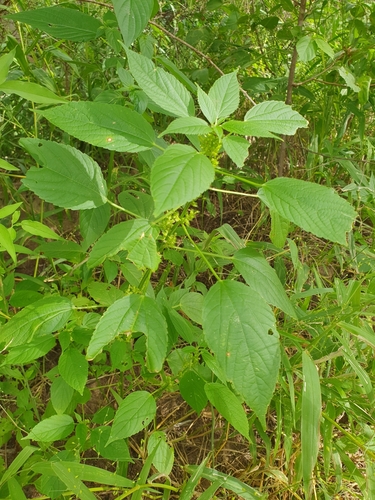
Hancea penangensis
(Mull.Arg.) S. E. C. Sierra, Kulju & Welzen

iNaturalist · cc-by-nc-nd
(c) loupok, some rights reserved (CC BY-NC-ND)
(c) loupok, some rights reserved (CC BY-NC-ND)

iNaturalist · cc-by-nc
(c) SunGW, some rights reserved (CC BY-NC)
(c) SunGW, some rights reserved (CC BY-NC)
What to Eat
Edible parts: ?
Where to Find It
It is a tropical plant.
Andamans, Asia, Bruneim Malaysia, Papua New Guinea, PNG, Philippines, Singapore, Thailand, Vietnam,
Countries: United Arab Emirates, Afghanistan, Armenia, Azerbaijan, Bangladesh, Bahrain, Brunei, Bhutan, China, Georgia, Indonesia, Israel, India, Iraq, Iran, Jordan, Japan, Kyrgyzstan, Cambodia, North Korea, South Korea, Kuwait, Kazakhstan, Laos, Lebanon, Sri Lanka, Myanmar, Mongolia, Maldives, Malaysia, Nepal, Oman, Papua New Guinea, Philippines, Pakistan, Qatar, Saudi Arabia, Singapore, Syria, Thailand, Tajikistan, Timor-Leste, Turkmenistan, Turkey, Taiwan, Uzbekistan, Vietnam, Yemen
How to Identify
A tree. It grows 28 m tall. The trunk is 35 cm across. The leaves are opposite but with one smaller. The flowers are 4 mm across. They are white to yellow. The fruit are 13 mm across. and green to red with 3 lobes. They are spiny.
Names & Synonyms
Beri, Beli, Enserai
Cordemoya penangensis (Mull.Arg.) S. E. C. Kulju & WelzenMallotus echinatus ElmerMallotus penangensis Mull.Arg.Mallotus pseudopenangensis Pax & K. Hoffm.and others
References (1)
- Lacuna-Richman, C., 2006, The use of non-wood forest products by migrants in a new settlement: experiences of a Visayan community in Palawan, Philippines. Journal of Ethnobiology and Ethnomedicine. 2:36 (As Mallotus pseudopenangensis Pax & K. Hoffm.)