Ferocactus pilosus
(Galeotti ex Salm-Dyck) Werderm.
Mexican lime cactus
(c) Zona Sujeta a Conservación Ecológica Sierra de Zapalinamé, some rights reserved (CC BY-NC), uploaded by Zona Sujeta a Conservación Ecológica Sierra de Zapalinamé

(c) Manlio Martínez Barona, some rights reserved (CC BY-NC)

(c) Ad Konings, some rights reserved (CC BY-NC)
What to Eat
Edible parts: Fruit, Flowers, Stems
The fruit is eaten raw, the stems are cooked, and the flowers are eaten with sugar.
Where to Find It
It is a tropical plant. It grows on rocky limestone hillsides and dry and open areas.
Asia, Indonesia, Mexico*, North America, SE Asia, USA,
How to Identify
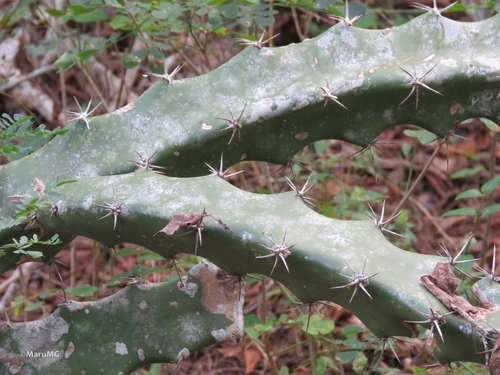
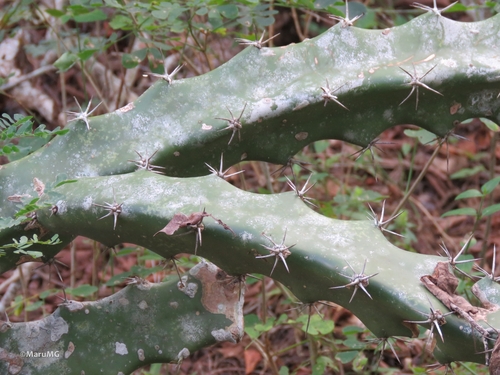
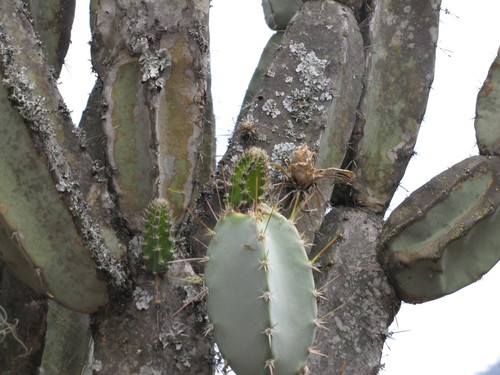
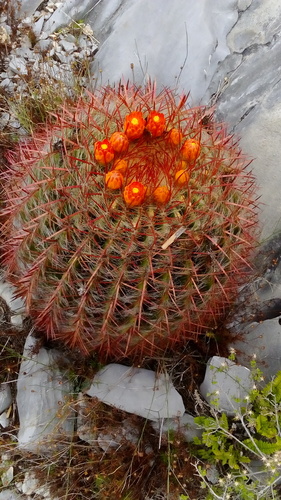
A cactus. It can grow singly or occur as a clump. The stems are column shaped and 3 m tall and 50 cm across. There are 13-20 ribs which become more rounded as the plant matures. There are red or yellow spines. These can be 5 cm long. The flowers are in circles around the stem tips. They are 4 cm long and 2.5 cm across. The fruit is oval and yellow and 3.4 cm long.
How to Grow
Plants can be grown from seeds.
Wikipedia
Source ↗Ferocactus pilosus, also known as Mexican lime cactus (Biznaga De Lima) or Mexican fire barrel, is a species of cactus in North America.
Other Information
It is a cultivated food plant.
Names & Synonyms
Biznaga roja, Kaktus limau meksiko
References (8)
- Astrada, E., et al, 2007, Ethnobotany in the Cumbres de Monterrey National Park, Nuevo Leon, Mexico. Journal of Ethnobiology and Ethnomedicine 3:8
- Desert Survivors Online Plant Database (As Ferocactus stainesii var. pringlei)
- Estrada-Castillon, E., et al, 2014, Ethnobotany in Rayones, Nuevo Leon, Mexico. Journal of Ethnobiology and Ethnomedicine, 10:62
- Hellmuth, N. M., 2013, Maya Ethnobotany. Complete Inventory of plants. Associacion FLAAR Mesoamerica. Thirteenth edition. p 48
- Kermath, B. M., et al, 2014, Food Plants in the Americas: A survey of the domesticated, cultivated and wild plants used for Human food in North, Central and South America and the Caribbean. On line draft. p 367
- Piedra-Malagón, E. M. et al, 2022, Edible native plants of the Gulf of Mexico Province. Biodiversity Data Journal 10: e80565 p 15
- Sukarya, D. G., (Ed.) 2013, 3,500 Plant Species of the Botanic Gardens of Indonesia. LIPI p 1018
- World Checklist of Useful Plant Species 2020. Royal Botanic Gardens, Kew