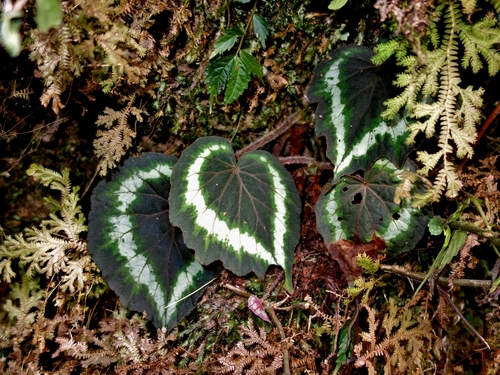
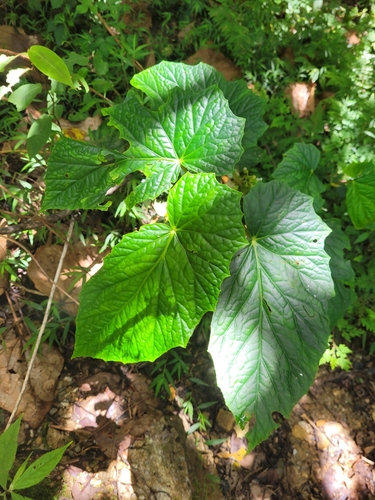
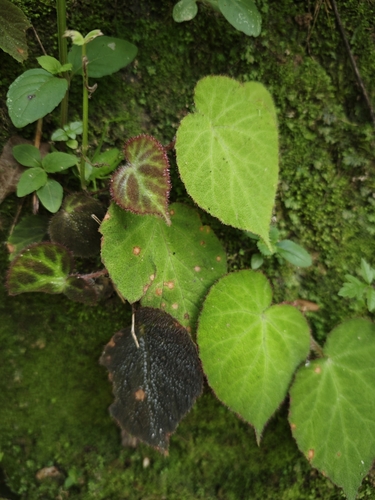
Begonia sinensis
A. DC.

iNaturalist · cc-by-nc
(c) Nan Yang, some rights reserved (CC BY-NC)
(c) Nan Yang, some rights reserved (CC BY-NC)
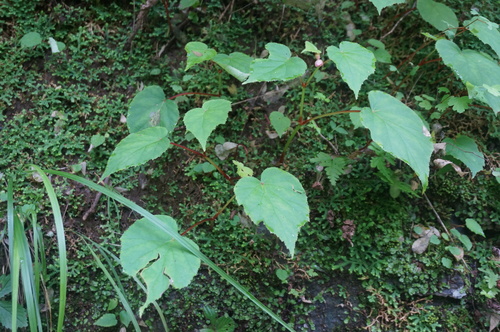
iNaturalist · cc-by-nc
(c) 红梅, some rights reserved (CC BY-NC)
(c) 红梅, some rights reserved (CC BY-NC)

iNaturalist · cc-by-nc
(c) mianink, some rights reserved (CC BY-NC)
(c) mianink, some rights reserved (CC BY-NC)
What to Eat
Edible parts: Stalks
The stalks are eaten.
Where to Find It
It is a subtropical plant.
Asia, China,
Countries: United Arab Emirates, Afghanistan, Armenia, Azerbaijan, Bangladesh, Bahrain, Brunei, Bhutan, China, Georgia, Indonesia, Israel, India, Iraq, Iran, Jordan, Japan, Kyrgyzstan, Cambodia, North Korea, South Korea, Kuwait, Kazakhstan, Laos, Lebanon, Sri Lanka, Myanmar, Mongolia, Maldives, Malaysia, Nepal, Oman, Philippines, Pakistan, Qatar, Saudi Arabia, Singapore, Syria, Thailand, Tajikistan, Timor-Leste, Turkmenistan, Turkey, Taiwan, Uzbekistan, Vietnam, Yemen
How to Identify
An herb in the Begoniaceae family found in subtropical regions, with edible stalks.
Names & Synonyms
Yikouxie
References (2)
- Kang, Y., et al, 2012, Wild food plants and wild edible fungi in two valleys on the Qinling Mountains (Shaanxi, central China) Journal of Ethnobiology and Ethnomedicine; 9:26
- Kang, Y., et al, 2012, Wild food plants and wild edible fungi of Heihe valley (Qinling Mountains, Shaanxi, central China): Herbophilia and indifference to fruits and mushrooms. Acta Societas Botanicorum Poloniae 81(4):4-5-413