Rubus rufus
Focke
(c) Jacy Chen, some rights reserved (CC BY), uploaded by Jacy Chen

(c) Han-Ting Liu, some rights reserved (CC BY-NC), uploaded by Han-Ting Liu
(c) Jacy Chen, some rights reserved (CC BY), uploaded by Jacy Chen
What to Eat
Edible parts: Fruit
The fruits are eaten raw.
Dangerous Lookalikes
This plant can be confused with the following toxic species. Always verify identification carefully before consuming any wild plant.


Red Baneberry: Short herbaceous plant (no thorns), berries on thick red stems, each berry has a single seed, compound sharply-toothed leaves.
Rubus rufus: Thorny woody canes (brambles), aggregate berry made of many drupelets, berries pull easily from receptacle.
Where to Find It
It is a tropical plant. It grows in valleys near rivers between 900-2,500 m above sea level. In Vietnam it occurs between 800-1,800 m above sea level. It grows in Sichuan and Yunnan in China.
Asia, China, Indochina, SE Asia, Thailand, Vietnam,
How to Identify
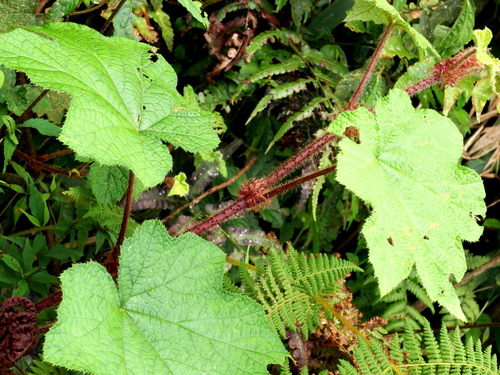
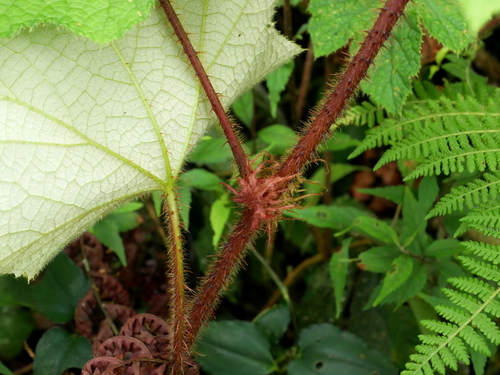
A shrub. It grows 3 m tall. There are a few needle-like prickles. The branches have red-brown hairs. The leaves are simple and lobed and then divided again. The flowers can be in clusters in the axils of leaves. The flowers are 1 cm across. The petals are white. The fruit are aggregate and orange-red.
Names & Synonyms
Dum do
References (2)
- Flora of China @ efloras.org Volume 9
- Ghorbani, A., et al, 2012, A comparison of the wild food plant use knowledge of ethnic minorities in Naban River Watershed Nature Reserve, Yunnan, SW China. Journal of Ethnobiology and Ethnomedicine; 8:17
More from Rosaceae


