Coniogramme intermedia
Hieron
iNaturalist · cc-by-nc
(c) Wen Ling Tsai, some rights reserved (CC BY-NC)
(c) Wen Ling Tsai, some rights reserved (CC BY-NC)

iNaturalist · cc-by-nc
(c) 江国彬, some rights reserved (CC BY-NC), uploaded by 江国彬
(c) 江国彬, some rights reserved (CC BY-NC), uploaded by 江国彬
iNaturalist · cc-by-nc
(c) Wen Ling Tsai, some rights reserved (CC BY-NC)
(c) Wen Ling Tsai, some rights reserved (CC BY-NC)
What to Eat
Edible parts: Rhizome - starch, Root, Leaves, Fronds
The fronds or leaves are cooked as a vegetable, either fried or used in soup. The rhizomes are processed for starch to make noodles.
Where to Find It
It is a temperate plant.
Asia, Bhutan, China, Himalayas, India, Japan, Korea, Nepal, Pakistan, Russia, SE Asia, Tibet, Vietnam,
Countries: United Arab Emirates, Afghanistan, Armenia, Azerbaijan, Bangladesh, Bahrain, Brunei, Bhutan, China, Georgia, Indonesia, Israel, India, Iraq, Iran, Jordan, Japan, Kyrgyzstan, Cambodia, North Korea, South Korea, Kuwait, Kazakhstan, Laos, Lebanon, Sri Lanka, Myanmar, Mongolia, Maldives, Malaysia, Nepal, Oman, Philippines, Pakistan, Qatar, Russia, Saudi Arabia, Singapore, Syria, Thailand, Tajikistan, Timor-Leste, Turkmenistan, Turkey, Taiwan, Uzbekistan, Vietnam, Yemen
How to Identify
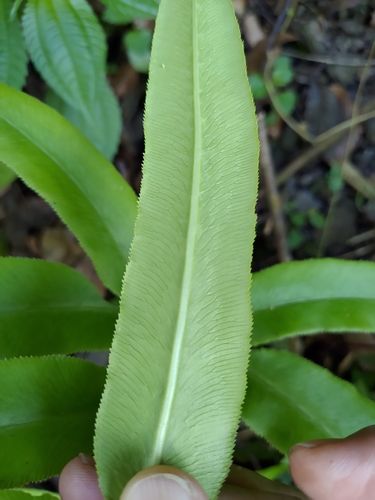
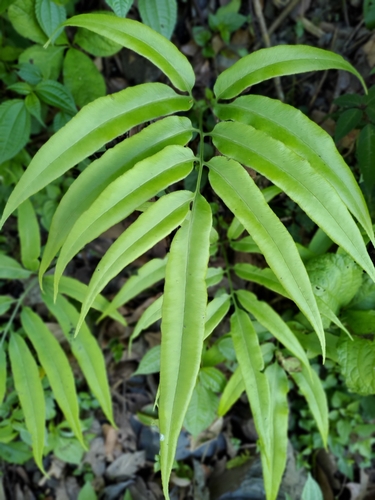
A temperate fern growing 60-120 cm tall, found in the Pteridaceae family. The fronds and rhizomes are both edible and commonly used in traditional cooking.
Notes
Also put in the family Hemionitiaceae and Adiantaceae.
Names & Synonyms
Go-blo-rko-gri-rko-ryo
Several
References (4)
- Ding, X., 2021, Collection calendar: the diversity and local knowledge of wild edible plants used by Chenthang Sherpa people to treat seasonal food shortages in Tibet, China. Journal of Ethnobiology and Ethnomedicine 17:40
- Lim, T. K., 2015, Edible Medicinal and Non Medicinal Plants. Volume 9, Modified Stems, Roots, Bulbs. Springer p 27
- Liu, Y., et al, 2012, Food uses of ferns in China: a review. Acta Societatis Botanicorum Poloniae 84(4): 263-270
- www.eFloras.org Flora of China


