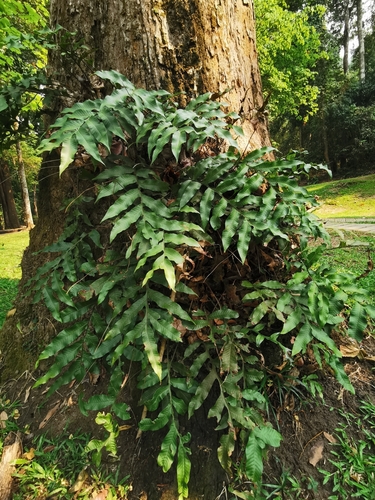
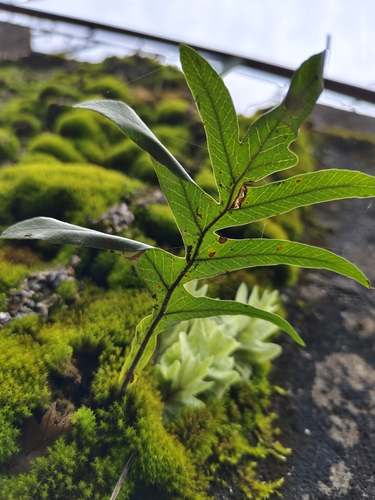
Polypodiodes niponica
(Mett.) Ching
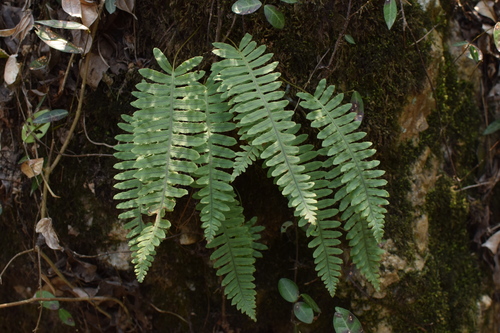
(c) 江国彬, some rights reserved (CC BY-NC)
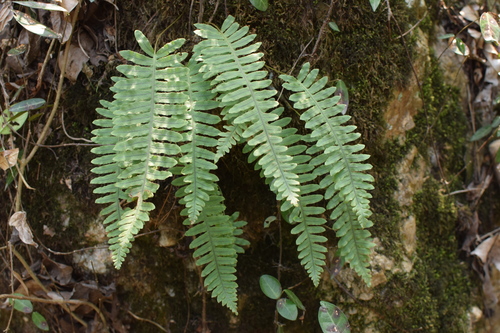
(c) 江国彬, some rights reserved (CC BY-NC)
(c) 江国彬, some rights reserved (CC BY-NC)
What to Eat
Edible parts: Leaves, Fronds
Young leaves and fronds are cooked as a vegetable, though they have a notably bitter taste.
Where to Find It
It is a tropical plant. It grows attached to trees or rocks. In southern China it occurs between 300-1,800 m above sea level. In Sichuan and Yunnan.
Asia, China, India, Japan, Northeastern India, SE Asia, Taiwan, Tibet, Vietnam,
How to Identify
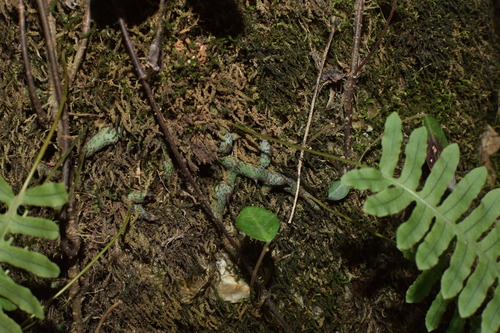
A fern. It has a long creeping rhizome. It is grey-green and 5 mm across. It has a whitish bloom and scales. The stalk is straw coloured and 5-15 cm long. It is hairy. The blades are oblong to sword shaped and have teeth along the edge. It is 30-40 c, long by 10-13 cm wide and divided along the stalk. There are 15-25 pairs of segments 3-5 cm long by 1 cm wide. The blades are hairy especially underneath.
Names & Synonyms
References (1)
- Liu, Y., et al, 2012, Food uses of ferns in China: a review. Acta Societatis Botanicorum Poloniae 84(4): 263-270