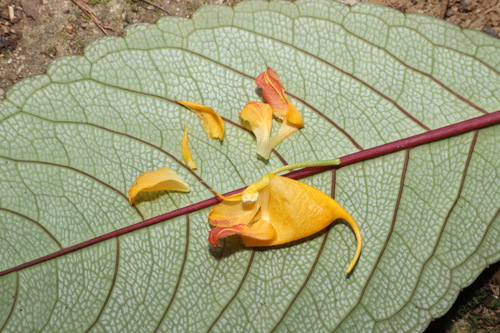
Impatiens tripetala
Roxb. ex DC.
BalsaminaceaeLeaves
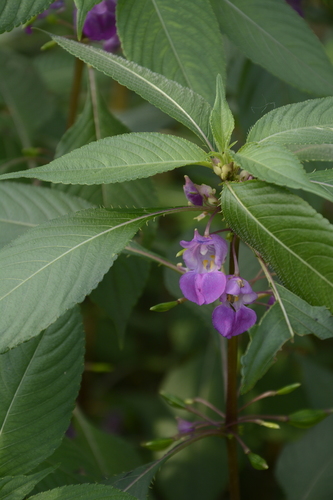
iNaturalist · cc-by
(c) Siddarth Machado, some rights reserved (CC BY), uploaded by Siddarth Machado
(c) Siddarth Machado, some rights reserved (CC BY), uploaded by Siddarth Machado
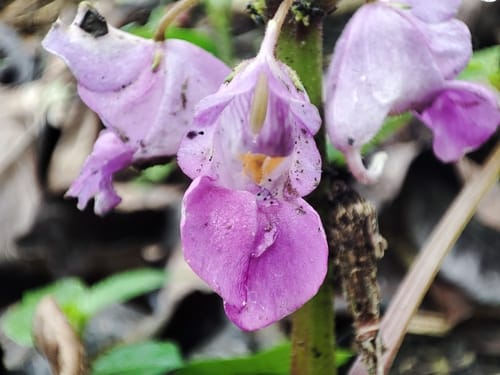
iNaturalist · cc-by-nc
(c) Benoît Segerer, some rights reserved (CC BY-NC)
(c) Benoît Segerer, some rights reserved (CC BY-NC)
What to Eat
Edible parts: Leaves
The young leaves are eaten in small amounts, either raw or boiled, to promote appetite.
Where to Find It
In Nepal it grows between 1,400-1,800 m above sea level.
Asia, Bhutan, Himalayas, India, Indochina, Myanmar, Nepal, Northeastern India, SE Asia, Thailand,
Countries: United Arab Emirates, Afghanistan, Armenia, Azerbaijan, Bangladesh, Bahrain, Brunei, Bhutan, China, Georgia, Indonesia, Israel, India, Iraq, Iran, Jordan, Japan, Kyrgyzstan, Cambodia, North Korea, South Korea, Kuwait, Kazakhstan, Laos, Lebanon, Sri Lanka, Myanmar, Mongolia, Maldives, Malaysia, Nepal, Oman, Philippines, Pakistan, Qatar, Saudi Arabia, Singapore, Syria, Thailand, Tajikistan, Timor-Leste, Turkmenistan, Turkey, Taiwan, Uzbekistan, Vietnam, Yemen
How to Identify
A herb. The leaves are alternate. The leaf stalk is long. The flowers are large and red or purple.
Medicinal Uses
Traditionally used to promote appetite.
Names & Synonyms
Leangm
Impatiens multiflora Wall. ex Hook.f. & Thoms
References (1)
- Srivastava, R. C., 2010, Traditional knowledge of Nyishi (Daffla) tribe of Arunachal Pradesh. Indian Journal of Traditional Knowledge. 9(1):26-37