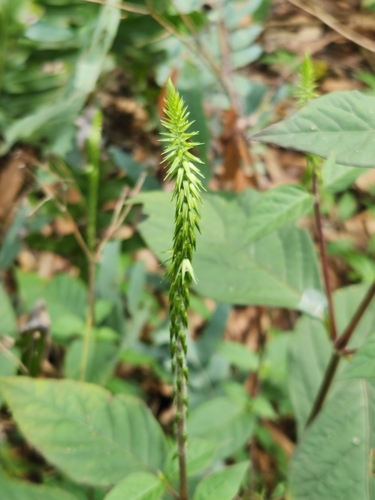
Chenopodium botrys
L.
Sticky goosefoot
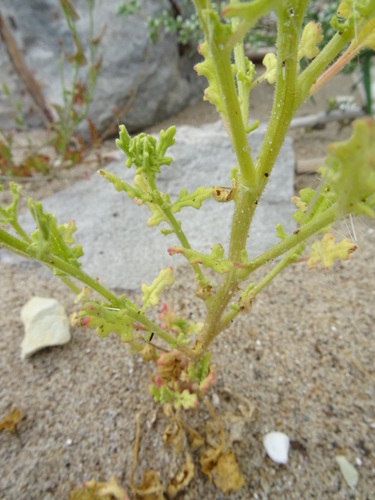
(c) cava, some rights reserved (CC BY-NC)
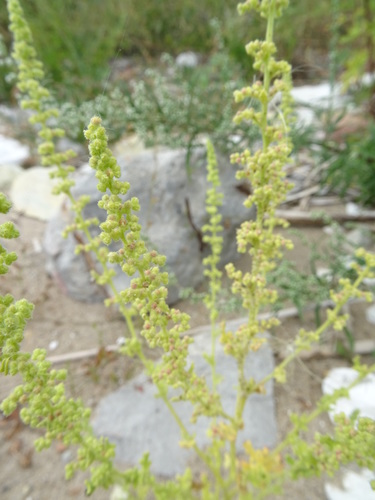
(c) cava, some rights reserved (CC BY-NC)
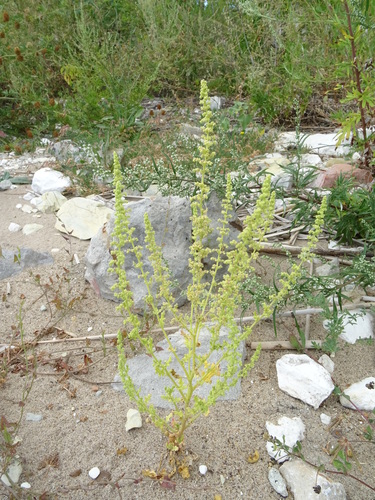
(c) cava, some rights reserved (CC BY-NC)
What to Eat
Edible parts: Leaves, Seeds
A strong-scented, low-value edible with potential toxicity. Leaves and seeds should be consumed sparingly, if at all. Foragers are far better served by mild Chenopodium species with established safety and superior nutrition. Leaves - cooked. A popular vegetable (the report does not say where!). The raw leaves should only be eaten in small quantities, see the notes above on toxicity. Seed - cooked. It can be ground into a meal and used with flour in making bread etc. The seed is small and fiddly, it should be soaked in water overnight and thoroughly rinsed before it is used in order to remove any saponins. The leaves are a tea substitute. Edible Uses & Rating: Although edible in theory, oakleaf goosefoot is a low-rating edible due to its potent essential oils and potential toxicity. The leaves can be eaten cooked and have been consumed historically by certain groups, but strong caution is warranted. Seeds are technically edible but may concentrate volatile compounds and should not be relied upon as a food source. Compared to nutritious species like pitseed goosefoot or lambsquarter, oakleaf goosefoot is inferior in flavor, safety, abundance, and digestibility. Taste, Processing & Kitchen Notes: Fresh leaves have a sharp, penetrating, resinous flavor reminiscent of epazote but typically stronger and more medicinal. Comparisons include varnish, turpentine, crushed pine needles, diesel fumes, or ragweed—depending on the sample and plant age. The raw taste is harsh, and the texture is resin-sticky. Thorough boiling or high-heat cooking reduces the sharpness but does not eliminate it entirely. Seeds, when cooked, taste surprisingly similar to mild quinoa but often carry a resinous edge. In practice, anyone seeking edible goosefoots will prefer mild species; oakleaf goosefoot is best reserved for experimental tasting or emergency use. Its essential oils may flavor broths, but the culinary applications remain extremely limited. Seasonality (Phenology): Plants emerge in spring following winter moisture and grow steadily through early summer. Flowering typically begins mid-summer, with seeds forming late summer into early autumn. Aromatic intensity increases as temperatures rise and as the plant matures. Leaves remain available throughout most of the season but become more resinous with age. Seeds mature in autumn and persist for several weeks before dispersal. Safety & Cautions (Food Use): This species contains volatile oils, including ascaridole, which is neurotoxic in high doses. Symptoms of overconsumption may include nausea, dizziness, headache, disorientation, cardiac irregularities, or—in extreme scenarios—convulsions. Leaves and seeds should be treated as potentially hazardous, especially when eaten raw or in quantity. Only mild species of Chenopodium should be consumed regularly. Avoid this species entirely if you are unsure of identification or sensitivity. Harvest & Processing Workflow: Harvesting is not recommended, but if done for experimental or ethnobotanical purposes, young leaves may be collected early in the season before resin accumulation peaks. Wash thoroughly to remove dust and glandular residue. Boil vigorously and discard the cooking water to reduce volatile toxins. Seeds may be toasted or boiled, but their safety remains uncertain. Do not consume repeatedly or in large quantities. Look-Alikes & Confusion Risks: Easily confused with other Dysphania species (such as epazote and fetid goosefoot), all of which share sticky, aromatic, glandular foliage. Mild, mealy goosefoots like Chenopodium album or C. berlandieri lack the strong scent and sticky glands. The lobed, oak-shaped leaves are a helpful distinguishing feature. Because strong-scented species may contain toxic compounds, avoiding any goosefoot with a powerful, resinous odor is a prudent rule for foragers. Traditional / Indigenous Use Summary: Historical culinary use is minimal. Some accounts record consumption of leaves as spinach-like cooked greens by Old World cultures such as certain Bantu groups. Medicinal use—especially as an anthelmintic—is better documented. In North America, Indigenous use was limited or absent for food; where mentioned, the plant was approached cautiously. Its utility remains mainly ethnobotanical and medicinal rather than nutritional.
Known Hazards
Where to Find It
It is a temperate plant. It grows in valleys, river terraces, around houses, roadsides. It grows at higher altitudes in the tropics. In NE India it grows between 2,100-2,500 m above sea level. It can grow in arid places. It suits hardiness zones 6-10.
Africa, Angola, Asia, Australia, Balkans, Central Africa, China, East Africa, Ethiopia, Europe, France, Himalayas, India, Kenya, Luxembourg, Macedonia, Malawi, Mediterranean, Middle East, North America, Pakistan, Saudi Arabia, SE Asia, Somalia, South Africa, Southern Africa, Spain, Tanzania, Uganda, USA, Vietnam, Yemen,
How to Identify
An annual herb. It grows 20-50 cm tall and spreads 30 cm wide. It is hairy on the upper part. It is sticky and has a smell. The leaves in the middle of the stem are 3-9 cm long. They are divided to about half way to the midrib. The flowers are greenish-yellow. The seeds are a flattened round shape and 0.6-0.8 mm across.
How to Grow
Oakleaf goosefoot is an aromatic, resinous, distinctive annual with limited food value and moderate safety concerns. While technically edible when thoroughly cooked, its strong flavor, potential toxicity, and the availability of far superior species make it a rarely chosen wild food. Its primary significance lies in its botanical uniqueness and historical medicinal associations rather than its culinary potential. An easily grown plant, succeeding in most soils but disliking shade. It prefers a moderately fertile soil. The Jerusalem oak is occasionally cultivated for its edible leaves, there is at least one named variety, developed in the Netherlands. 'Green Magic' is a cultivar with a delicious nutty flavour. It can be harvested just 31 days after sowing. The dried flower spikes are aromatic and ornamental. The leaves emit an agreeable aromatic smell when they are handled. Growing Conditions: Oakleaf goosefoot prefers disturbed soils, sandy or loamy substrates, and full sun. It tolerates drought well due to its resinous foliage and can persist in dry foothill habitats, roadsides, desert washes, and field margins. It also germinates readily in gardens and waste areas, especially after soil disturbance. The species has minimal nutritional requirements and performs well even in nutrient-poor soils. It is generally more common in cooler upland deserts than in extremely hot low-elevation basins. Habitat & Range: Originally native to southern Europe, the Middle East, and Asia, the species is now naturalized across much of western North America. In the Southwest, it appears in Arizona, New Mexico, Utah, Nevada, and occasionally California, typically in disturbed or rocky soils. It is less common than many other goosefoots but can form substantial stands in favorable years, particularly following wet winters. Size & Landscape Performance: Plants range from 20 to 80 cm, depending on moisture and soil fertility. In landscapes, oakleaf goosefoot is more likely to be considered a weedy aromatic herb than a useful edible. Its strong scent and sticky texture limit its appeal. However, in wild gardens or ecological restoration plots, it may appear spontaneously in disturbed patches. It is neither aggressively invasive nor particularly desirable as an ornamental, though its intricate leaf shape and fragrance have led to occasional horticultural use. Cultivation (Horticulture): Cultivation is minimal; seeds germinate readily in spring and require no special treatment. It self-seeds easily but is not typically maintained intentionally. If cultivated for educational or historical reasons, it prefers full sun, lean soil, and minimal irrigation. The aromatic compounds are strongest when grown in warm, dry environments. It is easily controlled by removal before seed set. Pests & Problems: The species is resistant to most herbivory, pathogens, and environmental stress due to its resinous glands. Drought, heat, and poor soil rarely limit its survival. Overly moist, rich soils may reduce aromatic intensity and increase susceptibility to fungal issues, though these remain rare. Cultivar / Selection Notes: No cultivars exist. Plants naturalized in North America reflect a mixture of historical garden introductions and wild Eurasian genotypes. Aromatic intensity varies somewhat between populations, but all remain strong-scented and resinous. Identification & Habit: Oakleaf goosefoot is an upright, freely branching annual with a resinous, strong odor detectable from several meters away. The leaves are deeply lobed, often resembling small oak leaves, with irregular sinuses and rounded lobes. Surfaces are dotted with tiny, sticky, glandular hairs that hold aromatic oils. Stems are slender, often reddish or green, and become increasingly branched toward the upper portions. Inflorescences consist of small clusters of greenish flowers forming loose terminal spikes and leaf-axil clusters. Flowers are tiny and lack petals, as in other Chenopodioid plants. When crushed, foliage releases an intense medicinal or herbaceous scent that immediately differentiates the species from mild, mealy goosefoots. Plants often form scattered colonies in disturbed soils, field margins, and desert foothills.
Propagation: Propagation is solely by seed. Seeds germinate quickly under warm conditions and require only surface or shallow sowing. The species can naturalise modestly in gardens, though not to the extent of its milder relatives.
Medicinal Uses
The plant is antiasthmatic and has been used in the treatment of catarrh. It has also been used as an anthelmintic, as a substitute for Chenopodium ambrosioides. The plant contains 0.04% essential oil, though this oil does not contain the active ingredient ascaridole.
Other Uses
Gold and green dyes can be obtained from the whole plant. The dried plant repels moths. The aromatic and ornamental flower spikes are used decoratively. The whole plant is very aromatic and is used as a scent in pillows, bags, baskets, and similar items.
Wikipedia
Source ↗An annual herb reaching 0.6 m tall with 0.2 m spread. Hardy to UK zone 6. Flowers July to October with seeds ripening August to October. Grows in light sandy, medium loamy, and heavy clay soils across mildly acidic to basic pH ranges. Requires full sun and prefers moist soil. Wind-pollinated hermaphrodite with a strong, penetrating scent reminiscent of epazote, varnish, turpentine, or diesel fumes.
Other Information
It is very popular.
Notes
There are about 100-150-250 Chenopodium species. They are mostly in temperate regions. Also put in the family Chenopodiaceae.
Names & Synonyms
Ambrosia, Deshkit, Feather Geranium, Jerusalem oak, Kinhgioi choi, Marghai teeth, Nubra, Saag kharawa, Sag, Sahanik, Sokana, Vastuk, Xiang li
References (21)
- Ambasta, S.P. (Ed.), 2000, The Useful Plants of India. CSIR India. p 119
- Blamey, M and Grey-Wilson, C., 2005, Wild flowers of the Mediterranean. A & C Black London. p 39
- Cundall, P., (ed.), 2004, Gardening Australia: flora: the gardener's bible. ABC Books. p 370
- Facciola, S., 1998, Cornucopia 2: a Source Book of Edible Plants. Kampong Publications, p 77
- Kaul, M.K. et al, 1985, Ethno-botanic studies in North-West and Trans-Himalaya - contribution to the wild food plants of Ladakh. J.Econo. Tax. Bot. Vol. 6 No. 3 pp 523-527
- Khalid, N., et al, 2023, Wild food plants gathered by four cultural groups in North Waziristan, Pakistan. Genet Resour Crop Evol. 70:1243–1276
- Khan, M. T., et al, 2016, Ethnobotanical Study of Wild Flora in the Remote Areas of Northern Pakistan. Wulfenia Journal Vol. 23, No 10 p 153
- Plants for a Future database, The Field, Penpol, Lostwithiel, Cornwall, PL22 0NG, UK. http://www.scs.leeds.ac.uk/pfaf/
- Royal Botanic Gardens, Kew (1999). Survey of Economic Plants for Arid and Semi-Arid Lands (SEPASAL) database. Published on the Internet; http://www.rbgkew.org.uk/ceb/sepasal/internet [Accessed 8th April 2011]
- Ruiters-Welcome, A. K., 2019, Food plants of southern Africa. Ph.D. thesis. Univ. of Johannesburg p 11
- Seidemann J., 2005, World Spice Plants. Economic Usage, Botany, Taxonomy. Springer. p 96
- Sharma, L. et al, 2018, Diversity, distribution pattern, endemism and indigenous uses of wild edible plants in Cold Desert Biosphere Reserve of Indian Trans Himalaya. Indian Journal of Traditional Knowledge. Vol 17(1) January 2018 pp 122-131
- Sharma, P., et al, 2013, Wild edibles of Murari Devi and surrounding areas in Mandi district of Himachal Pradesh, India. International Journal of Biodiversity and Conservation. Vol. 5(9), pp. 580-592, September 2013
- Sp. pl. 1:219. 1753
- Tanaka,
- Tareen, N. M., et al, 2016, Ethnomedicinal Utilization of Wild Edible Vegetables in District Harnai of Balochistan Province - Pakistan. Pakistan Journal of Botany 48(3): 1159-1171
- Thiselton-Dywer, W.T., (Ed.), 1913, Flora of Tropical Africa. Vol VI-section 1. Reeve, p 79
- Tozer, F., 2007, The Uses of Wild Plants. Green Man Publishing. p 65
- Welcome, A. K. & Van Wyk, B.-E., 2019, An inventory and analysis of the food plants of southern Africa. South African Journal of Botany 122 (2019) 136–179
- Wild edible plants of Himachal Pradesh
- Zhu Gelin (Chu Ge-ling); Steven E. Clemants, CHENOPODIACEAE [Draft], Flora of China