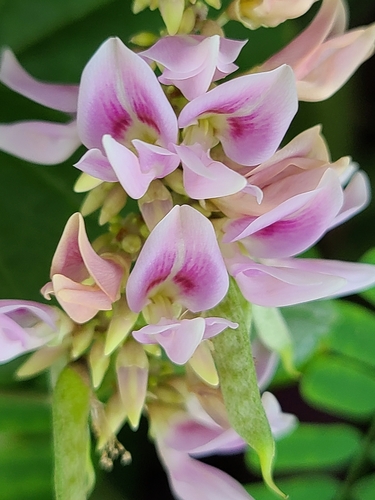
Archidendron falcatum
I. C. Nielsen
Jering

gbif · cc0
President and Fellows of Harvard College
President and Fellows of Harvard College

gbif · cc0
President and Fellows of Harvard College
President and Fellows of Harvard College

gbif · cc0
President and Fellows of Harvard College
President and Fellows of Harvard College
What to Eat
Edible parts: Leaves
The leaves are eaten.
Where to Find It
It is a tropical plant.
Asia, Malaysia, Philippines, SE Asia,
Countries: United Arab Emirates, Afghanistan, Armenia, Azerbaijan, Bangladesh, Bahrain, Brunei, Bhutan, China, Georgia, Indonesia, Israel, India, Iraq, Iran, Jordan, Japan, Kyrgyzstan, Cambodia, North Korea, South Korea, Kuwait, Kazakhstan, Laos, Lebanon, Sri Lanka, Myanmar, Mongolia, Maldives, Malaysia, Nepal, Oman, Philippines, Pakistan, Qatar, Saudi Arabia, Singapore, Syria, Thailand, Tajikistan, Timor-Leste, Turkmenistan, Turkey, Taiwan, Uzbekistan, Vietnam, Yemen
How to Identify
A small tropical tree in the Fabaceae family that grows approximately 6 m tall with a trunk diameter of around 15 cm.
Nutrition Score: 42/100
| Part | Moisture | kJ | kcal | Protein | Vit A | Vit C | Iron | Zinc |
|---|---|---|---|---|---|---|---|---|
| Leaves | 52.5 | 769 | 184 | 5 | — | — | — | — |
Notes
Also as Mimosaceae.
Names & Synonyms
Pithecellobium lobatum "sensu Fern.-Vill. non Benth."
Pithecellobium scutiferum "sensu auct., non (Blanco) BentMisapplied
References (1)
- Hoe, V. B. & Siong, K. H., 1999, The nutritional value of indigenous fruit and vegetables in Sarawak. Asia Pacific J. Clin. Nutr. 8(1):24-31 (As Pithecellobium lobatum) - caution - confusion over name.