Capparis sepiaria
L.

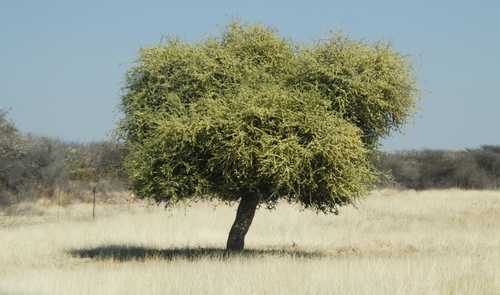
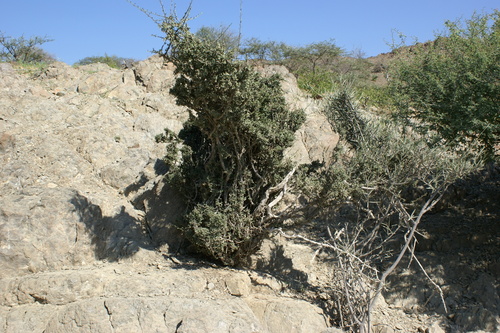
(c) Dinesh Valke, some rights reserved (CC BY-NC-ND)

(c) Marie Delport, some rights reserved (CC BY-NC)
What to Eat
Edible parts: Fruit, Seeds, Leaves
The ripe fruit are eaten fresh or used for pickles. The leaves are boiled and eaten as a cooked vegetable. The seeds are also edible.
Known Hazards
Where to Find It
It is a tropical plant. In the Himalayas it grows up to 1,000 m above sea level.
Africa, Asia, Australia, Burkina Faso, Cambodia, Cameroon, Central Africa, China, East Africa, Ethiopia, Himalayas, India, Indochina, Indonesia, Laos, Madagascar, Malaysia, Myanmar, Nepal, New Guinea, Philippines, Rwanda, SE Asia, South Africa, Southern Africa, Sri Lanka, Thailand, Uganda, Vietnam,
How to Identify
A shrub or climber. It is thorny. The leaves are oval to sword shaped. The flowers are white. They are in groups with very short stalks. The fruit is round and smooth. They are yellow to black.
How to Grow
Plants can be grown from seed.
Medicinal Uses
The fruit is considered to be aphrodisiac. The bark and the roots are used as a wound dressing. The plant is said to be alterative, febrifuge and tonic.
Other Uses
The dried branches make a good fuel.
Wikipedia
Source ↗Capparis sepiaria, also commonly called hedge caper or wild caper bush, is a shrub that has a pantropical distribution, especially in dry deciduous forests, foothills and scrub jungles.
Names & Synonyms
Cap ban-nao, Ekadulyai, Gajije, Hnget-kway-sa, Karva, Kodoch, Lamboy, Sugauk, Tsiravimbelonitra, Umukorokoombe, Voafasolahy
References (10)
- Belem, B., et al, 2007, Use of Non Wood Forest Products by local people bordering the “Parc National Kaboré Tambi”, Burkina Faso. The Journal of Transdisciplinary Environmental Studies vol. 6, no. 1 p 9
- Goode, P., 1989, Edible Plants of Uganda. FAO p 30
- Hanawa, Y., 2013, Wild edible plants used by Guiziga people of far north region of Cameroon. Int. J. Med. Arom. Plants. Vol 3 (2) : 136-143
- Le Houerou, H. N., (Ed.), 1980, Browse in Africa. The current state of knowledge. International Livestock Centre for Africa, Ethiopia. p 162
- Ruiters-Welcome, A. K., 2019, Food plants of southern Africa. Ph.D. thesis. Univ. of Johannesburg p 42
- Upreti, K., et al, 2010, Diversity and Distribution of Wild Edible Fruit Plants of Uttarakhand. Bioversity Potentials of the Himalaya. p 164
- Welcome, A. K. & Van Wyk, B.-E., 2019, An inventory and analysis of the food plants of southern Africa. South African Journal of Botany 122 (2019) 136–179
- World Checklist of Useful Plant Species 2020. Royal Botanic Gardens, Kew
- www.efloras.org Flora of China Volume 7
- Yimer, A., et al, 2021, Ethnobotanical study of wild edible plants used by Meinit Ethnic Community at Bench-Maji Zone, Southwest Ethiopia. Research Square. p 5