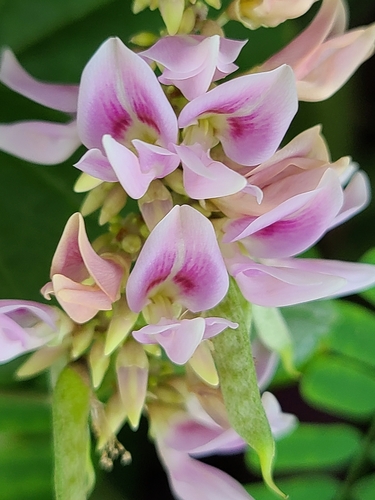
Vigna friesiorum
Verdc.

gbif · cc-by
Meise Botanic Garden
Meise Botanic Garden

gbif · cc-by
Meise Botanic Garden
Meise Botanic Garden

gbif · cc-by-nc-sa
MBG
MBG
What to Eat
Edible parts: Tuber, Root, Fruit, Pods
The root tuber is peeled and chewed for its sweet sap. The tuber, root, fruit, and pods are edible.
Where to Find It
It is a tropical plant. In Kenya it grows between 400-1,700 m altitude. It is in grassland usually on red clay.
Africa, East Africa, Ethiopia, Kenya, Tanzania, Uganda,
Countries: Angola, Burkina Faso, Burundi, Benin, Botswana, Congo (DRC), Central African Republic, Congo (Republic), Cote d'Ivoire, Cameroon, Cape Verde, Djibouti, Algeria, Egypt, Eritrea, Ethiopia, Gabon, Ghana, Gambia, Guinea, Equatorial Guinea, Guinea-Bissau, Kenya, Comoros, Liberia, Lesotho, Libya, Morocco, Madagascar, Mali, Mauritania, Mauritius, Malawi, Mozambique, Namibia, Niger, Nigeria, Rwanda, Seychelles, Sudan, Sierra Leone, Senegal, Somalia, South Sudan, Sao Tome & Principe, Eswatini, Chad, Togo, Tunisia, Tanzania, Uganda, South Africa, Zambia, Zimbabwe
How to Identify
A small erect herb. It has many branches. It grows 20-30 cm high. It grows from a narrow tuber. The tuber is 15-25 cm long by 2 cm wide. It is reddish brown on the surface. The stems are weak. The leaves have long narrow leaflets. The leaves have long leaf stalks. The leaflets are slightly hairy and do not have lobes.
How to Grow
Plants are grown from seeds.
Medicinal Uses
The root tuber is chewed for its sweet sap.
Names & Synonyms
Camee hoolaa, Olgisoyiai
Vigna friesiorum var. angustifolia Verdc.Vigna friesiorum var. ulugurensis (Harms) Verdc.Vigna ulugurensis Harms
References (3)
- Gemedo-Dalle, T., et al, 2005, Plant Biodiversity and Ethnobotany of Borana Pastoralists in Southern Oromia, Ethiopia. Economic Botany 59(1) pp. 43-65 (As Vigna friesiorum)
- Maundu, P. et al, 1999, Traditional Food Plants of Kenya. National Museum of Kenya. 288p
- Mutie, F. M., et al, 2023, Important Medicinal and Food Taxa (Orders and Families) in Kenya, Based on Three Quantitative Approaches. Plants 2023, 12, 1145