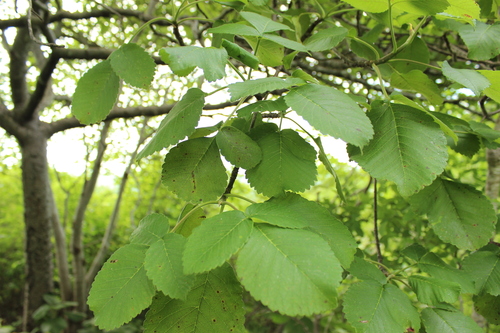
Searsia lucida
(L.) F. A. Barkley
Glossy currant, Glossy crowberry
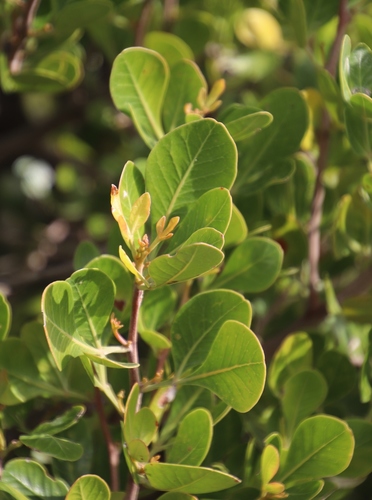
(c) Tony Rebelo, some rights reserved (CC BY-SA), uploaded by Tony Rebelo

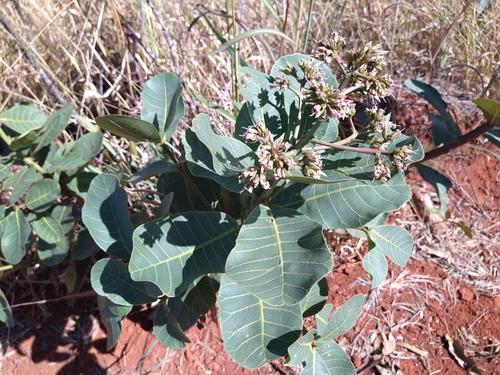
(c) Geoff Nichols, some rights reserved (CC BY-NC)

(c) Catherine Parker, some rights reserved (CC BY-NC)
What to Eat
Edible parts: Fruit
The fruit are eaten raw as a snack and also used to curdle milk, particularly favored by children.
Where to Find It
It is a subtropical plant. It grows from sea level to 2,000 m above sea level in South Africa.
Africa, Eswatini, South Africa, Southern Africa, Swaziland,
How to Identify
A shrub or small tree. It grows 2-3 m tall. It can be 5 m tall and spread 4 m across. The leaves are shiny. They have 3 leaflets. The flowers are white. The fruit are green. They become red-brown as they ripen. They are 5 mm across.
Other Uses
The wood is a source of tannins.
Wikipedia
Source ↗Searsia lucida, previously known as Rhus lucida, and commonly known as the varnished kuni-rhus (English) or blinktaaibos (Afrikaans).
Other Information
The fruit are especially eaten by children.
Names & Synonyms
Amapozi, Blinktaaibos, Inhlokoshiyane, Inhlolokotshane, Knakerbos, Taaibos
References (5)
- De Vynk, J. C., et al, 2016, Indigenous edible plant use by contemporary Khoe-San descendants of South Africa's Cape South Coast. South African Journal of Botany. 102 (2016) 60-69
- Moffett, R. O., 2007, Name changes in the Old World Rhus and recognition of Searsia (Anacardiaceae). Bothalia 37,2: 165-175 (2007)
- Ruiters-Welcome, A. K., 2019, Food plants of southern Africa. Ph.D. thesis. Univ. of Johannesburg p 16
- Shava, S., 2000, The Use of Indigenous Plants as Food by a Rural Community in the Eastern Cape: an Educational Exploration. Masters Thesis Rhodes University. p 66 (As Rhus lucida)
- Welcome, A. K. & Van Wyk, B.-E., 2019, An inventory and analysis of the food plants of southern Africa. South African Journal of Botany 122 (2019) 136–179