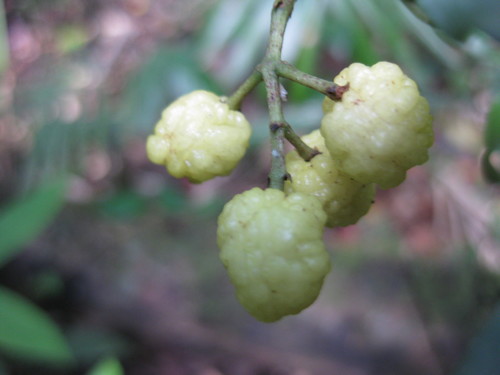
Zanthoxylum heitzii
(Aubrev. & Pellegr.) P. G. Waterman
(c) clementine_db, some rights reserved (CC BY-NC), uploaded by clementine_db

Saint Fédriche NDZAI
What to Eat
Edible parts: Fruit
The fruit is eaten.
Known Hazards
Where to Find It
It is a tropical plant. It grows in evergreen forest up to 1,200 m above sea level. It is best in well-drained soils. Seedlings need light.
Africa, Cameroon, Central Africa, Central African Republic, CAR, Congo DR, East Africa, Gabon,
How to Identify
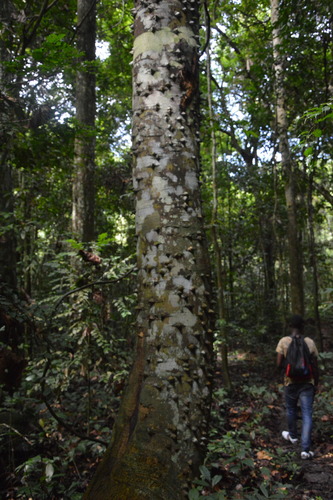
A large tree. It can grow 35 m tall. The trunk is 20 m tall. The trunk can be 1.5 m across. There are prickly processes on the trunk. These can be 9 cm long. The leaves are alternate and clustered at the ends of branches. The leaves are compound and have leaflets along the stalk with one at the end. There are 25-51 leaflets. The leaves are up to 100 cm long. The leaflets are almost opposite and without stalks. They are oval or sword shaped and 4-15 cm long by 2-5 cm wide. There are small round teeth along the edge. The flowers are of one sex. They are small and without a stalk. They are near the ends of branches and in groups 40 cm long with many flowers. They are white. The fruit is a round follicle 4 mm across. The seeds are round and 2.5 mm across and black and shiny.
How to Grow
Plants can be grown from seed. Plants grow rapidly. Seeds germinate in 25-30 days. They are best not soaked in water.
Propagation: Seed - sow in a nursery seedbed in a sunny or lightly shaded position. Germination usually takes place within 25 - 30 days of sowing the seed.
Medicinal Uses
Used in traditional medicine for malaria; demonstrated activity against some malaria larvae. Currently being researched for potential use in HIV and sickle cell disorder treatment.
Other Uses
The heartwood is pale yellow to greenish yellow; it is not clearly demarcated from the pale yellow, 1 - 2cm wide band of sapwood. The wood is lustrous; the grain usually interlocked, sometimes straight; the texture fine to moderately coarse; quartercut surfaces show a slight ribbon-like figure; freshly cut wood has a slight, pleasant scent. The wood is light in weight; soft; not very durable, being moderately resistant to fungal and termite attack but susceptible to Lyctus and marine borer attacks. It seasons normally, with only a slight risk of checking or distortion; once dry it is moderately stable in service. The wood saws and works well with ordinary machine and hand tools; planing may cause some difficulties due to interlocked grain; moulding, polishing, gluing, painting and varnishing properties are all satisfactory; screwing and nailing properties are good, with the wood holding screws well, although nails are easy to draw. It produces good veneer by slicing and rotary cutting. The wood is suitable for light construction, light flooring, joinery, interior trim, moulding, shipbuilding, furniture, cabinet work, toys, novelties, boxes, crates, turnery, veneer, plywood, hardboard and particle board. It is used locally for canoes, drums and beehives. The wood is sometimes used for fuel. The tree is sometimes retained by farmers after clearing the forest for agricultural land, to serve as a shade tree for cultivation of crops such as coffee and cocoa. A natural pioneer in its native range, it often regenerates abundantly in larger gaps in the forest and is commonly found in secondary forest.
Notes
It is used in medicine for malaria. It has been shown to kill some malaria larvae. It is also being checked for use for HIV and sickle cell disorder.
Names & Synonyms
References (2)
- Dzoyem, J. P., et al, 2013, Cytotoxic and antimicrobial activity of selected Cameroonian edible plants. Complementary and Alternative Medicine. BMC. 13:78 (As Fagara heitzii)
- World Checklist of Useful Plant Species 2020. Royal Botanic Gardens, Kew