Ficus lyrata
Warb.
Fiddle leaved fig

(c) Cerlin Ng, some rights reserved (CC BY-NC-SA)

(c) Cerlin Ng, some rights reserved (CC BY-NC-SA)
(c) Dailun Shi, some rights reserved (CC BY-NC), uploaded by Dailun Shi
What to Eat
Edible parts: Fruit
The fruit is edible.
Where to Find It
It is a Mediterranean climate plant. It grows in lowland tropical rainforest. In XTBG Yunnan.
Africa, Asia, Benin, Cameroon, Canary Is., Central America, China, Côte d'Ivoire, Cyprus, Dominican Republic, El Salvador, Gabon, Ghana, Guinea-Bissau, Indonesia, Ivory Coast, Liberia, Mediterranean*, Nigeria, SE Asia, Sierra Leone, Togo, Trinidad-Tobago, West Africa*, West Indies,
How to Identify
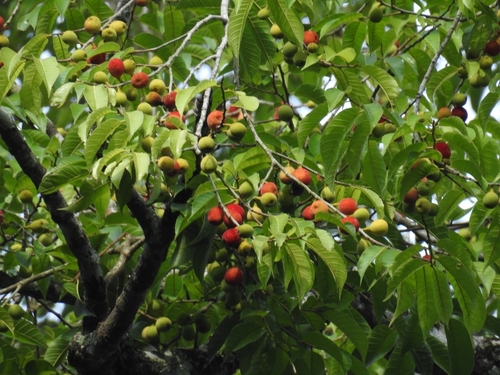
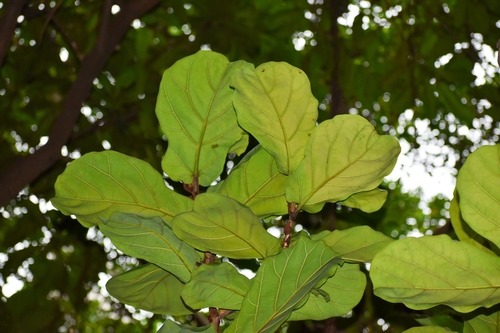
A fig tree. It grows 15 m tall. The leaves vary in shape. They are shiny and dark green and broadly oval. They are 45 cm long and 30 cm wide. They have a leathery texture and wavy edge. The fruit are green and about 3 cm across.
How to Grow
Plants can be grown by seeds. The pollinating wasp is Agaon spatulatum Wiebes.
Wikipedia
Source ↗Ficus lyrata, commonly known as the fiddle-leaf fig, banjo fig, fiddle-leaved fig tree, lyre leaf fig tree, or lyre-leaved fig tree, is a species of plant in the mulberry and fig family Moraceae. It is native to western Africa, but is cultivated around the world as an ornamental plant. It has received the Royal Horticultural Society's Award of Garden Merit.
Names & Synonyms
Pohon ara daun biola
References (4)
- http://cypruswildflowers.com
- Kew Plants of the World Online
- Sukarya, D. G., (Ed.) 2013, 3,500 Plant Species of the Botanic Gardens of Indonesia. LIPI p 286
- www.figweb.org