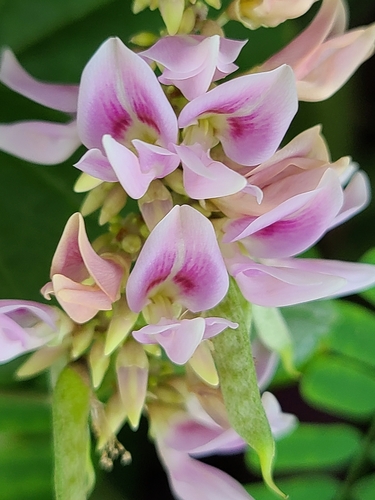
Clathrotropis macrocarpa
Ducke
Black heart, Bigfruit clathrotropis
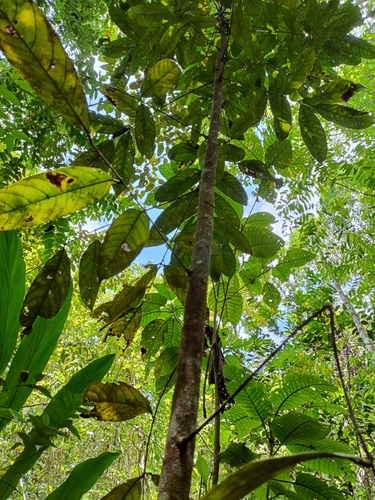
(c) patriciaigb, some rights reserved (CC BY-NC)
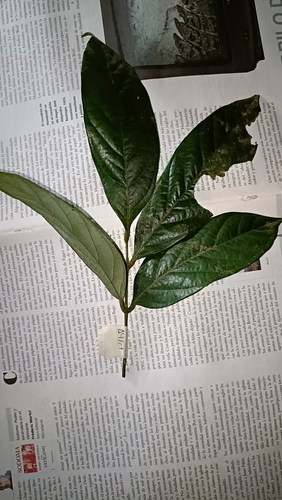
(c) patriciaigb, some rights reserved (CC BY-NC)

I. Huamantupa : Universidad Nacional San Antonio Abad de Cusco
Known Hazards
Where to Find It
It is a tropical plant.
Amazon, Brazil, Colombia, Ecuador, Guyana, South America, Venezuela,
How to Identify
A tree.
How to Grow
A plant of low elevations in the wet tropics.
Medicinal Uses
Juice from the macerated inner bark is used as an antipruritic or as a medicament for bush-yaws. The inner bark is scraped, mixed with warm water and used for washing persistent sores. The bark is boiled, and the water used as an anti-fungal or for treating athlete’s foot.
Other Uses
The leaves are commonly used to package food. It is believed that this is the leaf used to line the pits in which bati-butter (see Erisma japura) is stored. The heartwood is pinkish brown to dark brown with lighter streaks due to the prominent vessel lines; it is sharply demarcated from the thick, yellowish to brownish white sapwood. It is straight grained; not lustrous; coarse textured with a harsh feel but a waxy appearance; odourless and tasteless when seasoned. The wood is hard, heavy, tough, and strong but is not very attractive in comparison to many other tropical American woods. Detailed strength tests are lacking, but it is generally reported to be a very hard, tough strong wood and is difficult to split under vertical compression. The wood is considered only moderately difficult to work, finishes smoothly, and takes a high polish. It is moderately resistant to decay in contact with the ground and moderately resistant to subterranean termites and probably has moderate to low resistance to marine borers. The silica content, which is often associated with high resistance to attack by marine borers, is reported at only 0.01%. In Trinidad the wood is preferred for oil-derrick substructures because of its high density, hardness, and resistance to splitting. It should be well suited for heavy construction, piling in non-teredo areas, boatbuilding, bridge timbers, and other uses requiring a heavy, hard, strong wood where high resistance to decay or insects is not important.
Names & Synonyms
Aromata, Barbasco, Bizcocho, Butete-e, Cabari, Caboury, Farinero, Kabari, Kajaru, Manana, Masano, Mayaro poui, Mionqui, Tepaque, Timbo-pau, Wapokohi
References (2)
- Grandtner, M. M. & Chevrette, J., 2013, Dictionary of Trees, Volume 2: South America: Nomenclature, Taxonomy and Ecology. Academic Press p 137
- www.proyanomami.org