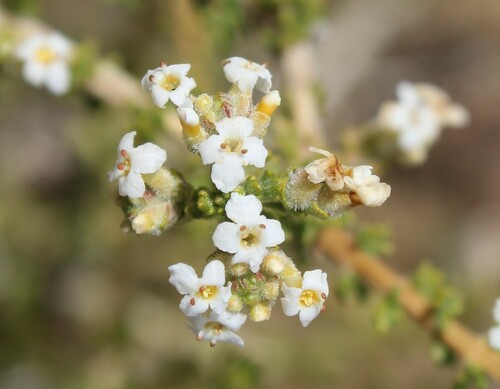
Citharexylum montevidense
(Spreng.) Moldenke
(c) E. Goossen, some rights reserved (CC BY)
(c) E. Goossen, some rights reserved (CC BY)
(c) E. Goossen, some rights reserved (CC BY)
What to Eat
Edible parts: Fruit
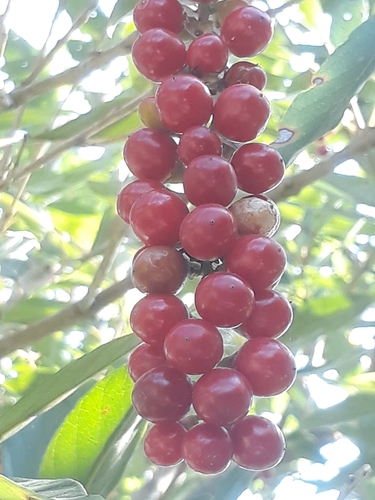
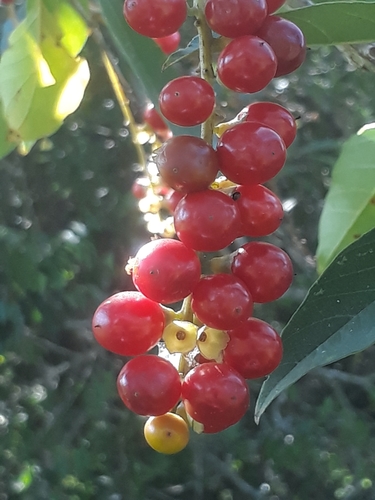
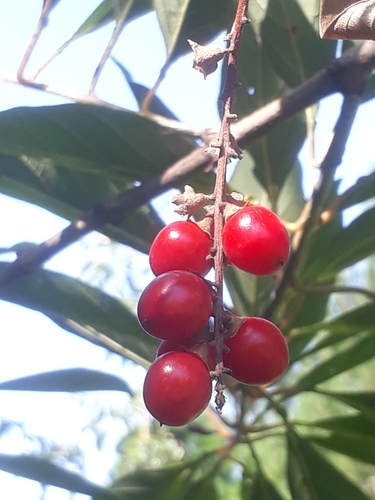
The fruit has a sweet, succulent pulp. This report does not say that the fruit is edible. The fruit is a red, globose drupe about 12mm in diameter, containing 1 - 3 seeds.
Where to Find It
It is a tropical plant. It grows in open places in deciduous forests. It suits a sunny position.
Argentina, Brazil*, Paraguay, Slovenia, South America, Uruguay,
How to Identify
A spiny tree. It grows 5-10 m tall. It loses its leaves during the year. The crown is large and open. The trunk is short and 15-25 cm across. The fruit is round and red and 12 mm across. There are 1-3 seeds.
How to Grow
Plants can be grown from fresh seeds. They germinate in 15-30 days.
Propagation: Seed - best sown as soon as it is ripe in a partially shaded position in a nursery seedbed. A germination rate of around 50% can be expected, with the seed sprouting within 15 - 30 days.
Other Uses
The wood is coarse-textured, straight-grained, moderately heavy, easy to cut, not durable. Because of its small size it is generally only used as fuel and to make charcoal. A fast-growing tree that succeeds in full sun, is easy to propagate and provides food for the native fauna; it can be used as a pioneer species when restoring native woodland.
Production
Young plants grow quickly.
Names & Synonyms
Taruma-de-espino
References (2)
- Brack, P., et al, 2020, Frutas nativas do Rio Grande do Sul, Brasil: riqueza e potencial alimentício. Native fruits of Rio Grande do Sul, Brazil: richness and potential as food. Rodriguésia 71: e0310201
- Fern, K., 2012, Tropical Species Database http://theferns.info/tropical/