Drypetes natalensis
(Harv.) Hutch.

(c) magdastlucia, some rights reserved (CC BY-NC), uploaded by magdastlucia
(c) magdastlucia, some rights reserved (CC BY-NC)
What to Eat
Edible parts: Fruit
Fruit - raw. The pulp is edible. The yellow-brown to orange, subglobose fruit is around 27mm long, 33mm in diameter.
Where to Find It
It is a tropical plant. It grows in dry evergreen forest and along rivers. It grows from sea level to 1,500 m above sea level.
Africa, East Africa, Kenya, Malawi, Mozambique, Somalia, South Africa, Southern Africa, Sudan S, Tanzania, Zimbabwe,
How to Identify
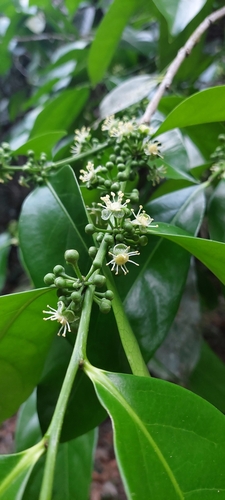
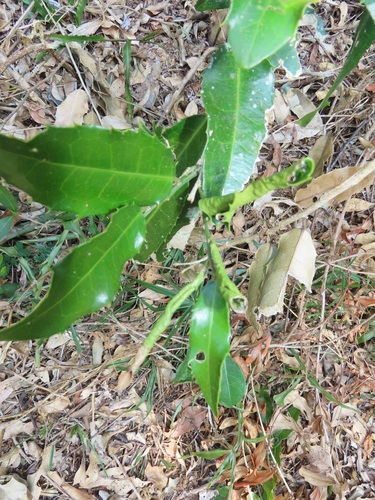
A shrub or small tree. The crown is dense and rounded. It grows 9-15 m tall. The trunk is 30 cm across. Flowers occur in the trunk and large branches. Male and female flowers are on separate plants. The fruit is a flattened round shape and 27 mm long by 33 mm across. They are yellow-brown to orange.
How to Grow
A dioecious species, both male and female forms need to be grown if fruit and seed are required.
Medicinal Uses
A decoction of the stem bark and leaves is taken to reduce fever in patients with malaria.
Other Uses
The wood is used to make wooden spoons, tool handles and beds. The wood is used for fuel and to make charcoal.
References (2)
- Fern, K., 2012, Tropical Species Database http://theferns.info/tropical/
- Lovett, J. C., et al Field Guide to the Moist Forest Trees or Tanzania. http://www.york.ac.uk/res/cepl/webpage