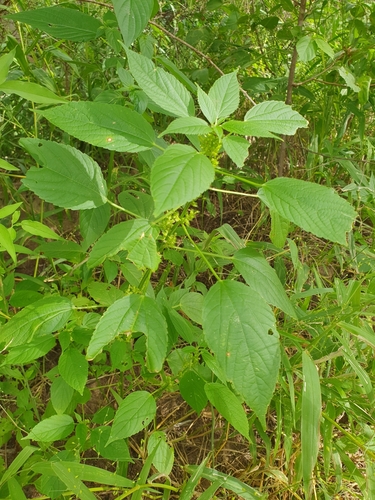
Hevea pauciflora
(Spruce ex Benth.) Mull.Arg.
Few flower rubber tree
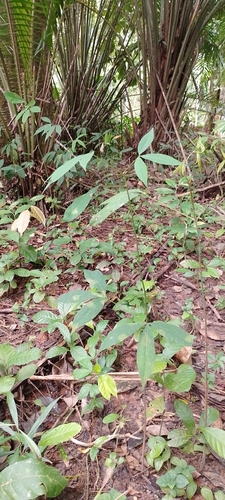
(c) plantas_bioblitz, some rights reserved (CC BY-NC)
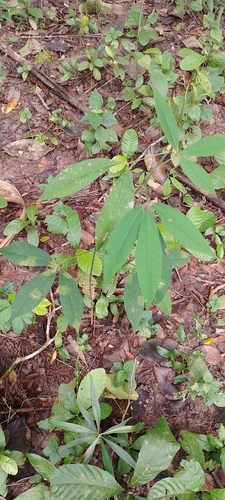
(c) plantas_bioblitz, some rights reserved (CC BY-NC)
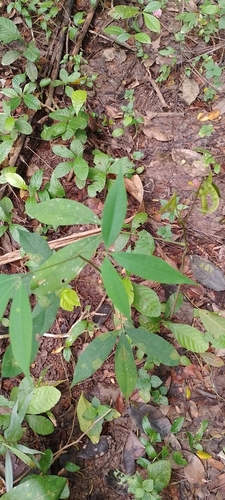
(c) plantas_bioblitz, some rights reserved (CC BY-NC)
What to Eat
Edible parts: Seeds
The seeds are cooked and eaten; in some regions they are an important food staple while in others they are only eaten during famines.
Known Hazards
Where to Find It
It is a tropical plant. It grows on rocky hillsides on well-drained non flooding soils.
Amazon, Brazil, Colombia, Guyana, Peru, South America, Suriname, Venezuela,
How to Identify
An evergreen tree in the Euphorbiaceae family growing 18 m tall, native to tropical rocky hillsides with well-drained non-flooding soils.
Medicinal Uses
The latex obtained from the tree is applied to the skin in order to suffocate parasitic botfly larvae.
Other Uses
A white latex is obtained from the tree. It is low in rubber content and high in resin.
Wikipedia
Source ↗Hevea pauciflora is a species of rubber tree in the genus Hevea, belonging to the family Euphorbiaceae. It is native to the rainforests of Venezuela, the Guyanas, northern Brazil, Colombia and Peru. It grows on slopes and high river banks where it is not seasonally inundated. H. pauciflora is a small evergreen tree growing to a height of about 18 m (60 ft). The specific epithet pauciflora is Latin for 'few-flowered'. It is sometimes tapped for rubber production but the latex is low in quality, being mixed with much resin. This tree has been used in breeding programmes, for example in Malaysia, to increase the disease resistance and improve the growth qualities of Hevea brasiliensis.
Other Information
In some places the seeds are an important food and in others only a famine food.
Names & Synonyms
Coriacea, Hati, Seringa, Seringa-itauba, Shijig, Shiringa, Shiringa maposa
References (5)
- Fern, K., 2012, Tropical Species Database http://theferns.info/tropical/
- Grandtner, M. M. & Chevrette, J., 2013, Dictionary of Trees, Volume 2: South America: Nomenclature, Taxonomy and Ecology. Academic Press p 300
- Journal of the Arnold Arboretum Vol 37. 1956, http://www.bioversitylibrary.org
- Kermath, B. M., et al, 2014, Food Plants in the Americas: A survey of the domesticated, cultivated and wild plants used for Human food in North, Central and South America and the Caribbean. On line draft. p 415 (var. coriacea)
- Roa, J. A. G. & Boada, D. S. G., 2018, Fundación para el Fortalecimiento de la Fruticultura y Plantas Alimenticias no Convencionales en Colombia.