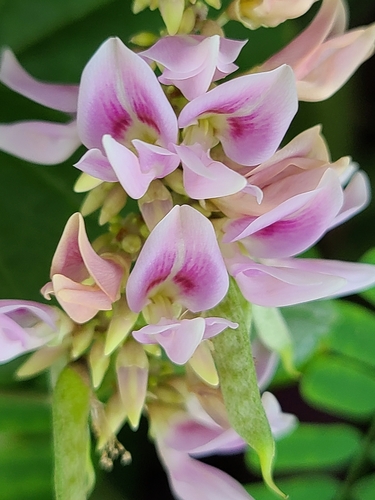
Inga mucuna
Walp.
Mucuna inga
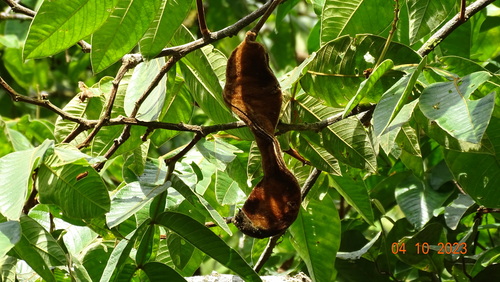
(c) Andrey Ojeda, some rights reserved (CC BY-NC), uploaded by Andrey Ojeda

Field Museum of Natural History - Botany Department | GDI 2013-2015

Rapid Reference Collection (RRC) | Field Museum of Natural History - Keller Science Action Center
What to Eat
Edible parts: Fruit
The pulp that surrounds the seeds inside the seedpod can be eaten raw or cooked. A sweet flavour. The pods are 25 - 33 cm long, 5 - 6 cm wide and 0.5 cm thick.
Where to Find It
It is a tropical plant. It grows in forest along the shore.
Central America, Colombia, Panama, South America,
How to Identify
A tree. It grows to about 10 m tall. The trunk can be 10-50 cm across. The fruit are pods 25-33 cm long and 5-6 cm wide and 0.5 cm thick.
How to Grow
Plants can be grown by seeds.
Other Uses
The wood of Inga species is generally attractive, but it has a coarse texture, is susceptible to attack by dry-wood termites and is not durable in the soil. The wood is used for fuel.
Wikipedia
Source ↗Inga mucuna is a species of plant in the family Fabaceae. It is a tree of moist tropical lowland forest growing up to 10 m tall (exceptionally 20 m) with a trunk diameter around 0.5 m. The large leaves consist of three or four pairs of leaflets with dense hairs along the edges and veins. It has been used for firewood. The large seedpods (typically around 30 cm long and 5 cm wide) contain an edible pulp. It is found in Colombia and Panama. It is threatened by habitat loss. The first description of the species was published in 1852.
Notes
Also as Mimosaceae.
Names & Synonyms
Churimo, Cuilip, Guaba, Guava peluda
References (6)
- Fern, K., 2012, Tropical Species Database http://theferns.info/tropical/
- Grandtner, M. M. & Chevrette, J., 2013, Dictionary of Trees, Volume 2: South America: Nomenclature, Taxonomy and Ecology. Academic Press p 323
- Kermath, B. M., et al, 2014, Food Plants in the Americas: A survey of the domesticated, cultivated and wild plants used for Human food in North, Central and South America and the Caribbean. On line draft. p 442
- Kew Plants of the World On line
- Roa, J. A. G. & Boada, D. S. G., 2018, Fundación para el Fortalecimiento de la Fruticultura y Plantas Alimenticias no Convencionales en Colombia.
- Uphof, J. C. Th., 1959,