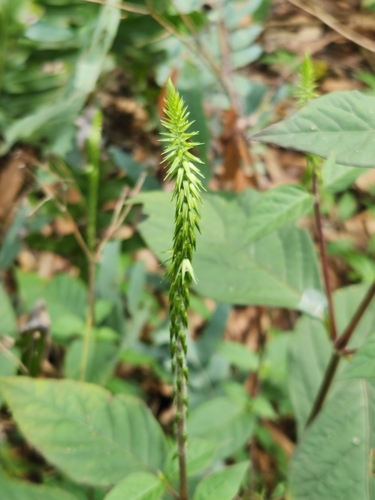
Chenopodium rubrum
L.
Red goosefoot, Hong ye li
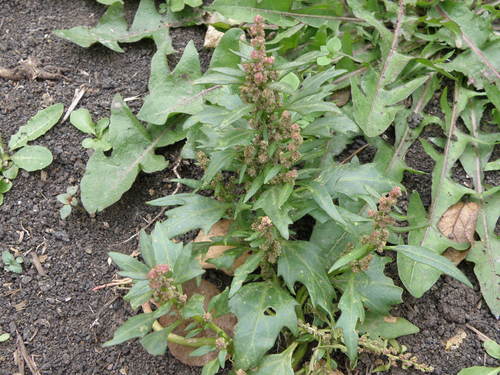
(c) Alexey P. Seregin, some rights reserved (CC BY-NC)

(c) Igor, some rights reserved (CC BY-NC)

(c) leneoa, some rights reserved (CC BY-NC)
What to Eat
Edible parts: Leaves, Seeds
Leaves - raw or cooked as a spinach[12, 46, 61, 74, 105, 177, 183]. The raw leaves should only be eaten in small quantities, see the notes above on toxicity. Seed - ground into a powder and used with cereal flours to make bread, cakes etc. The seed is small and fiddly, it should be soaked in water overnight and thoroughly rinsed before it is used in order to remove any saponins. Leaves are harsh, acrid, and rarely worthwhile. Seeds are abundant, pleasant, nutritious, and comparable to quinoa and other superior wild chenopod grains. A strong seed species and a weak leaf species.. Edible Uses & Rating: Red goosefoot provides edible leaves and seeds, though only the seeds are of high value. Leaves, even when young, tend to be acrid, mineral-heavy, and only marginally serviceable as a boiled green. Seeds, however, are excellent—nutritious, abundant, and comparable to quinoa and the best chenopods such as pitseed and slimleaf goosefoot. Red goosefoot earns a low rating for leaves but a high rating for seeds, placing it solidly among the dependable wild grains of the Great Basin and western deserts. Taste, Processing & Kitchen Notes: Leaves are frequently unpalatable. They often taste harsh, saline, and acrid, with no meaningful improvement from boiling. Texturally, they become mushy when cooked, compounding their limited culinary appeal. Their use should be considered only in survival contexts. Seeds, however, are very pleasant. When toasted, they develop a mild nutty aroma with a flavour nearly identical to quinoa. Boiling yields a soft, porridge-like texture suitable for both sweet and savoury preparations. Because the pericarp is thin and calyx remnants detach easily, seeds are simple to clean. To enhance flavour, many foragers use a combination of toasting followed by boiling to create a richer, more complex meal. Seasonality (Phenology): Red goosefoot germinates in late spring as soils warm, producing lush vegetative growth through early summer. Flowering typically occurs mid-summer, with seed maturation from late summer into autumn. In saline or wetland margins, the species may persist longer into autumn than upland chenopods. Seeds remain attached well after the plant dries, allowing harvest into early winter. Safety & Cautions (Food Use): As with all goosefoots, leaves contain oxalates and saponins; red goosefoot leaves are particularly harsh and should be consumed sparingly, if at all, even when boiled. Seeds are safe when cooked but should not be eaten in large quantities raw. Foraging in saline environments requires ensuring soils are not contaminated by industrial runoff or agricultural chemicals. Harvest & Processing Workflow: Harvest seeds by stripping dry inflorescences into a bucket or onto a cloth once the plant turns red-brown and brittle. Winnow or sieve to remove debris. Seeds may then be toasted, boiled, or ground into flour. Because the species matures over a broad window, multiple harvests from the same stand are often feasible. Leaves are not recommended for culinary use but may be gathered very young if necessary and boiled thoroughly. Cultivar / Selection Notes: No cultivars exist. Seed size and pigmentation vary among populations, but all known forms exhibit similar culinary performance. Look-Alikes & Confusion Risks: Red goosefoot may resemble young Chenopodium album or C. berlandieri, but its deeply toothed leaves, smooth surfaces, and strong red pigmentation in mature plants distinguish it reliably. Its affinity for saline or wet soils is also characteristic. It should not be confused with the strongly scented Dysphania species, which are resinous and glandular rather than smooth and leathery. Traditional / Indigenous Use Summary: The Goshiute Indians of Utah and Nevada used red goosefoot seeds as porridge and likely incorporated them into broader seasonal seed-gathering traditions. While documentation is limited compared to other species, its ecological abundance and high seed quality indicate that it contributed meaningfully to traditional subsistence strategies in the Great Basin and interior West. Leaves appear to have had little or no traditional use.
Known Hazards
Where to Find It
It is a temperate plant. It grows on lightly salty-alkaline sites, It is resistant to drought and frost.
Asia, Australia, Britain, China, Europe*, Ireland, Luxembourg, North America, USA, Yugoslavia,
How to Identify
An annual herb 30-80 cm tall. The stem is erect and red. The leaves are triangle shaped. They are large and have blunt lobes. There is a notch near the tip. The flowers are erect spikes.
How to Grow
An easily grown plant, succeeding in most soils but disliking shade. it prefers a moderately fertile soil. A dependable, high-quality seed producer found primarily in saline or seasonally wet environments. While the leaves are generally unpalatable and of low value, the seeds are excellent—flavourful, nutritious, and easy to prepare. For foragers seeking wild grains in the Great Basin or western valleys, red goosefoot remains one of the most valuable Chenopodium species. Growing Conditions: This species thrives in open, moist, or saline soils—salt flats, lake edges, stream margins, alkaline basins, and disturbed wet ground. It tolerates high mineral loads, seasonal flooding, evaporation-driven salinity, and fluctuating moisture regimes. In upland areas, it may inhabit disturbed sites with temporary moisture but is most characteristic of low valley bottoms and saline basins. Habitat & Range: Red goosefoot is native across western North America into the northern United States and Canada. It is most common in the Great Basin, Rocky Mountain foothills, saline valleys, playas, and marsh edges. In the Southwest, good populations occur where standing water evaporates seasonally, concentrating salts and minerals. Its range extends into higher latitudes and cooler climates where suitable moist ground is available. Size & Landscape Performance: Plants typically reach heights of 20–60 cm, with taller individuals appearing in nutrient-rich or seasonally wet soils. The species is not typically cultivated ornamentally, though its red pigmentation can provide attractive colouration in wild gardens. In ecological plantings, it functions as a pioneer species that stabilises disturbed soils and produces substantial biomass and seed. Pests & Problems: Red goosefoot experiences minimal pest pressure in arid regions. Excess moisture can encourage fungal spotting on leaves, though this is primarily cosmetic. Seed predation is the most notable concern but rarely diminishes the abundance available for human foragers. Cultivar / Selection Notes: No cultivars exist. Seed size and pigmentation vary among populations, but all known forms exhibit similar culinary performance. Identification & Habit: Red goosefoot grows as an erect, sometimes branched annual reaching 20 to 60 cm tall. Stems may be green or flushed red, especially in sun-exposed, mineral-rich sites. Leaves are hairless, often thick or leathery, usually triangular, rhombic, or lanceolate, and deeply toothed or lobed. Unlike many Chenopodium species, the leaf surfaces lack the typical mealy or dusty coating, appearing smooth and sometimes glossy. Plants frequently display red pigmentation across stems and leaves as they mature, contributing to the common name. Flowers are small and green, aggregated in dense clusters along upper stems. As seeds mature in late season, the plant shifts from green to red and eventually brown, becoming brittle while retaining large quantities of readily gathered seed.
Propagation: Sow seed in spring directly in situ. Most of the seed typically germinates within a few days of sowing.
Medicinal Uses
None known.
Other Uses
Gold and green dyes can be obtained from the whole plant. The seeds are eaten by granivorous birds and small mammals, supporting late-season wildlife. Dense seed clusters also provide habitat for invertebrates. As a fast-growing pioneer species, red goosefoot contributes to soil nutrient cycling and stabilisation in saline or disturbed ecosystems.
Wikipedia
Source ↗Annual herb growing 0.6 m tall by 0.3 m wide, hardy to UK zone 4. Wind-pollinated hermaphroditic flowers bloom July to October with seed ripening August to October. Adapts to light sandy, medium loamy, and heavy clay soils at mildly acid to basic pH levels. Requires full sun and tolerates both dry and moist soil conditions.
Notes
There are about 100-150-250 Chenopodium species. They are mostly in temperate regions. Also put in the family Chenopodiaceae.
Names & Synonyms
Chenopodium rubrum L. is a synonym of Oxybasis rubra
References (8)
- Beckstrom-Sternberg, Stephen M., and James A. Duke. "The Foodplant Database." http://probe.nalusda.gov:8300/cgi-bin/browse/foodplantdb.(ACEDB version 4.0 - data version July 1994)
- Bodkin, F., 1991, Encyclopedia Botanica. Cornstalk publishing, p 250
- INFOODSUpdatedFGU-list.xls
- Irving, M., 2009, The Forager Handbook, A Guide to the Edible Plants of Britain. Ebury Press p 191
- Michael, P., 2007, Edible Wild Plants and Herbs. Grub Street. London. p 101
- Plants for a Future database, The Field, Penpol, Lostwithiel, Cornwall, PL22 0NG, UK. http://www.scs.leeds.ac.uk/pfaf/
- Sp. pl. 1:218. 1753
- Zhu Gelin (Chu Ge-ling); Steven E. Clemants, CHENOPODIACEAE [Draft], Flora of China