Salacia sessiliflora
Hand.Mazz.
CelastraceaeFruit

gbif · cc-by-nc-sa
GBIF
GBIF

gbif · cc-by-nc-sa
MBG
MBG

gbif · cc-by-nc-sa
MBG
MBG
What to Eat
Edible parts: Fruit
Fruit - raw. The pulp surrounding the seeds is slightly sweet. The orange-yellow to orange-red, globose fruit is 20 - 45mm in diameter, containing 3 - 4 seeds.
Where to Find It
It is a tropical plant. It grows in mountains between 600-1,600 m above sea level. In Yunnan.
Asia, China,
Countries: United Arab Emirates, Afghanistan, Armenia, Azerbaijan, Bangladesh, Bahrain, Brunei, Bhutan, China, Georgia, Indonesia, Israel, India, Iraq, Iran, Jordan, Japan, Kyrgyzstan, Cambodia, North Korea, South Korea, Kuwait, Kazakhstan, Laos, Lebanon, Sri Lanka, Myanmar, Mongolia, Maldives, Malaysia, Nepal, Oman, Philippines, Pakistan, Qatar, Saudi Arabia, Singapore, Syria, Thailand, Tajikistan, Timor-Leste, Turkmenistan, Turkey, Taiwan, Uzbekistan, Vietnam, Yemen
How to Identify
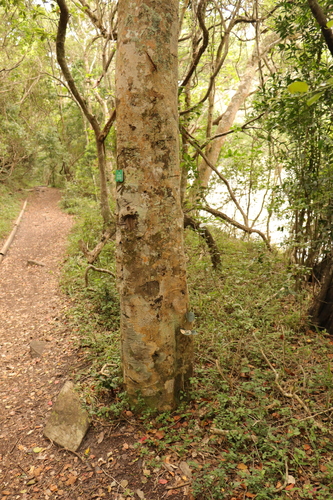
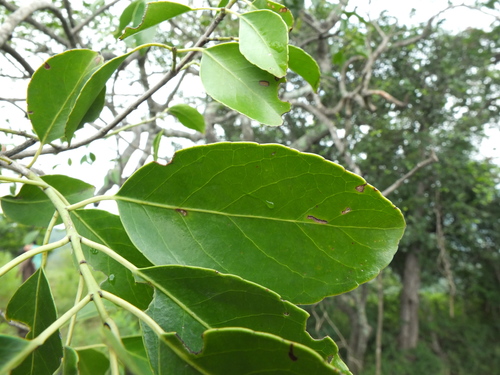
A shrub. It grows 4 m tall. The young branches are dark grey, The leaves are narrowly oblong and 10-15 cm long by 4-5 cm wide. They are leathery and shiny. The fruit are orange to red and round. They are 2-5 cm across and contain 3-4 seeds. The flowers are light green and they occur as small numbers in a group. The fruit is round and orange to red. They are 2-3 cm across. There are 3-4 seeds. The fruit are sweet.
Names & Synonyms
A ka la ma a bo
References (3)
- Fern, K., 2012, Tropical Species Database http://theferns.info/tropical/
- Flora of China.
- Luo, B., et al, 2019, Wild edible plants collected by Hani from terraced rice paddy agroecosystem in Honghe Prefecture, Yunnan, China. Journal of Ethnobiology and Ethnomedicine 15:56