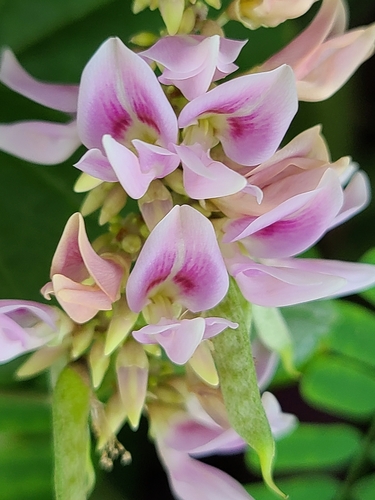
Aganope thyrsiflora
(Benth.) Polhill
(c) Vinayaraj, some rights reserved (CC BY-SA)
(c) Vinayaraj, some rights reserved (CC BY-SA)
(c) Vinayaraj, some rights reserved (CC BY-SA)
What to Eat
Edible parts: Leaves, Vegetable
Young leaves are boiled and eaten as a vegetable, either strained and cooked, fried, or used in chutney.
Known Hazards
Where to Find It
It is a tropical plant. It grows by streams in mountains usually at low elevations but can be up to 2,000 m in Yunnan. It occurs in the Western Ghats in India.
Asia, Cambodia, China, India, Indochina, Laos, Malaysia, Myanmar, Northeastern India, Papua New Guinea, PNG, Philippines, SE Asia, Thailand, Vietnam,
How to Identify
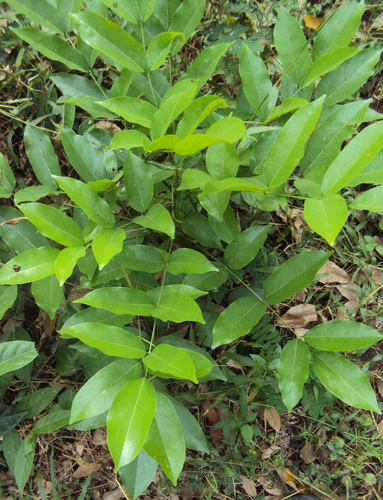
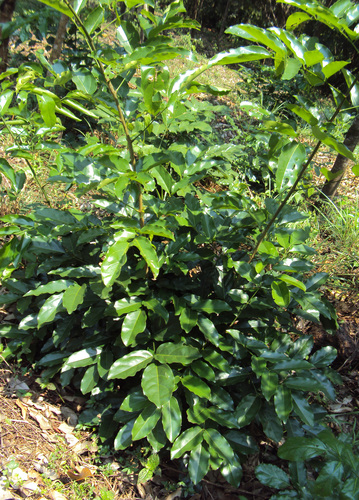
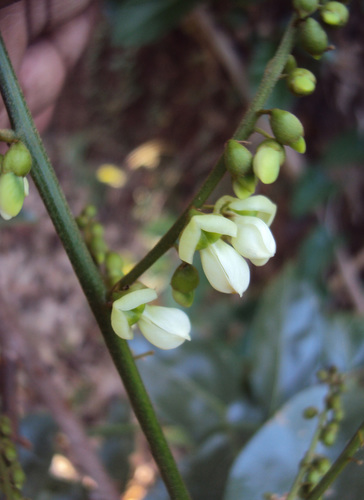
A woody creeper or climbing shrub. The leaves have 5-9 leaflets. The leaves are oblong and 10-15 cm long by 4-7 cm wide. Flowering shoots are 12-35 cm long. The flowers are 8 mm across. The pods are 5-10 cm long by 3-4 cm wide. They contain 1-3 seeds.
Medicinal Uses
The boiled and strained leaf preparation is used as a vegetable.
Other Uses
The plant contains rotenone, which is widely used as an insecticide. Rotenone is effective against a range of horticultural pests, such as aphids and caterpillars, and also against external body parasites like ticks, lice, fleas and flies. It is reported to be ineffective against bedbugs, cockroaches, scale insects and red spiders.. The rotenone can be found in various parts of the plant, but is generally most abundant in the bark, especially of the roots. The bark can be dried and powdered for use as an insecticidal dust.
Wikipedia
Source ↗Aganope thyrsiflora is a liana which shows the characters of a shrub when small. It is found in most of the tropical Asian countries.
Names & Synonyms
Hui-hu, Huihu
References (3)
- Gangte, H. E., et al, 2013, Wild Edible Plants used by the Zou Tribe in Manipur, India. International Journal of Scientific and Research Publications, Volume 3, Issue 5 (As Derris wallichii)
- Kar, A., et al, 2013, Wild Edible Plant Resources used by the Mizos of Mizoram, India. Kathmandu University Journal of Science, Engineering and Technology. Vol. 9, No. 1, July, 2013, 106-126 (As Derris thyrsiflora)
- Konsam, S., et al, 2016, Assessment of wild leafy vegetables traditionally consumed by the ethnic communities of Manipur, northeast India. Journal of Ethnobiology and Ethnomedicine, 12:9 (As Derris wallichii)