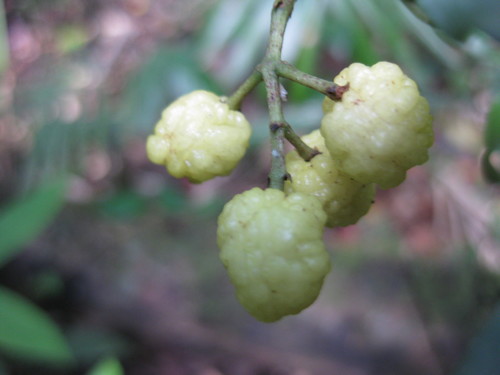
Glycosmis lucida
Wall. ex C. C. Huang
RutaceaeFruit

gbif · cc-by
Royal Botanic Gardens, Kew
Royal Botanic Gardens, Kew

gbif · cc-by
Royal Botanic Gardens, Kew
Royal Botanic Gardens, Kew
What to Eat
Edible parts: Fruit
The ripe fruit are eaten fresh.
Where to Find It
It is a tropical plant. It grows in mountain woods between 900-1,400 m above sea level.
Asia, Bhutan, China, Himalayas, India, Myanmar, Northeastern India, SE Asia,
Countries: United Arab Emirates, Afghanistan, Armenia, Azerbaijan, Bangladesh, Bahrain, Brunei, Bhutan, China, Georgia, Indonesia, Israel, India, Iraq, Iran, Jordan, Japan, Kyrgyzstan, Cambodia, North Korea, South Korea, Kuwait, Kazakhstan, Laos, Lebanon, Sri Lanka, Myanmar, Mongolia, Maldives, Malaysia, Nepal, Oman, Philippines, Pakistan, Qatar, Saudi Arabia, Singapore, Syria, Thailand, Tajikistan, Timor-Leste, Turkmenistan, Turkey, Taiwan, Uzbekistan, Vietnam, Yemen
How to Identify
A small tree. It grows 3-5 m tall. The leaves have 3 to 5 leaflets. The leaflets are oblong and 7-18 cm long by 3-6 cm wide. The flowers can be in the axils of leaves or at the end of branches. The fruit are oval and orange. They are 1 cm wide. There is one seed.
Names & Synonyms
Thei-sam-tawk
Glycosmis cymosa (Kurz) J. Narayanaswami ex TanakaGlycosmis oxyphylla Wall.Glycosmis tetraphylla Wallich ex NarayanGlycosmis yunnanensis C. C. Huang
References (1)
- Kar, A., et al, 2013, Wild Edible Plant Resources used by the Mizos of Mizoram, India. Kathmandu University Journal of Science, Engineering and Technology. Vol. 9, No. 1, July, 2013, 106-126 (As Glycosmis cymosa)