Acacia verniciflua
A. Cunn.
Varnish wattle
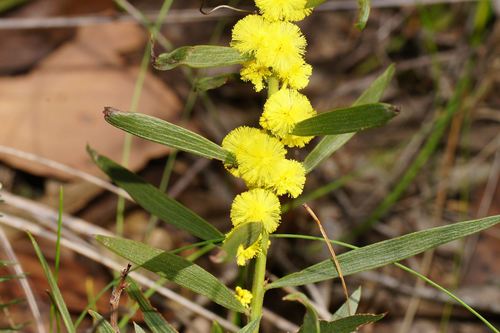
(c) Reiner Richter, some rights reserved (CC BY-NC-SA), uploaded by Reiner Richter
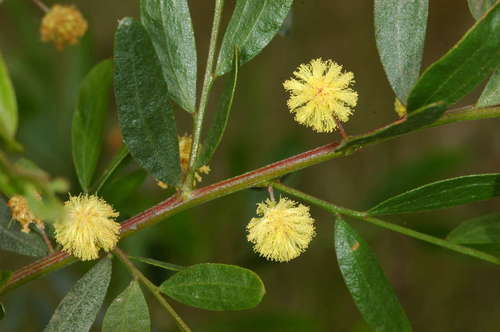
(c) Chris Lindorff, some rights reserved (CC BY), uploaded by Chris Lindorff
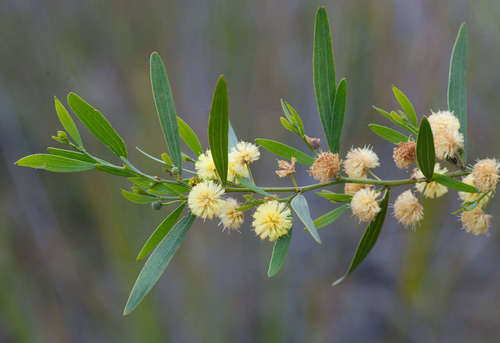
(c) Chris Clarke, some rights reserved (CC BY), uploaded by Chris Clarke
What to Eat
Edible parts: Pods, Seeds
The pods and seeds are edible.
Where to Find It
It is a temperate plant. Arboretum Tasmania.
Australia*, Tasmania,
How to Identify
A shrub or small tree. It grows 5 m tall. There are prickles along the stem. The leaves are twice divided and there are 8-18 pairs of pinnae. There are up to 50 pairs of pinnules on each pinnae. The flowers are yellow. They are in large clusters at the ends of branches. The pods are flattened.
Wikipedia
Source ↗Acacia verniciflua, commonly known as varnish wattle, is a shrub or small tree species that is endemic to Australia. The species occurs in dry sclerophyll forest in South Australia, Victoria, New South Wales and Queensland. It is often found growing alongside Eucalyptus obliqua where it can dominate the understory. A. verniciflua has an erect or spreading habit, growing to between 1 and 6 metres high. The phyllodes are often sticky and lustrous and vary in length, width and shape. The globular pale-yellow flowerheads appear in the leaf axils from July to November, followed by seedpods that are up to 10 cm long and unconstricted. They contain shiny black seeds. Three forms identified in the Flora of Victoria (1996) have since been assigned to other species as follows: A. verniciflua (Bacchus Marsh variant) - Acacia rostriformis A. verniciflua (Casterton variant) - Acacia exudans A. verniciflua (Southern variant) - Acacia leprosa var. graveolens
Names & Synonyms
References (2)
- www.fsd.monash.edu.au/files/bethgottpamphley_po.pdf
- Bushfoods Magazine No. 4