Sorbus decora
(Sarg.) Schneid.
Showny mountain ash

(c) JR P, some rights reserved (CC BY-NC)
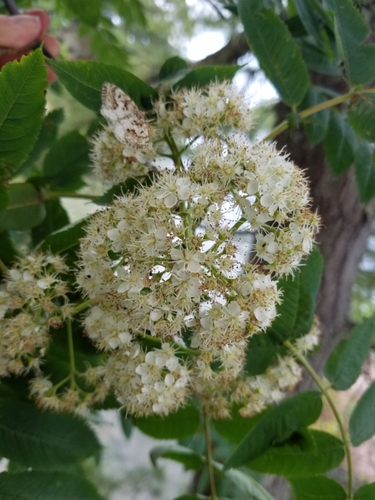
(c) Sarah Johnson, some rights reserved (CC BY), uploaded by Sarah Johnson
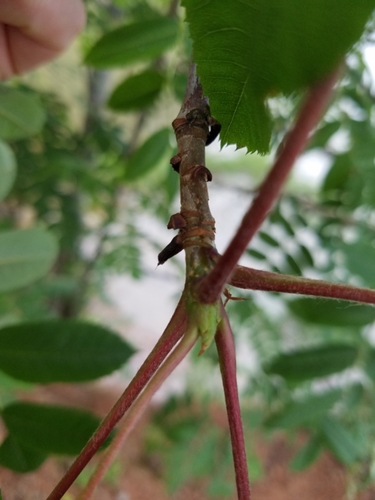
(c) Sarah Johnson, some rights reserved (CC BY), uploaded by Sarah Johnson
What to Eat
Edible parts: Fruit
The fruit can be eaten raw or cooked in preserves, and the flavour is best after a frost. The fruits measure 7–10mm across and are borne in dense clusters.
Known Hazards
Where to Find It
It is a cool temperate plant. It is hardy to hardiness zone 2.
Canada, North America, Slovenia, USA,
How to Identify
A tree that loses its leaves. It grows 10 m tall. The fruit can be 1 cm across. They are produced in dense clusters. They are orange-red.
How to Grow
Propagation: Seed is best sown as soon as it is ripe in a cold frame. Where seed is plentiful, it can be sown in an outdoor seedbed. Stored seed benefits from 2 weeks of warm stratification followed by 14–16 weeks of cold stratification, so sow as early in the year as possible. Prick out seedlings into individual pots once large enough to handle. Top-growth is very slow in the first year or two as the plant focuses on root development. Keep seedlings in pots in a cold frame through their first winter, then plant out into permanent positions in late spring.
Medicinal Uses
A decoction of the inner bark, taken from the base of the stem, has been used as both a wash and a poultice in the treatment of rheumatism, and can be taken internally to treat backache. A decoction of the peeled stems has also been drunk for backache relief.
Other Uses
This species tolerates exposed conditions and poor soils, making it suitable as a pioneer plant in re-afforestation schemes where it can establish conditions favourable for other woodland trees. The wood is close-grained, soft, and moderately light with little strength, and holds no commercial value.
Wikipedia
Source ↗Sorbus decora, commonly known as the northern mountain ash, showy mountain-ash, Greenland mountain-ash, and dogberry, is a species of deciduous shrub or very small tree native to northeastern North America.
Notes
They have health benefits.
References (3)
- Harris, C.S. et al, 2014, Investigating Wild Berries as a Dietary Approach to Reducing the Formation of Advanced Glycation Endproducts: Chemical Correlates of In Vitro Antiglycation Activity. Plant Foods Hum Nutr 69:71–77
- http://www.botanic-gardens-ljubljana.com/en/plants
- Kermath, B. M., et al, 2014, Food Plants in the Americas: A survey of the domesticated, cultivated and wild plants used for Human food in North, Central and South America and the Caribbean. On line draft. p 829
More from Rosaceae


