Consolea moniliformis
(L.) A. Berger

(c) Katharina Geiß, some rights reserved (CC BY-NC), uploaded by Katharina Geiß
(c) William Cinea, some rights reserved (CC BY-NC)
What to Eat
Edible parts: Fruit
The fruit is eaten.
Where to Find It
It is a tropical plant. In Puerto Rico it grows from sea level up to 200 m above sea level.
Dominican Republic, Haiti, Puerto Rico, West Indies,
How to Identify
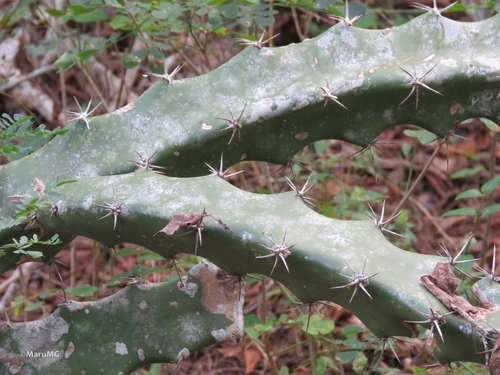
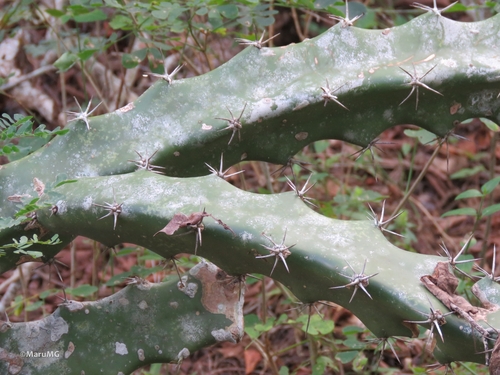
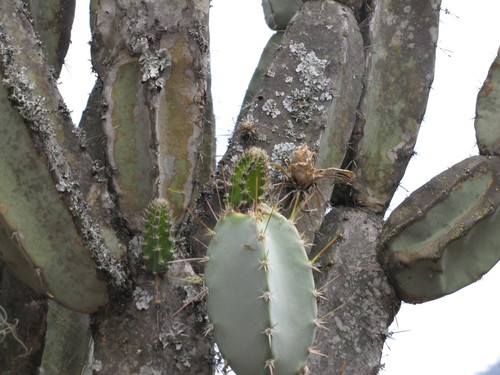
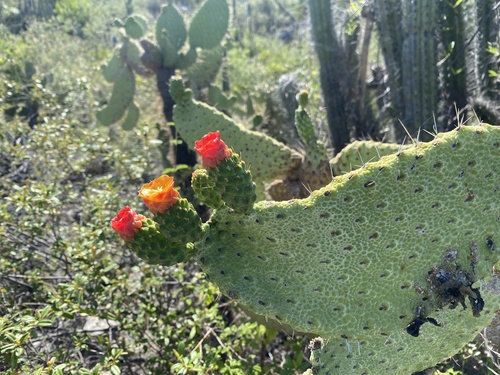
A tree like cactus. It can be 5-7 m tall. It has a single, erect, round spiny trunk. There are oblong, flattened spiny pads or joints. The leaves are replaced by clusters or sharp slender spines. The flowers occur singly and erect on the edges of the pads. The fruit is pear shaped and spiny. It is green or red and 6 cm long.
Wikipedia
Source ↗Consolea moniliformis is a species of cactus that is native to the Greater Antilles, on Cuba, Hispaniola (in the Dominican Republic and Haiti), and Puerto Rico (on the islands of Mona, Culebra and Desecheo). The species forms small shrubs, with vividly green falciform pads and is often growing near the coast. On Hispaniola it is often confused with Consolea testudinis-crus a species that forms large tree-like plants with bluish-grey pads, in Puerto Rico it is at times confused with Consolea rubescens.
Names & Synonyms
Alpargata
References (1)
- Little, E. L., et al, 1974, Trees of Puerto Rico and the Virgin Islands. USDA Handbook 449. Forestry Service. p 602 (As Opuntia moniliformis)