Acrotriche aggregata
R. Br.
Tall groundberry
(c) Alan McArthur, some rights reserved (CC BY-NC), uploaded by Alan McArthur
(c) Pete Woodall, some rights reserved (CC BY-NC), uploaded by Pete Woodall
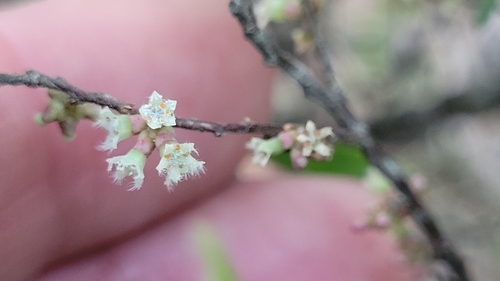
(c) Stephen Csurhes, some rights reserved (CC BY-NC), uploaded by Stephen Csurhes
What to Eat
Edible parts: Berries, Fruit
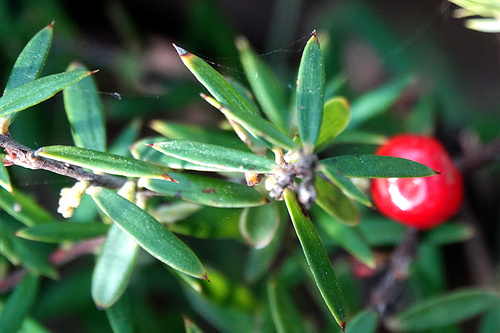
Fruit - raw. An acid flavour. The succulent, red fruit is up to 7mm in diameter. The red, globular fruit is around 4mm in diameter.
Where to Find It
It is a temperate plant. A plant native to New South Wales in Australia. It grows in the rainforest. It can also occur in drier places. It prefers light to medium soils. It will grow on sandy infertile soils. They need to be well drained. It needs slight shade but will grown in an open sunny position. It is drought resistant and can withstand slight frosts.
Australia*,
How to Identify
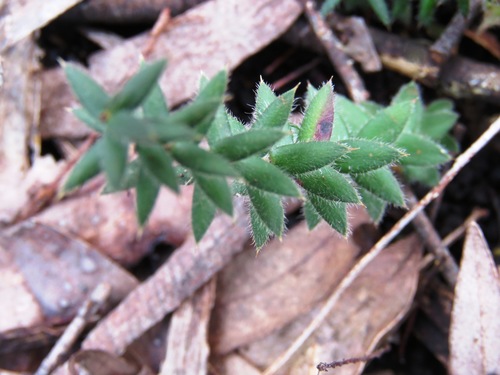
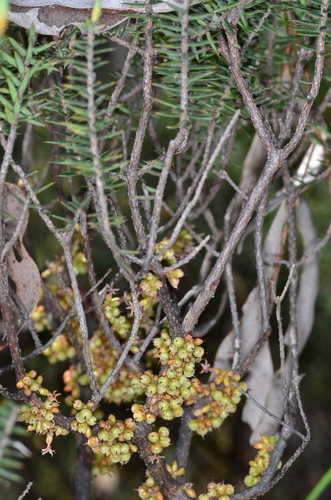
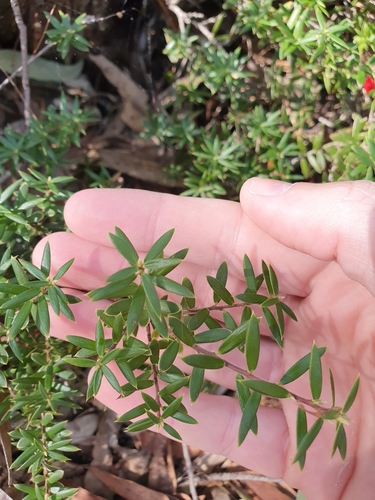
An evergreen shrub. It grows to 2 m high and spreads 1.5-2 m. The stem is erect and branched. The leaves are oblong and get more narrow towards the ends. They are 1-3 cm long. The tops of the leaves are without hairs but the underside is more pale with a bluish colour. The tips of the leaves are sharp. The flowers are small (o.3 cm long) and green. They are like tubes. They occur in short spikes in the angles where leaves join. They are usually on older wood. The fruit are pea sized about 0.6 cm across. They are almost round. As they ripen they turn from white to red. They are shiny and bright red. There is one seed inside. The flesh is edible.
How to Grow
It is grown by cuttings.
Medicinal Uses
None known.
Other Uses
None known.
Wikipedia
Source ↗Acrotriche aggregata, commonly known as red cluster heath, tall acrotriche or tall groundberry is a species of flowering plant in the family Ericaceae and is endemic to eastern Australia. It is an erect, spreading shrub, with elliptic to egg-shaped leaves, and spikes of tube-shaped, pale green, cream-coloured or white flowers, and succulent red drupes.
Production
Fruit are produced March to July. Fruit can ripen almost any time fo the year.
Notes
There are 14 Acrotriche species. They are in Australia. There are 4,050 species in the Ericaceae. Previously some of these were in the Ampetraceae, Epacridaceae, Monotropaceae and Pyrolaceae.
References (12)
- Bodkin, F., 1991, Encyclopedia Botanica. Cornstalk publishing, p 47
- Cooper W & Cooper W T, 1994, Fruits of the Rain Forest. RD Press p 20
- Cooper, W. and Cooper, W., 2004, Fruits of the Australian Tropical Rainforest. Nokomis Editions, Victoria, Australia. p 164
- Elliot, W.R., & Jones, D.L., 1982, Encyclopedia of Australian Plants suitable for cultivation. Vol 2. Lothian. p 144
- Haslam, S., 2004, Noosa's Native Plants. Noosa Integrated Catchment Assn. Inc. p 221
- Jackes, B.R., 2001, Plants of the Tropics. Rainforest to Heath. An Identification Guide. James Cook University. p 51
- Low, T., 1991, Wild Food Plants of Australia. Australian Nature FieldGuide, Angus & Robertson. p 131
- Low, T., 1992, Bush Tucker. Australia’s Wild Food Harvest. Angus & Robertson. p 42
- Melzer, R. & Plumb, J., 2011, Plants of Capricornia. Belgamba, Rockhampton. p 109
- Ryan, M. (Ed.), 2003, Wild Plants of Greater Brisbane. Queensland Museum. p 123
- Steenbeeke, Greg as part of the Plants Directory project. List of plant species from northern NSW that may be used as food plants p 3
- Williams, J.B., Harden, G.J., and McDonald, W.J.F., 1984, Trees and shrubs in rainforests of New South Wales and Southern Queensland. Univ. of New England, Armidale. p 87