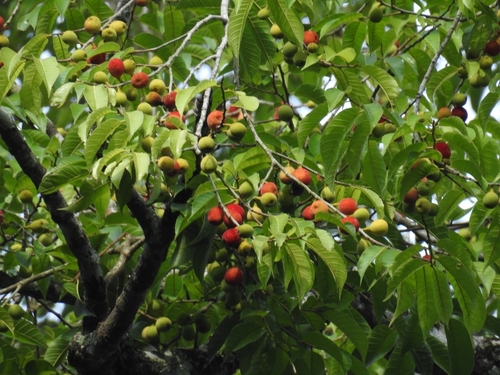
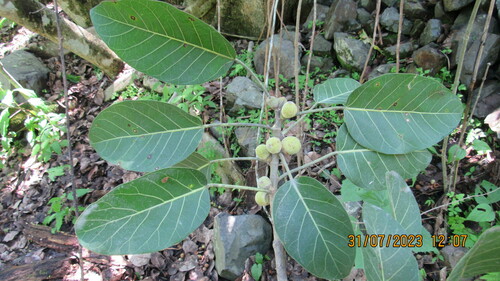
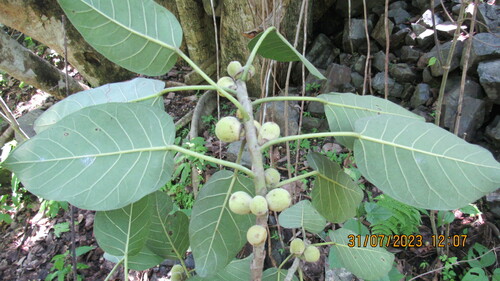
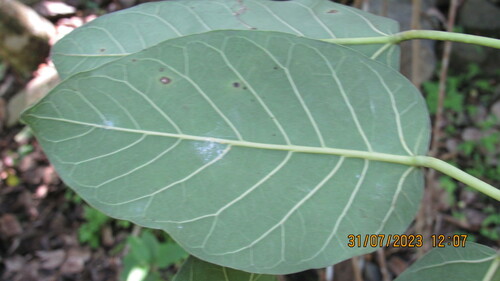
Ficus membranacea
C. Wright
Membranaceus fig
MoraceaeFruit
iNaturalist · cc-by
(c) Ulises Pinedo, some rights reserved (CC BY)
(c) Ulises Pinedo, some rights reserved (CC BY)
iNaturalist · cc-by
(c) Ulises Pinedo, some rights reserved (CC BY)
(c) Ulises Pinedo, some rights reserved (CC BY)
iNaturalist · cc-by
(c) Ulises Pinedo, some rights reserved (CC BY)
(c) Ulises Pinedo, some rights reserved (CC BY)
What to Eat
Edible parts: Fruit
The fruit is eaten.
Where to Find It
It is a tropical plant.
Central America, Colombia, Cuba, Ecuador, Jamaica, Mexico, Peru, West Indies,
Countries: Antigua & Barbuda, Barbados, Bahamas, Belize, Colombia, Costa Rica, Cuba, Dominica, Dominican Republic, Ecuador, Grenada, Guatemala, Honduras, Haiti, Jamaica, St Kitts & Nevis, St Lucia, Mexico, Nicaragua, Panama, Peru, Puerto Rico, El Salvador, Trinidad & Tobago, St Vincent
How to Identify
A tropical fig tree that produces edible fruit. It belongs to the Moraceae family and is found in tropical regions.
Wikipedia
Source ↗Ficus membranacea is a species of flowering plant in the family Moraceae, commonly known as amate. It is a tree native to the tropical Americas, including northern, central, and southwestern Mexico, Cuba, Jamaica, Colombia, Ecuador, and Peru. It is a hemiepiphytic tree which grows 10–30 meters tall. It grows in tropical deciduous forests, gallery forests, and secondary vegetation from 25 to 2,000 meters elevation.
Names & Synonyms
Ficus harrisii Warb.Ficus jonesii Standl.Ficus meizonochlamys Rossberg
References (2)
- Kew Plants of the World Online
- Reis, S. V. and Lipp, F. L., 1982, New Plant Sources for Drugs and Foods from the New York Botanical Garden herbarium. Harvard. p 41