Alchornea scandens
(Lour.) Mull.Arg.
Burny vine
iNaturalist · cc-by-nc
(c) rejen, some rights reserved (CC BY-NC)
(c) rejen, some rights reserved (CC BY-NC)
iNaturalist · cc-by-nc
(c) rejen, some rights reserved (CC BY-NC)
(c) rejen, some rights reserved (CC BY-NC)
iNaturalist · cc-by-nc
(c) rejen, some rights reserved (CC BY-NC)
(c) rejen, some rights reserved (CC BY-NC)
What to Eat
Edible parts: Fruit, Seeds
Both the fruit and seeds are eaten.
Where to Find It
It is a tropical plant. It grows in Hainan in China.
Asia, Australia, China, Malaysia, Papua New Guinea, PNG, Philippines, SE Asia, Taiwan,
Countries: United Arab Emirates, Afghanistan, Armenia, Australia, Azerbaijan, Bangladesh, Bahrain, Brunei, Bhutan, China, Georgia, Indonesia, Israel, India, Iraq, Iran, Jordan, Japan, Kyrgyzstan, Cambodia, North Korea, South Korea, Kuwait, Kazakhstan, Laos, Lebanon, Sri Lanka, Myanmar, Mongolia, Maldives, Malaysia, Nepal, Oman, Papua New Guinea, Philippines, Pakistan, Qatar, Saudi Arabia, Singapore, Syria, Thailand, Tajikistan, Timor-Leste, Turkmenistan, Turkey, Taiwan, Uzbekistan, Vietnam, Yemen
How to Identify
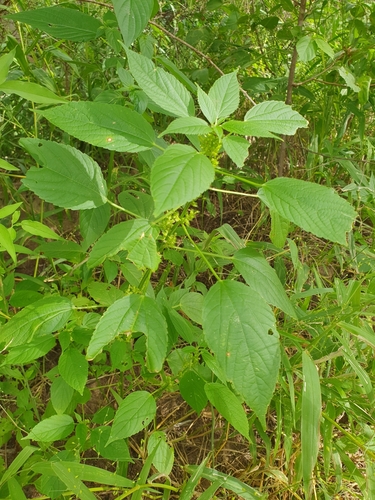
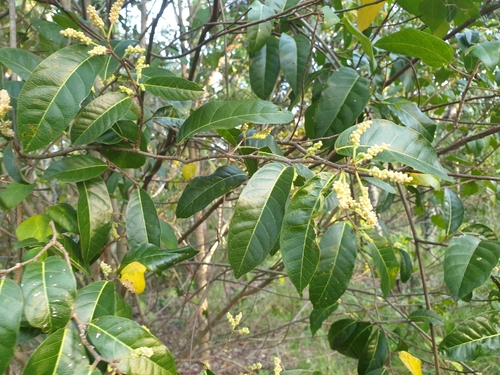
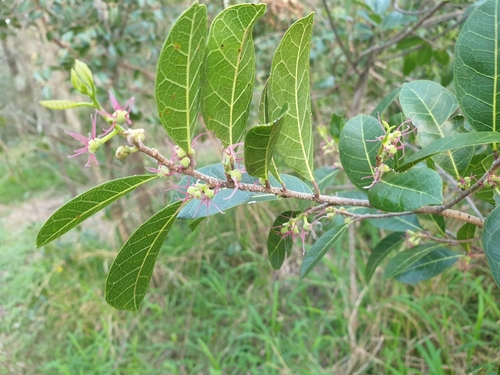
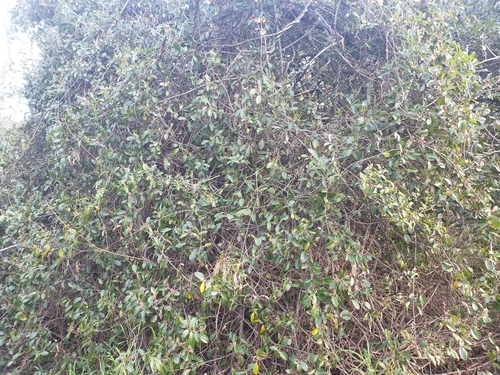
A vine or climbing shrub. It grows 4-8 m long. The leaves are leathery ad oblong to narrowly oval. They are 4-10 cm long and 2.5-4 cm wide. They are pointed at the tip and rounded at the base. The fruit is oval and 6-7 mm long.
Names & Synonyms
Hingi
Caturus scandens Lour.Malaisa scandens (Lour.) Planch.Malaisa tortuosa BlancoTrophis scandens (Lour.) Hook. & Arn.
References (1)
- Reis, S. V. and Lipp, F. L., 1982, New Plant Sources for Drugs and Foods from the New York Botanical Garden herbarium. Harvard. p 44 (As Malaisa scandens)