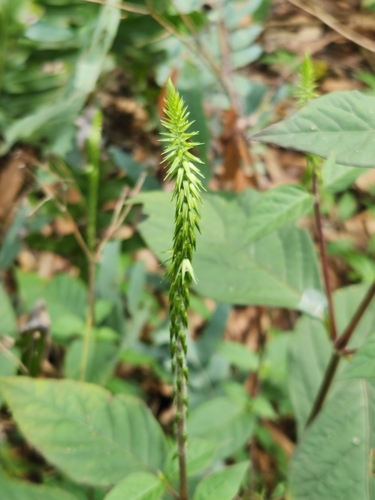
Atriplex suckleyi
(Torr.) Rydb.
AmaranthaceaeLeaves

iNaturalist · cc-by-nc
(c) Hunter Jackson, some rights reserved (CC BY-NC)
(c) Hunter Jackson, some rights reserved (CC BY-NC)

iNaturalist · cc-by-nc
(c) Hunter Jackson, some rights reserved (CC BY-NC)
(c) Hunter Jackson, some rights reserved (CC BY-NC)

iNaturalist · cc-by-nc
(c) Hunter Jackson, some rights reserved (CC BY-NC)
(c) Hunter Jackson, some rights reserved (CC BY-NC)
What to Eat
Edible parts: Leaves
The leaves are eaten.
Where to Find It
It is a tropical plant.
Mexico, North America, USA,
Countries: Antigua & Barbuda, Barbados, Bahamas, Belize, Canada, Costa Rica, Cuba, Dominica, Dominican Republic, Grenada, Guatemala, Honduras, Haiti, Jamaica, St Kitts & Nevis, St Lucia, Mexico, Nicaragua, Panama, Puerto Rico, El Salvador, Trinidad & Tobago, United States, St Vincent
How to Identify
A herb. It branches from the base and is spreading. It grows 5-30 cm tall and wide. The stems have a red tinge. The leaves are alternate and do not have leaf stalks. The leaves are narrowly oval and 7-35 mm long by 4-10 mm wide. They are thick and succulent. The male flowers are in groups and the female flowers often occur singly in the axils of the leaves.
Names & Synonyms
Atriplex endolepis S. WatsonAtriplex monilofera S. WatsonAtriplex suckleyi Torr.Endolepis dioica (Nutt.) Standl.Endolepis monilifera (S. Watson) Standl.Kochia dioica Nutt.Salsola dioica (Nutt.) Spreng.and others
References (1)
- Reis, S. V. and Lipp, F. L., 1982, New Plant Sources for Drugs and Foods from the New York Botanical Garden herbarium. Harvard. p 53 (As Endolepis monilifera)