Prunus susquehanae
hort ex Willd.
Appalachian sand plum, Sesquehana sandcherry
RosaceaeFruit
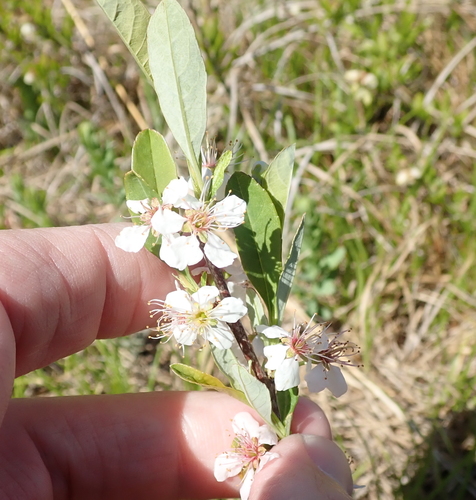
iNaturalist · cc-by-nc
(c) Eric Doucette, some rights reserved (CC BY-NC), uploaded by Eric Doucette
(c) Eric Doucette, some rights reserved (CC BY-NC), uploaded by Eric Doucette
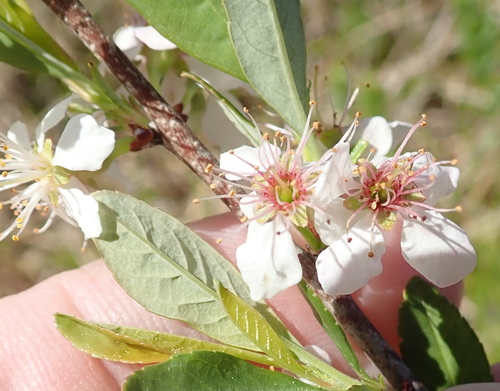
iNaturalist · cc-by-nc
(c) Eric Doucette, some rights reserved (CC BY-NC), uploaded by Eric Doucette
(c) Eric Doucette, some rights reserved (CC BY-NC), uploaded by Eric Doucette
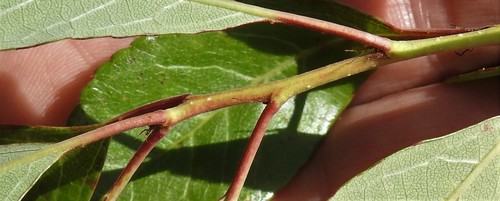
iNaturalist · cc-by-nc
(c) Michael John Oldham, some rights reserved (CC BY-NC), uploaded by Michael John Oldham
(c) Michael John Oldham, some rights reserved (CC BY-NC), uploaded by Michael John Oldham
What to Eat
Edible parts: Fruit
The fruit is eaten.
Where to Find It
It is a temperate plant. It grow in sandy and barren areas.
Canada, North America, USA,
Countries: Antigua & Barbuda, Barbados, Bahamas, Belize, Canada, Costa Rica, Cuba, Dominica, Dominican Republic, Grenada, Guatemala, Honduras, Haiti, Jamaica, St Kitts & Nevis, St Lucia, Mexico, Nicaragua, Panama, Puerto Rico, El Salvador, Trinidad & Tobago, United States, St Vincent
How to Identify
A shrub. It grows 1 m tall. The leaves are silvery blue-green underneath. The leaves are simple with teeth along the edge. It loses its leaves in winter. The leaves are 3-7 cm long by 1.5-3 cm wide. The fruit is fleshy.
Names & Synonyms
Cerasus susquehanae (Willd.) SweetPrunus cuneata Raf.Prunus pumila var. susquehanaeand others
References (1)
- Reis, S. V. and Lipp, F. L., 1982, New Plant Sources for Drugs and Foods from the New York Botanical Garden herbarium. Harvard. p 99 (As Prunus cuneata)
More from Rosaceae

Acaena anserinifolia
Bidgee widgee, Buzzy, New Zealand Bur
No photo
Acaenia anserinifolia - (J.R.Forst.&G.Forst.)Druce.
Pirri-Pirri Bur

Adenostoma sparsifolium
Red shanks, Ribbonwood

Agrimonia eupatoria
Agrimony, Salt and Pepper

Agrimonia odorata
Adour agrimony, Liver-wort

Agrimonia pilosa
Indian chestnut, Agrimony