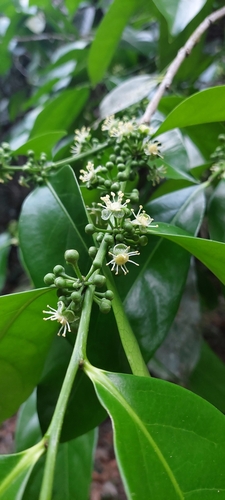
Drypetes lateriflora
(Sw.) Krug & Urb.
PutranjivaceaeFruit
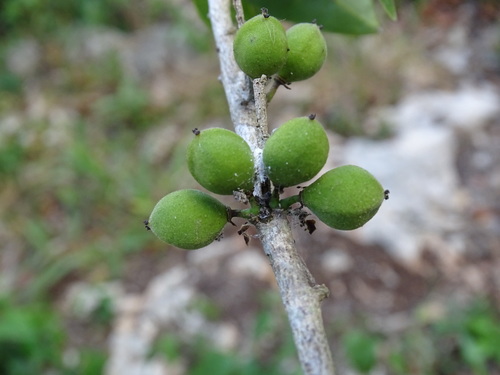
iNaturalist · cc-by
(c) Alexis López Hernández, some rights reserved (CC BY), uploaded by Alexis López Hernández
(c) Alexis López Hernández, some rights reserved (CC BY), uploaded by Alexis López Hernández
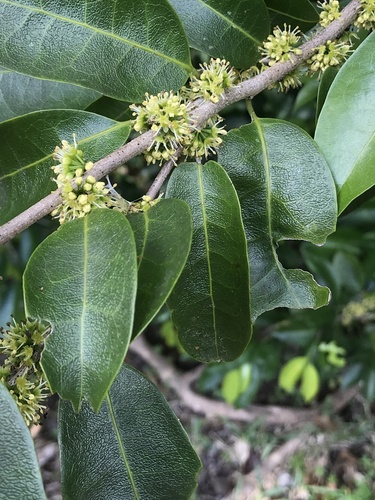
iNaturalist · cc-by-nc
(c) Alan R. Franck, some rights reserved (CC BY-NC), uploaded by Alan R. Franck
(c) Alan R. Franck, some rights reserved (CC BY-NC), uploaded by Alan R. Franck
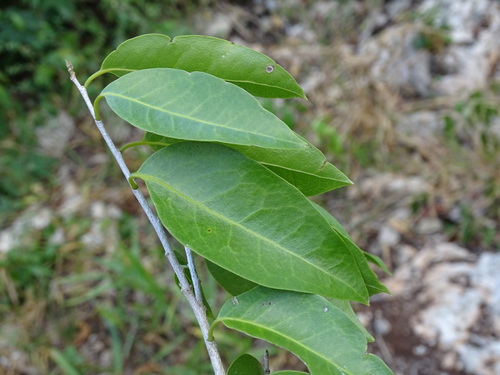
iNaturalist · cc-by
(c) Alexis López Hernández, some rights reserved (CC BY), uploaded by Alexis López Hernández
(c) Alexis López Hernández, some rights reserved (CC BY), uploaded by Alexis López Hernández
What to Eat
Edible parts: Fruit
The fruit is edible.
Where to Find It
It is a tropical plant. It grows up to 520 m above sea level.
Central America, Costa Rica, Dominican Republic, Mexico, Nicaragua, North America, USA, West Indies,
Countries: Antigua & Barbuda, Barbados, Bahamas, Belize, Canada, Costa Rica, Cuba, Dominica, Dominican Republic, Grenada, Guatemala, Honduras, Haiti, Jamaica, St Kitts & Nevis, St Lucia, Mexico, Nicaragua, Panama, Puerto Rico, El Salvador, Trinidad & Tobago, United States, St Vincent
How to Identify
A tree. It grows 10 m tall. The bark is light brown and rough and scaly. The leaves are narrowly oval and 4-12 cm long by 1.5-5 cm wide. The fruit are orange to red and 10-13 mm long by 8-11 mm wide. There is usually one seed in each fruit.
Wikipedia
Source ↗Drypetes lateriflora, the Guiana plum, is a species of flowering plant in the family Putranjivaceae. It is native to Mexico, Central America, southern Florida, and the Caribbean. A tree reaching 30 ft (9 m), it is typically found in hammocks. It is assessed as Least Concern.
Names & Synonyms
Drypetes alba var. latifolia Griseb.Drypetes lateriflora var. guatemalensis Pax & K. Hoffm.Drypetes latifolia (Griseb.) C. WrightSchaefferia lateriflora Sw.and others
References (1)
- Reis, S. V. and Lipp, F. L., 1982, New Plant Sources for Drugs and Foods from the New York Botanical Garden herbarium. Harvard. p 156