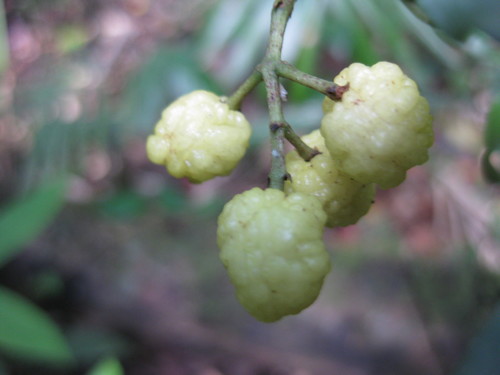
Citrus mitis
Blanco
Calamondin orange
RutaceaeFruit

iNaturalist · cc-by-nc
(c) 桃子, some rights reserved (CC BY-NC)
(c) 桃子, some rights reserved (CC BY-NC)

iNaturalist · cc-by-nc
(c) 桃子, some rights reserved (CC BY-NC)
(c) 桃子, some rights reserved (CC BY-NC)

iNaturalist · cc-by-nc
(c) 桃子, some rights reserved (CC BY-NC)
(c) 桃子, some rights reserved (CC BY-NC)
What to Eat
Edible parts: Fruit
The fruit are eaten raw.
Where to Find It
It is a tropical plant.
Asia, Fiji, Guam, Japan, Myanmar, Pacific, Philippines, SE Asia, Tuvalu,
Countries: United Arab Emirates, Afghanistan, Armenia, Australia, Azerbaijan, Bangladesh, Bahrain, Brunei, Bhutan, China, Fiji, Micronesia, Georgia, Indonesia, Israel, India, Iraq, Iran, Jordan, Japan, Kyrgyzstan, Cambodia, Kiribati, North Korea, South Korea, Kuwait, Kazakhstan, Laos, Lebanon, Sri Lanka, Marshall Islands, Myanmar, Mongolia, Maldives, Malaysia, Nepal, Nauru, New Zealand, Oman, Papua New Guinea, Philippines, Pakistan, Palau, Qatar, Saudi Arabia, Solomon Islands, Singapore, Syria, Thailand, Tajikistan, Timor-Leste, Turkmenistan, Tonga, Turkey, Tuvalu, Taiwan, Uzbekistan, Vietnam, Vanuatu, Samoa, Yemen
How to Identify
A shrub or small tree in the Rutaceae family, widely cultivated in tropical regions and producing small citrus fruit.
Other Information
It is cultivated.
Names & Synonyms
Kalamansi, Moli witiwiti, Moli laini, Pan-leinmaw
References (4)
- Arora, R. K., 2014, Diversity in Underutilized Plant Species - An Asia-Pacific Perspective. Bioversity International. p 63
- Jansen, A. A. J., et al, (Eds), Food and Nutrition in Fiji. Volume One. p 43
- Thaman, R. R, 2016, The flora of Tuvalu. Atoll Research Bulletin No. 611. Smithsonian Institute p 112
- Zeven, A. C. & de West, J. M. J., 1982, Dictionary of cultivated plants and their regions of diversity. Wageningen. p 63