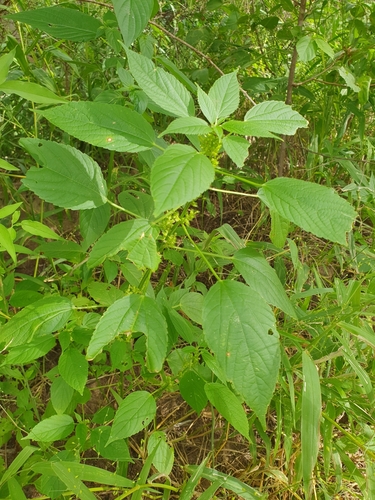
Acalypha lanceolata
Willd.
(c) Sutthikhun Phaengphongsai, some rights reserved (CC BY-NC-SA), uploaded by Sutthikhun Phaengphongsai

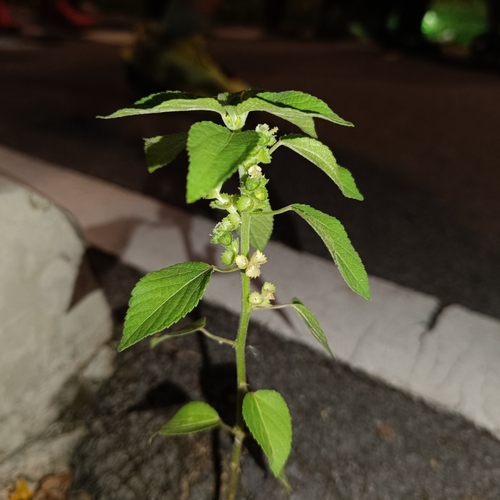
(c) Dinesh Valke, some rights reserved (CC BY-SA)
What to Eat
Edible parts: Leaves
The leaves are eaten.
Where to Find It
It is a tropical plant. In southern China it grows near sea level to 100 m above sea level.
Africa, American Samoa, Asia, Australia, China, India, Indochina, Indonesia, Malaysia, Myanmar, Pacific, Philippines, Samoa, SE Asia, Sri Lanka, Thailand, Uganda,
How to Identify
A shrub or small tree. It grows 5 m tall. There are prickles along the stem. The leaves are twice divided and there are 8-18 pairs of pinnae. There are up to 50 pairs of pinnules on each pinnae. The flowers are yellow. They are in large clusters at the ends of branches. The pods are flattened.
How to Grow
The plant has spread widely, probably as a result of human activity, and is a weed of cultivation in many areas of the tropics.
Medicinal Uses
It has medicinal uses.
Notes
It has medicinal uses.
Names & Synonyms
Ekiliton, Ogoogo tea
References (4)
- Liefting, A., et al, Samoan plant names. http://en.wikipedia.org
- Ojelel, S. & Kakudidi, E. K., 2015, Wild edible plant species utilized by a subsistence farming community in the Obalanga sub-county, Amuria district, Uganda. Journal of Ethnobiology and Ethnomedicine. 11:7
- PROTA
- World Checklist of Useful Plant Species 2020. Royal Botanic Gardens, Kew