Neillia sinensis
Oliv.
RosaceaeLeaves
iNaturalist · cc-by-nc
(c) ed_shaw, some rights reserved (CC BY-NC)
(c) ed_shaw, some rights reserved (CC BY-NC)
iNaturalist · cc-by-nc
(c) ed_shaw, some rights reserved (CC BY-NC)
(c) ed_shaw, some rights reserved (CC BY-NC)
What to Eat
Edible parts: Leaves
The leaves are eaten.
Where to Find It
It is a temperate plant. It grows in valleys in the forest between 1,000-2,500 m above sea level in central and southern China. In Sichuan and Yunnan.
Asia, China,
Countries: United Arab Emirates, Afghanistan, Armenia, Azerbaijan, Bangladesh, Bahrain, Brunei, Bhutan, China, Georgia, Indonesia, Israel, India, Iraq, Iran, Jordan, Japan, Kyrgyzstan, Cambodia, North Korea, South Korea, Kuwait, Kazakhstan, Laos, Lebanon, Sri Lanka, Myanmar, Mongolia, Maldives, Malaysia, Nepal, Oman, Philippines, Pakistan, Qatar, Saudi Arabia, Singapore, Syria, Thailand, Tajikistan, Timor-Leste, Turkmenistan, Turkey, Taiwan, Uzbekistan, Vietnam, Yemen
How to Identify
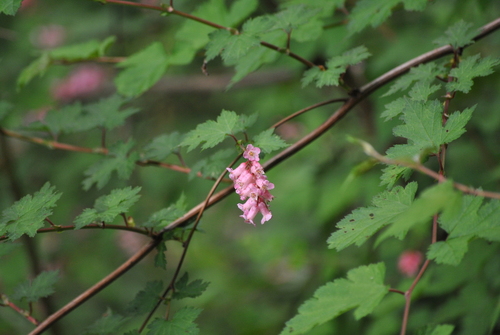
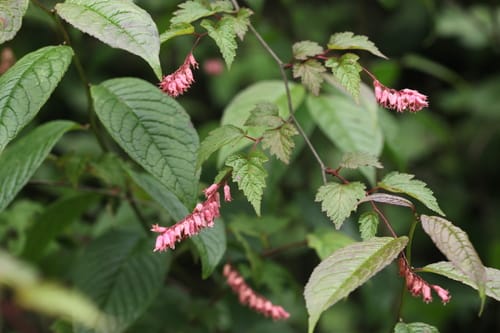
A shrub. It grows 4 m tall. The young branches are red brown. The leaves are narrowly oval and 5-11 cm long by 3-6 cm wide. There are irregular lobes and double teeth along the edge. There are many flowers in a cluster. The petals are pink.
Names & Synonyms
Cha ge
Neillia glandulocalyx H. L.v.Neillia sinensis var. sinensisand others
References (1)
- Kang, Y., et al, 2014, Wild food plants used by the Tibetans of Gongba Valley (Zouqu country, Gansu, China) Journal of Ethnobiology and Ethnomedicine 10:20
More from Rosaceae

Acaena anserinifolia
Bidgee widgee, Buzzy, New Zealand Bur
No photo
Acaenia anserinifolia - (J.R.Forst.&G.Forst.)Druce.
Pirri-Pirri Bur

Adenostoma sparsifolium
Red shanks, Ribbonwood

Agrimonia eupatoria
Agrimony, Salt and Pepper

Agrimonia odorata
Adour agrimony, Liver-wort

Agrimonia pilosa
Indian chestnut, Agrimony