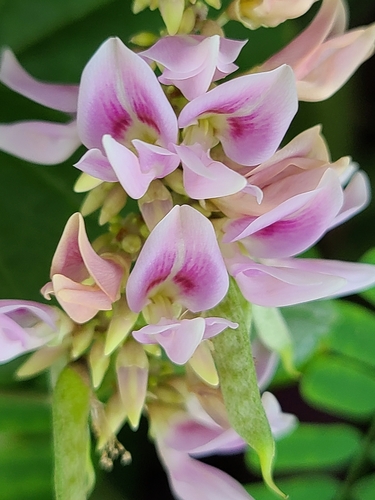
Acacia leiocalyx
(Domin) Pedley
Early-flowering black wattle

(c) Bruce McLennan, some rights reserved (CC BY-NC), uploaded by Bruce McLennan
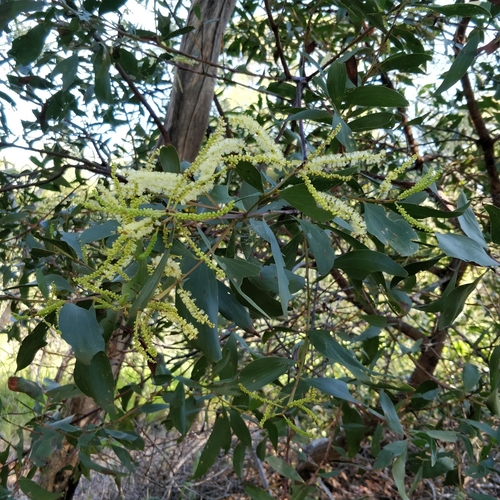
(c) Sam Stainsby, some rights reserved (CC BY), uploaded by Sam Stainsby

(c) Kristian Wells, some rights reserved (CC BY-NC), uploaded by Kristian Wells
What to Eat
Edible parts: Seeds, Gum
The seeds and gum are edible.
Known Hazards
How to Identify
A shrub or small tree. It grows 5 m tall. There are prickles along the stem. The leaves are twice divided and there are 8-18 pairs of pinnae. There are up to 50 pairs of pinnules on each pinnae. The flowers are yellow. They are in large clusters at the ends of branches. The pods are flattened.
Wikipedia
Source ↗Acacia leiocalyx (black wattle, early flowering black wattle, lamb's tail wattle, curracabah) grows in Queensland, Australia and as far south as Sydney. It is widespread and common in eucalypt woodlands, especially on well-drained, shallow soils. It is short-lived and grows 6–7 metres (20–23 ft.) tall, with a trunk about 180 mm (7 inches) in diameter.
Production
It grows quickly.
Names & Synonyms
References (1)
- Edible and Useful Native Plants (off internet)