Chydenanthus excelsus
(Blume) Miers
Besole tree, Kolowe tree

President and Fellows of Harvard College

President and Fellows of Harvard College

President and Fellows of Harvard College
What to Eat
Edible parts: Seeds, Nuts, Leaves
The seeds, nuts, and leaves are edible portions of this tree.
Known Hazards
Where to Find It
A tropical plant. It grows in forests and mangroves. It grows between 10-200 m above sea level.
Africa, Andamans, Asia, Australia, China, Fiji, India, India, Indochina, Indonesia, Myanmar, Nicobar, Pacific, SE Asia, Solomon Islands, South America, Sri Lanka, Vanuatu,
How to Identify
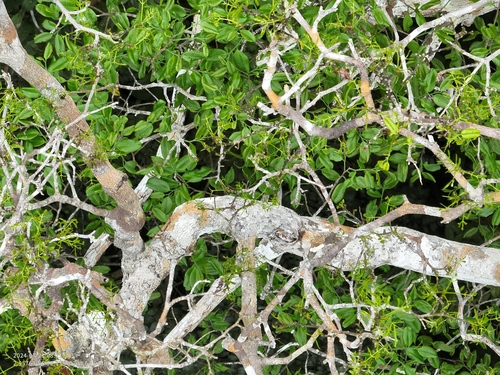
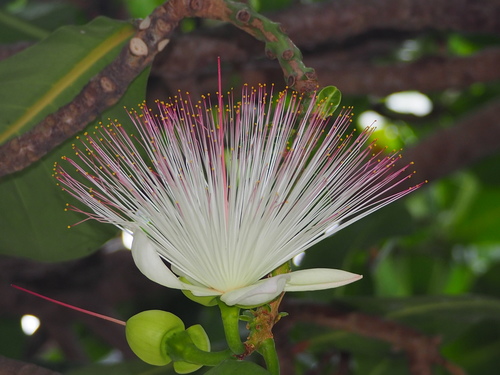
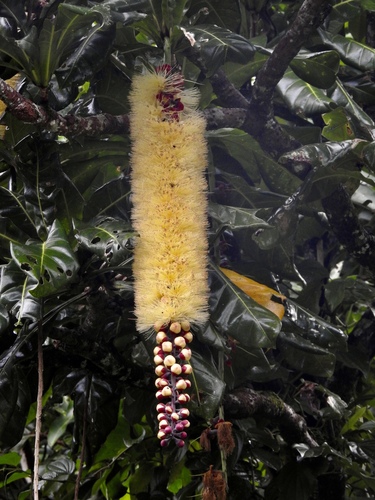
A tree. It grows about 8-28 m high. The branches are broadly spreading and drooping. The leaves are simple and alternate. The leaves are long and pointed. They are 14-27 cm long by 5-10 cm wide. The flowering panicle is 10-17 cm long. The flowers are pink to white. The fruit are a capsule that is brown when ripe. There are 2 seeds.
How to Grow
Plants can be grown by seeds.
Notes
The seeds are used as a fish poison.
Names & Synonyms
Besole, Bludeng, Brosol, Kolowe, Pohon besole, Rumput jarum
References (8)
- Barrau, J., 1976, Subsistence Agriculture in Melanesia. Bernice P. Bishop Museu, Bulletin 219 Honolulu Hawaii. Kraus reprint. p 53
- French, B.R., 2010, Food Plants of Solomon Islands. A Compendium. Food Plants International Inc. p 308
- Hedrick, U.P., 1919, (Ed.), Sturtevant's edible plants of the world. p 93 (As Barringtonia excelsa)
- Massal, E. and Barrau, J., 1973, Food Plants of the South Sea Islands. SPC Technical Paper No 94. Noumea, New Caledonia. p 32 (As Barringtonia excelsa)
- Menninger, E.A., 1977, Edible Nuts of the World. Horticultural Books. Florida p 38 (As Barringtonia excelsa)
- Menninger, E.A., 1977, Edible Nuts of the World. Horticultural Books. Florida p 39
- Sukarya, D. G., (Ed.) 2013, 3,500 Plant Species of the Botanic Gardens of Indonesia. LIPI p 196
- Wickens, G.E., 1995, Edible Nuts. FAO Non-wood forest products. FAO, Rome. p 140