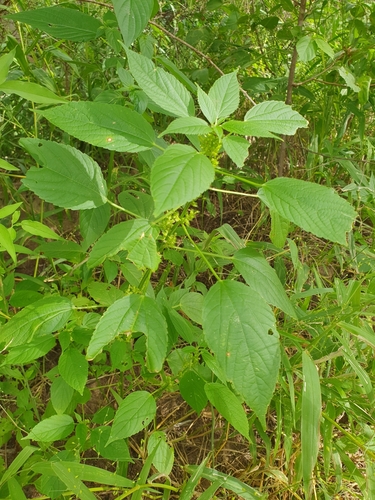
Croton caudatus
Geiseler
Croton
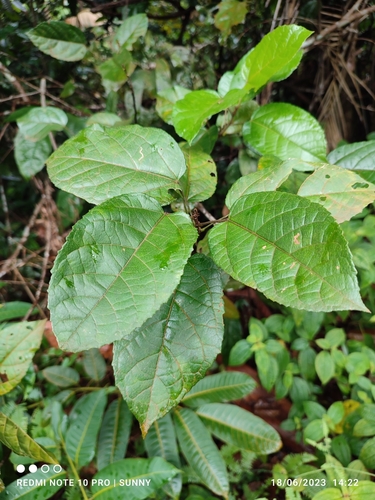
(c) SunGW, some rights reserved (CC BY-NC), uploaded by SunGW
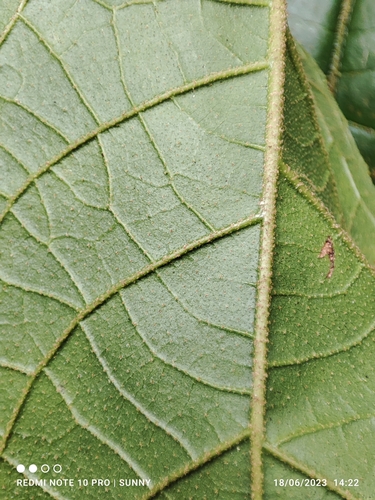
(c) SunGW, some rights reserved (CC BY-NC)
What to Eat
Edible parts: Leaves - juice
Leaf juice is consumed and leaves are sold in local markets.
Where to Find It
It is a subtropical plant. In southern China it grows between 500-600 m above sea level. In XTBG Yunnan. It occurs in the Western Ghats in India.
Asia, Australia, Bangladesh, Bhutan, Brunei, Cambodia, China, Himalayas, India, Indochina, Indonesia, Laos, Malaysia, Myanmar, Nepal, Northeastern India, Pakistan, Philippines, SE Asia, Thailand, Singapore, Sri Lanka, Vietnam,
How to Identify
A small shrub. It grows 2-3 m tall. It can be creeping. The leaves are 4-6 cm long by 4-5 cm wide. They are hairy underneath. The base is wedge shaped and there are some teeth or divisions along the edge.
How to Grow
Plants can be grown from seeds.
Medicinal Uses
The plant is considered medicinal.
Other Uses
The young stems are used in basketry. The wood is white or yellowish-white, hard and close-grained. It is only used for fuel.
Other Information
Leaves are sold in local markets.
Notes
It is considered a medicine.
Names & Synonyms
Agurdukha, Akar mendarong, Awle, Ran-lung-damdoi, Taung-salat
References (2)
- Medhi, P. & Borthakur, S. K., 2012, Phytoresources from North Cachur Hills of Assam -3: Edible plants sold at Hflong market. Indian Journal or Natural Products and Resources. 3(1) pp 84-109
- Sukarya, D. G., (Ed.) 2013, 3,500 Plant Species of the Botanic Gardens of Indonesia. LIPI p 916