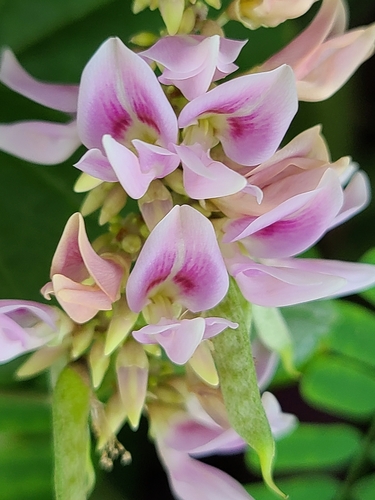
Mucuna bracteata
DC.
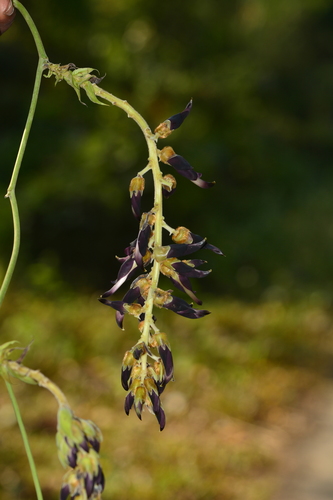
no rights reserved, uploaded by S.MORE
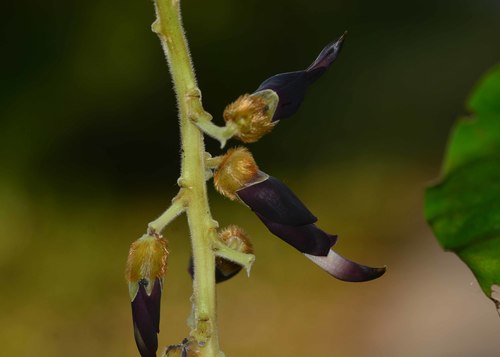
no rights reserved, uploaded by S.MORE
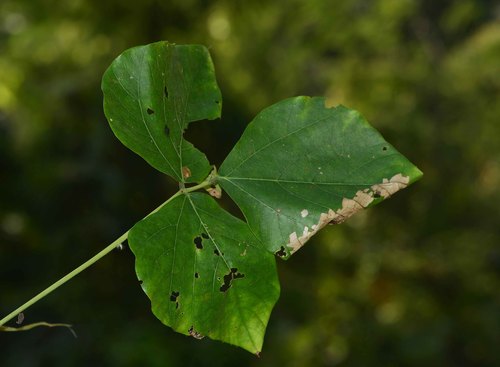
no rights reserved, uploaded by S.MORE
What to Eat
Edible parts: Seeds
The seeds are cooked and eaten as a vegetable.
Known Hazards
Where to Find It
It is a subtropical plant. It grows in forests and by rivers between 600-2,000 m above sea level. In Yunnan.
Asia, China, India, Indochina, Laos, Myanmar, Northeastern India, SE Asia, Thailand, Vietnam,
How to Identify
A twining herb. The leaves are 14-30 cm long. They have leaflets. The flowering shoots are in the axils of leaves and are 18-41 cm long. The flowers are clustered along these. They are deep purple. The pod is narrow and 6-9 cm long by 1-2 cm wide. There are 3-6 dark brown seeds. These are 9 mm long by 6 mm wide and 4 mm thick.
How to Grow
Prefers a well-drained, moist, humus-rich soil and a position in full sun or partial shade. This species is extremely similar to Mucuna pruriens, and is only distinguished by the thickly textured robust-veined ovate-rhombic leaflets with indumentum abaxially conspicuously sparser on the veins than on the leaf surface, the lower part of the inflorescence with many flowerless nodes with scars or persistent bracts, and the almost straight legume.
Medicinal Uses
The seeds are considered by some ethnic groups to have aphrodisiac properties. The hairs on the seedpods are used as a medicine to expel intestinal worms.
Other Uses
The plant is used as a cover crop in rubber and palm oil plantations. It is fast growing, has moderate drought resistance and shade tolerance and forms a thick cover which suppresses weeds.
Wikipedia
Source ↗Mucuna bracteata is a species of leguminous plant in the family Fabaceae. It is a nitrogen-regulating plant that is used in agroecosystems operating around certain types of agricultural plant systems including: rubber trees, oil palm, citrus and coconut. M. bracteate is a cover crop which helps to cover and shield the soil from weeds or plants, as well as providing rapid growth for existing agricultural crops, preventing soil erosion, and providing nitrogen fixation. The Mucuna bracteata crop grows about 10–15 cm/day in conditions similar to those that rubber and palm oil plants thrive in. Mucuna bracteata grows in a warm and humid ecosystem, at a temperature of about 20-35 degrees Celsius, and consistent annual rainfall. Originating in the North Eastern areas of India, M. bracteata has been introduced into Hevea rubber plantations in India and oil palm plantations in Malaysia. This plant has the potential to increase soil fertility and health through the processes of natural soil fertilization and aeration, furthermore, providing a sustainable water retention level for the soil beyond the current conditions of the rubber and palm oil plantation fields.
Names & Synonyms
Nwe-bok, Wakmi, Wee-te
References (1)
- Singh, B., et al, 2012, Wild edible plants used by Garo tribes of Nokrek Biosphere Reserve in Meghalaya, India. Indian Journal of Traditional Knowledge. 11(1) pp 166-171