Berberis petiolaris
Wall. ex G. Don
BerberidaceaeFruit

wikimedia · cc-by
Wikimedia Commons - Yercaud-elango
Wikimedia Commons - Yercaud-elango

wikimedia · cc-by
Wikimedia Commons - Yercaud-elango
Wikimedia Commons - Yercaud-elango
What to Eat
Edible parts: Fruit
The ripe fruit are eaten fresh, and unripe fruit are pickled.
Where to Find It
It is a subtropical plant. It grows in the Himalayas between 2,000-3,300 m above sea level. It grows on open slopes and the edges of forests.
Asia, Himalayas, India, Nepal,
Countries: United Arab Emirates, Afghanistan, Armenia, Azerbaijan, Bangladesh, Bahrain, Brunei, Bhutan, China, Georgia, Indonesia, Israel, India, Iraq, Iran, Jordan, Japan, Kyrgyzstan, Cambodia, North Korea, South Korea, Kuwait, Kazakhstan, Laos, Lebanon, Sri Lanka, Myanmar, Mongolia, Maldives, Malaysia, Nepal, Oman, Philippines, Pakistan, Qatar, Saudi Arabia, Singapore, Syria, Thailand, Tajikistan, Timor-Leste, Turkmenistan, Turkey, Taiwan, Uzbekistan, Vietnam, Yemen
How to Identify
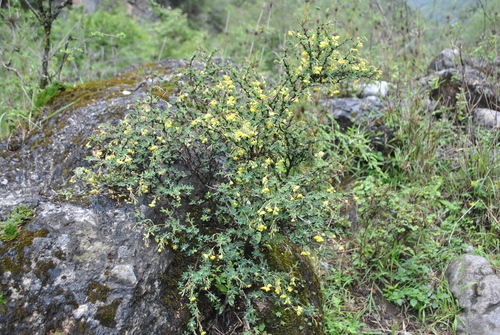
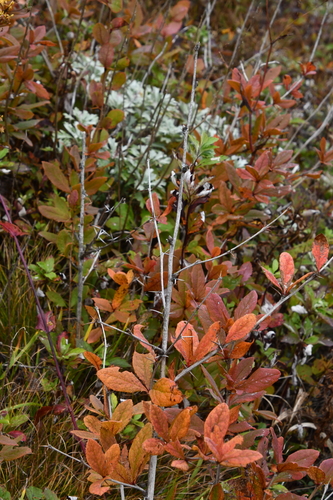
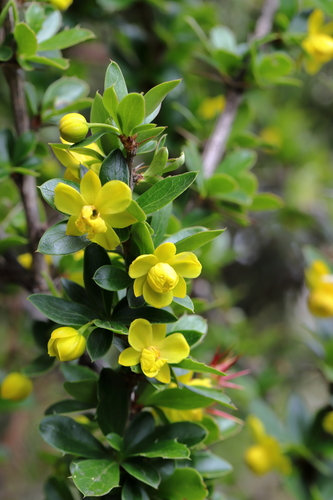
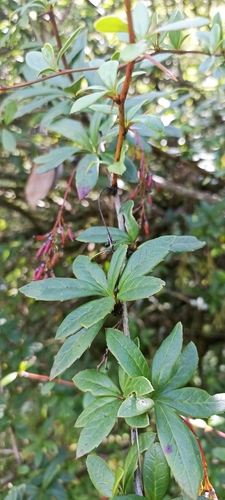
A large shrub. It grows 3-6 m tall. The stems are angled. It loses its leaves. The leaves are broadly oval or sword shaped and can have irregular teeth or spines. The leaves are green on both sides. The flowers are yellow and in groups. The fruit are oval and red-purple. They have several seeds.
Medicinal Uses
Traditional uses documented.
Production
In the Himalayas is flowers from March to June and fruits from September to October.
Names & Synonyms
Chotar, Kashmal, Kilmora
References (2)
- Upreti, K., et al, 2010, Diversity and Distribution of Wild Edible Fruit Plants of Uttarakhand. Bioversity Potentials of the Himalaya. p 161
- Wild edible plants of Himachal Pradesh