Agave schottii
Engelm.
AsparagaceaeShoots

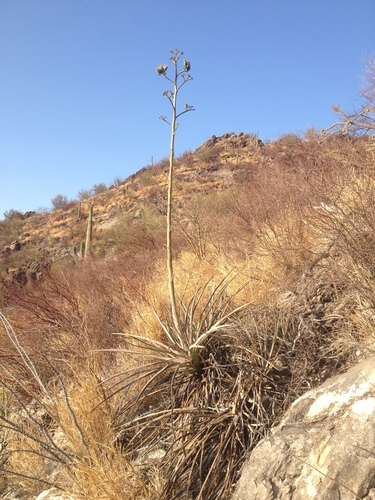
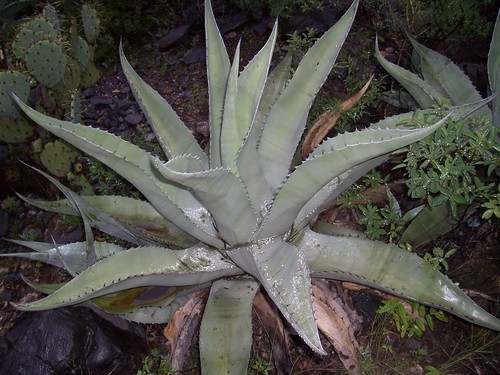
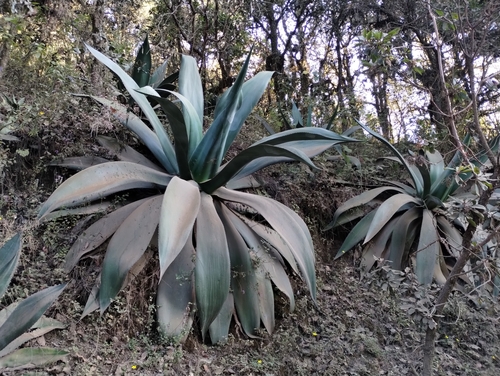
iNaturalist · cc-by
(c) CK2AZ, some rights reserved (CC BY), uploaded by CK2AZ
(c) CK2AZ, some rights reserved (CC BY), uploaded by CK2AZ
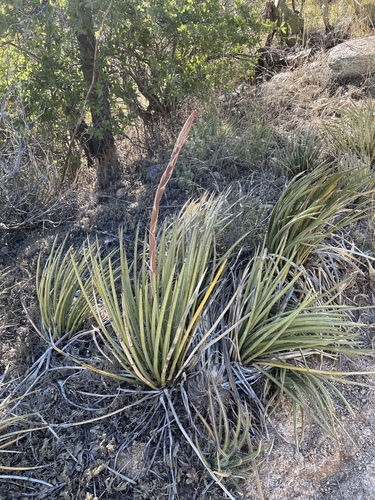
iNaturalist · cc-by-nc
(c) Deborah Bird, some rights reserved (CC BY-NC), uploaded by Deborah Bird
(c) Deborah Bird, some rights reserved (CC BY-NC), uploaded by Deborah Bird
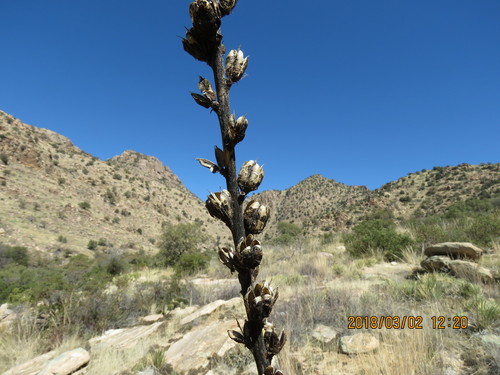
iNaturalist · cc0
no rights reserved, uploaded by Steve Wells
no rights reserved, uploaded by Steve Wells
What to Eat
Edible parts: Stem pith
The stem pith is edible.
Where to Find It
It is a temperate plant.
Mexico, North America, USA,
Countries: Antigua & Barbuda, Barbados, Bahamas, Belize, Canada, Costa Rica, Cuba, Dominica, Dominican Republic, Grenada, Guatemala, Honduras, Haiti, Jamaica, St Kitts & Nevis, St Lucia, Mexico, Nicaragua, Panama, Puerto Rico, El Salvador, Trinidad & Tobago, United States, St Vincent
How to Identify
A large temperate succulent agave with leaves arranged in a ring, belonging to the asparagaceae family.
Wikipedia
Source ↗Agave schottii, also known by the common name Amole, Schott's century plant, also called shin dagger or Sonoran shin dagger, is a shrub species within the genus Agave. It is a member of the subgenus Littaea. There are two widely recognized varieties of this species: Agave schotti var. schottii and Agave schottii var. treleasei.
Names & Synonyms
Agave geminiflora var. sonorae Torr.Agave mulfordiana Trel.Agave schottii var schottiiAgave schottii var. serrulata MulfordAgave sonorae (Torr.) Mearns
References (1)
- Nugent, J., 1999, Agaves and cacti., Permaculture plants. Sustainable Agriculture Research Institute. PO Box 10, Nanup, WA, 6275