Hesperaloe funifera
(K. Koch) Trel.
Giant hesperaloe

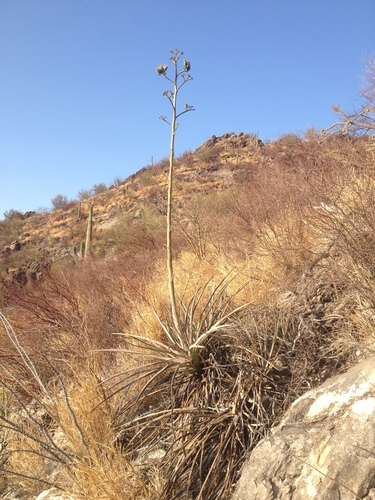
(c) 2010 Zoya Akulova, some rights reserved (CC BY-NC)
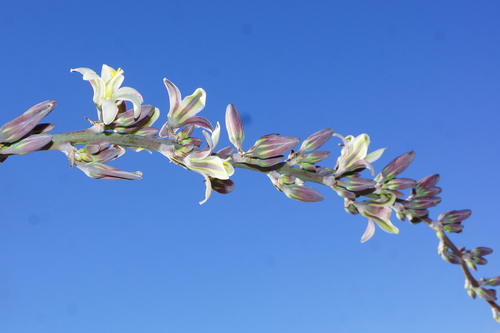
(c) José G. Flores Ventura, some rights reserved (CC BY-NC), uploaded by José G. Flores Ventura
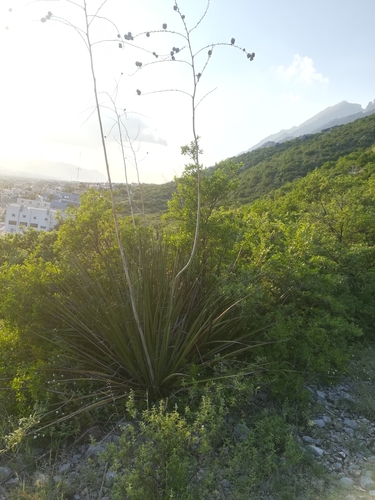
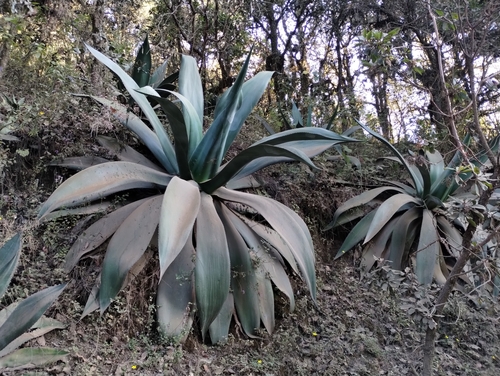
(c) Francisco Martínez González, some rights reserved (CC BY-SA), uploaded by Francisco Martínez González
What to Eat
None known.
How to Identify
An evergreen perennial growing slowly to 1.8 m, hardy to UK zone 7. Year-round foliage with flowers appearing September to October. Hermaphrodite flowers. Requires light sandy or medium loamy well-drained soils with mildly acidic to basic pH. Cannot tolerate shade. Adapts to both dry and moist conditions, showing good drought tolerance.
How to Grow
Propagation: Sow seed in spring in a greenhouse. Pre-soaking seed for 24 hours in warm water may speed germination. Seeds typically germinate within 1 to 12 months at 20°C. Prick seedlings into individual pots when large enough and grow on under glass or in a cold frame for at least the first two winters. Plant out into permanent positions in early summer, and consider providing basic winter protection such as a pane of glass during the first winter outdoors.
Medicinal Uses
None known.
Other Uses
The plant produces strong fibres suitable for making cordage. These fibres yield a paper with exceptional tensile and tear strength, making them suitable for high-strength speciality papers such as currency papers, bible papers, tea bags, and filters. They can also be blended with other fibres to improve the strength and texture of a wide range of paper products, including writing papers, tissue and towel products, and papers made from recycled fibre.
Wikipedia
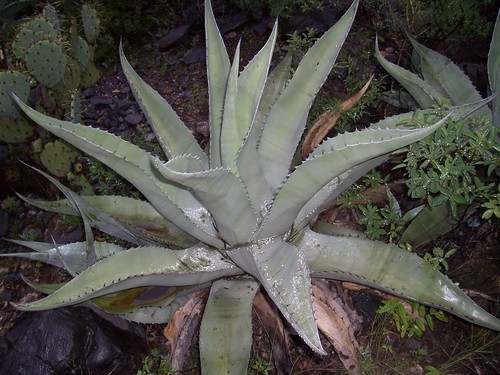
Source ↗Hesperaloe funifera (Coahuilan Hesperaloe, Giant Hesperaloe, or Mexican false yucca) is a species of flowering plant in the family Asparagaceae. It is native to Texas (Val Verde County) and northern Mexico (Coahuila, San Luis Potosí, Nuevo León), but sometimes cultivated as an ornamental elsewhere. Hesperaloe funifera grows on rocky slopes and open plains in the Tamaulipan mezquital and the eastern edges of the Chihuahuan Desert. It is a rosette-forming perennial. It has long, narrow, yellow-green blades up to 200 cm long but only 5 cm across. Flowering stalk can be up to 250 cm tall, with long branches. Flowers are green or white, often tinged with purple, about 25 mm across. The specific name funifera is derived from the Latin funis "rope" and fero "I bear" and thus signifies "bearer (provider) of rope" in reference to the plant's strong fibre, which may be used for this purpose.
Names & Synonyms
References (1)
- Brevard Country Edible Acres