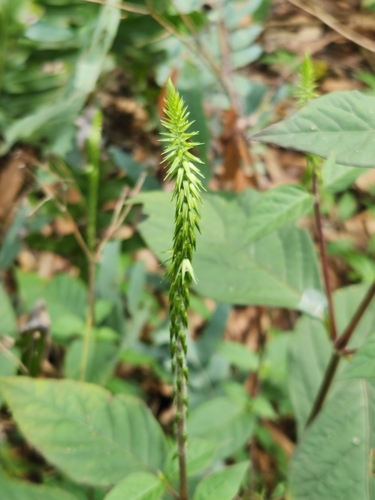
Corispermum declinatum
Stepj. ex Iljin

(c) Aleksandr Ebel, some rights reserved (CC BY-NC), uploaded by Aleksandr Ebel

(c) fabienne niebler, some rights reserved (CC BY-NC)
What to Eat
The seed is used as a flavouring in gin.
Where to Find It
It is a temperate plant.
Asia, China, Europe, Korea, Mongolia, Russia, Siberia,
How to Identify
Annual plant growing to 0.5 m tall. Flowers July to September with seeds ripening during the same period. Hermaphrodite. Tolerates light sandy, medium loamy, and heavy clay soils. Suitable for mildly acid, neutral, or basic pH levels. Grows in semi-shade or full sun and prefers moist soil.
How to Grow
We have very little information on this species and do not know if it will be hardy in Britain, though judging by its native habitat it is likely to succeed in many parts of the country, particularly the drier areas. It is likely to prefer a well-drained soil and a sunny position.
Propagation: Propagate by seed.
Medicinal Uses
None known.
Other Uses
None known.
Wikipedia
Annual plant growing to 0.5 m tall. Flowers July to September with seeds ripening during the same period. Hermaphrodite. Tolerates light sandy, medium loamy, and heavy clay soils. Suitable for mildly acid, neutral, or basic pH levels. Grows in semi-shade or full sun and prefers moist soil.
References (3)
- Brevard County Edible Acres
- www.eFloras.org Flora of China
- World Checklist of Useful Plant Species 2020. Royal Botanic Gardens, Kew