Caution — Parts of this plant may be toxic or require specific preparation. Verify with multiple sources before consuming.
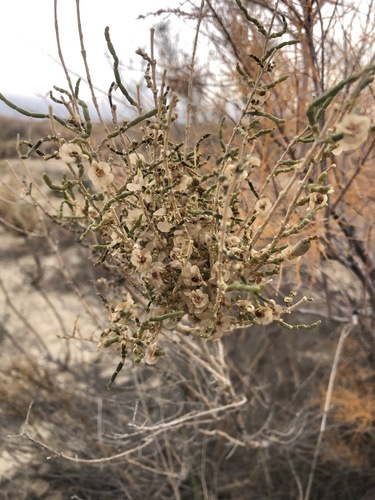
iNaturalist · cc-by-nc (c) B.Byambajav, some rights reserved (CC BY-NC), uploaded by B.Byambajav
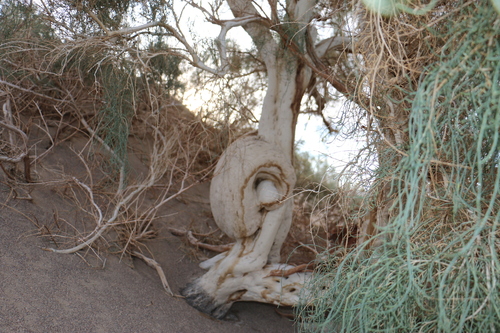
iNaturalist · cc-by-nc (c) Wildlife biologist - Dovchoo, some rights reserved (CC BY-NC), uploaded by Wildlife biologist - Dovchoo
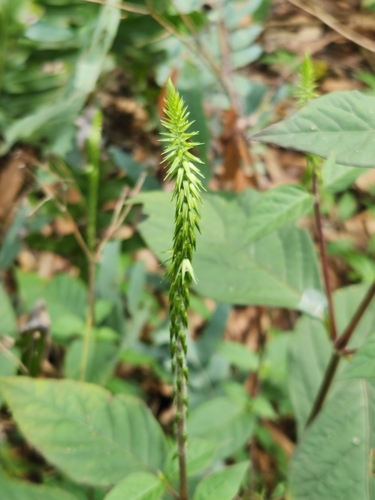
iNaturalist · cc-by-nc (c) Kherlenchimeg Nyamsuren, some rights reserved (CC BY-NC), uploaded by Kherlenchimeg Nyamsuren
What to Eat
Edible parts: Bark - water, Seeds - oil
No edible uses are known for this plant.
Known Hazards
The saxaul is planted on a large scale in the afforestation of arid areas in China. Being highly drought-resistant, it has played an important role in the establishment of shelter belts and the fixation of sand dunes as a counter to desertification.
The thick bark of the saxaul tree stores water. Quantities of the bark may be pressed for drinking water, making saxaul an important source of water in arid regions where it grows.
Saxaul is a traditional Turkmen firewood. It was heavily harvested in some provinces in Turkmenistan as it was used for fuel to fight the 2008 Central Asia energy crisis. In the Gobi desert, the saxaul is often the only kind of tree found. It used to be, and in some place still is, the only kind of wood that nomads can use for heating and cooking.
When the Russian Imperial Navy brought the first steamships into the land-locked Aral Sea, the local Governor-General Vasily Perovsky ordered the commander of Fort Aralsk to collect an "as large as possible supply" of saxaul wood (Anabasis saxaul, in the source) for use by the new steamships on their maiden navigation of 1851. Unfortunately for the Russian Naval budget (but probably quite fortunately for the saxaul itself), saxaul wood turned out to be not particularly suitable for steamships, as the hard and resinous wood was difficult to cut, and knotty and crooked saxaul logs could not be stored space-efficiently in the ships' holds. Therefore, starting from 1852, the Aral Flotilla switched to coal as its main fuel, despite the remarkable costs of shipping it by caravan from Orenburg.
The Uzbek government has also planted the trees in the Aral Desert to help prevent the spread of toxic salts left behind when the sea dried up, which have caused numerous health problems for people living on the perimeter of the desert.
Where to Find It
It is a temperate plant. It grows in sand dunes and salty and alkaline deserts.
Afghanistan, Asia, Central Asia, China, Iran, Middle East, Mongolia, Tajikistan,
Evergreen shrub reaching 2 m tall with year-round leaves and flowers in June to July. Hermaphroditic. Prefers light sandy and medium loamy soils that are well-drained and nutritionally poor. Tolerates mildly acidic to basic and very alkaline and saline soils. Requires full sun and adapts to both dry and moist soils, with excellent drought tolerance.
How to Grow
Propagation: Sow seed in spring in a greenhouse. Once seedlings are large enough to handle, prick them out into individual pots and grow on under glass for at least the first winter. Plant out into permanent positions in late spring or early summer, after the last expected frosts. Cuttings of half-ripe wood can be taken in July/August and rooted in sand in a frame.
Medicinal Uses
No medicinal uses are known for this plant.
Other Uses
This species plays an important role in afforestation and has been used extensively in biological reconditioning of desert environments. A green dye can be obtained from the wood. The wood is also an excellent fuel.
Haloxylon ammodendron, variously called the saxaul (Russian: саксау́л, romanized: saksaúl), black saxaul, also spelled sacsaoul or saksaul is a plant belonging to the family Amaranthaceae. "Saksaul" is a common Turkic word that entered Russian through Kazakh.
Names & Synonyms
Suo suo
Anabasis ammodendron C. A. Mey.Arthrophytum ammodendron (C. A. Mey.) Litv.Arthrophytum haloxylon Litv.Haloxylon aphyllum (Minhw.) Iljinand others
References (3)
Brevard County Edible Acres
Roshandel, P. & Shamsi, F., 2015, Analysis of oilseed of Halophytic species: Atriplex griffithii, Haloxylon ammodendron, Salicornia europaea, Salsola yazdiana. Journal of Advanced Laboratory Research in Biology. Volume 6, Issue 3; pp 83-88