Agave attenuata
Salm-Dyck
Swan's neck agave, Lion's tail agave
(c) Ignacio Torres-García, some rights reserved (CC BY-NC), uploaded by Ignacio Torres-García
(c) Arturo Salinas, some rights reserved (CC BY-NC), uploaded by Arturo Salinas

(c) Ignacio Torres-García, some rights reserved (CC BY-NC), uploaded by Ignacio Torres-García
What to Eat
Edible parts: Flower stalks
The young fat flower stalks are roasted and eaten.
Where to Find It
It is a tropical plant. It grows in dry areas between 1,900-2,500 m above sea level. In Townsville BG.
Asia, Australia, Indonesia, Mexico*, SE Asia,
How to Identify
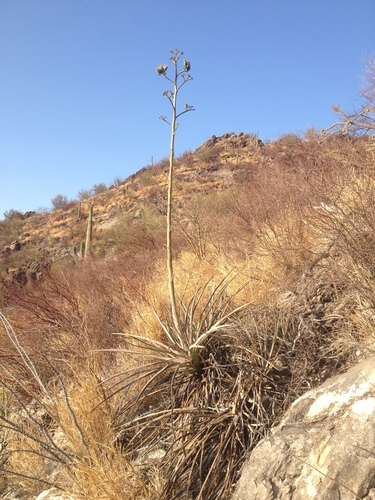
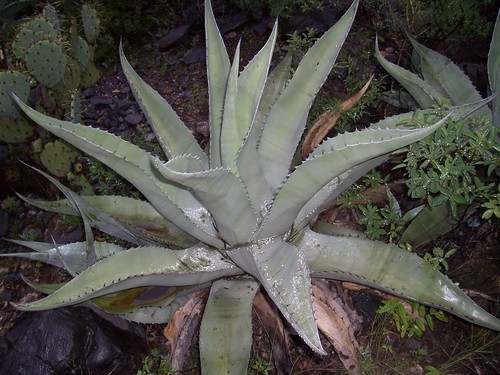
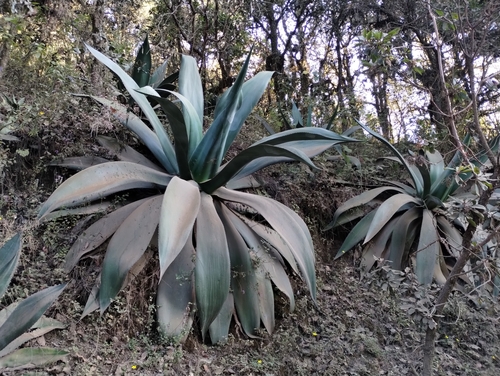
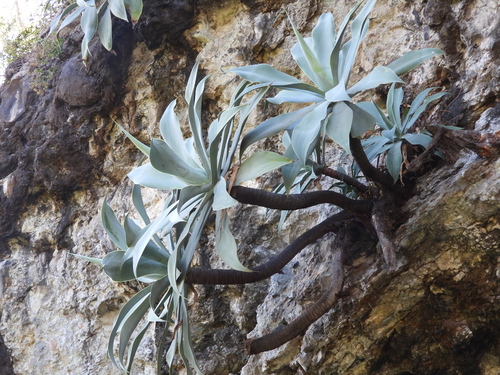
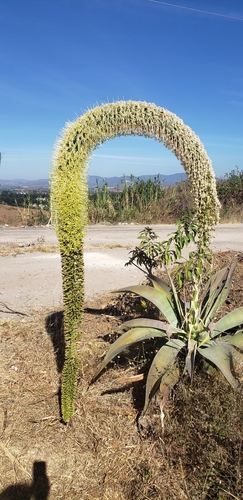
An agave. It is a succulent plant without spines. The stems are 50-150 cm tall. The crown is broad and has a compact ring of leaves. These are oval and taper tot eh tip. They are 50-70 cm long by 12-16 cm wide. They are light greenish-grey. The flower spike can be 3 m tall. The flowers are greenish-yellow.
How to Grow
Plants can be grown from seeds or suckers.
Wikipedia
Source ↗Agave attenuata, commonly called the foxtail or lion's tail agave or the swan's neck agave, is a species of flowering plant in the family Asparagaceae (the asparaguses, agaves and yuccas). Sometimes called the soft-leaf or soft-leaved agave, the aforementioned animal-related names are a nod to the appearance of the plant's inflorescence, which—after years, generally—rises slightly before gravity brings it back down, giving the bloom a curved, "swan"-like or "foxtail" look. The species' specific manner of flowering is unique in the genus Agave as most other species produce a towering, vertical display, reminiscent of a miniature tree. In addition to its inflorescence, when compared with other Agave species, A. attenuata is further unique with its soft, spineless leaves and the fact that it does not rapidly asexually produce dozens of "runners" or "pups" from the rhizome of the mother plant. These factors have helped A. attenuata earn a positive reputation amongst gardeners as easy-to-manage; the species has become extremely popular as an ornamental plant in appropriate climates and zones, especially the American Southwest, Latin America and the Mediterranean. Several unique forms and cultivars have been created and made available on the plant market, such as the white-variegated A. attenuata 'Variegata' and 'Ray of Light', or the teal-hued 'Boutin Blue'. The similarly teal-leaved 'Blue Flame' was achieved with the cross of Agave attenuata x Agave shawii.
Names & Synonyms
Agave ekor singa, Agave leher angsa
References (2)
- Lim, T. K., Edible Medicinal and Non-Medicinal Plants Volume 7 Flowers
- Sukarya, D. G., (Ed.) 2013, 3,500 Plant Species of the Botanic Gardens of Indonesia. LIPI p 997