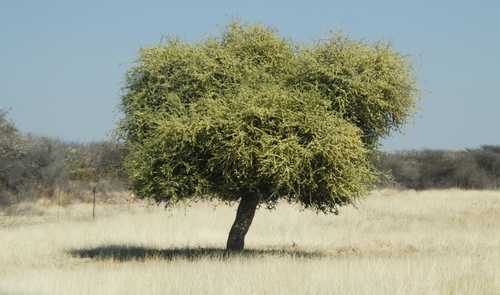
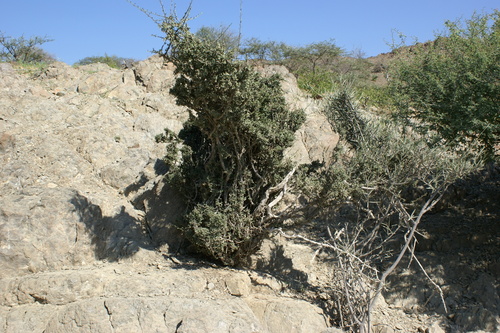
Crateva greveana
Baill.
Greve's caper, Greve's garlic pear
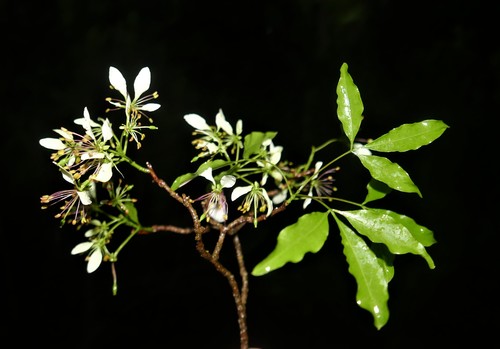
(c) feno, some rights reserved (CC BY-NC)
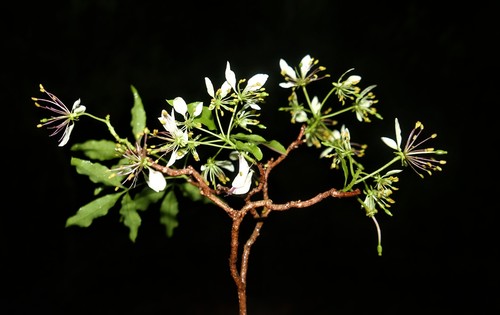
(c) feno, some rights reserved (CC BY-NC)
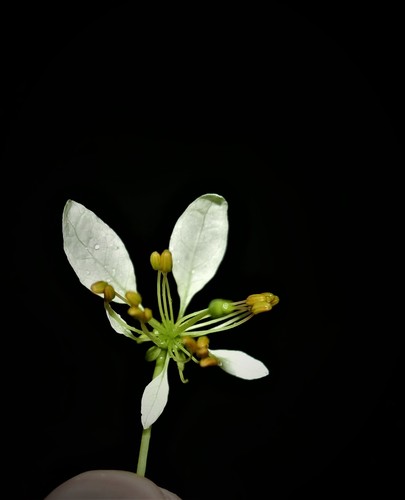
(c) feno, some rights reserved (CC BY-NC)
What to Eat
Edible parts: Fruit, Leaves
The fruit is boiled and eaten, and the leaves are also edible.
Where to Find It
It is a tropical plant. It grows in humid and dry scrubland and forests. It grows from sea level to 500 m above sea level.
Africa, Madagascar*,
How to Identify
A small tree. It loses its leaves during the year. The trunk has low branches. The bark is smooth and can have corky dots. The leaves are compound. The leaves are arranged alternately along the twigs. The leaves have 3-7 oval or sword shaped leaflets. These are 5-27 cm long by 3-10 cm wide. They are light green and taper to the base. The sides are slightly unequal. The flowers are in clusters and 5 cm wide. The fruit are oval or round and slightly woody. They are 6-15 cm long. The seeds are kidney shaped.
Names & Synonyms
Alalamisy, Ampody, Boromena, Hazonpasy, Keliony, Mafanakelika, Tangena, Teloravina, Tongohakoho, Tsilehabeko, Voampliana, Vodihaomby
References (1)
- Reitveld, S., 2013, The Animals and Plants of the Zazamalala Forest in Western Madagascar. p 58